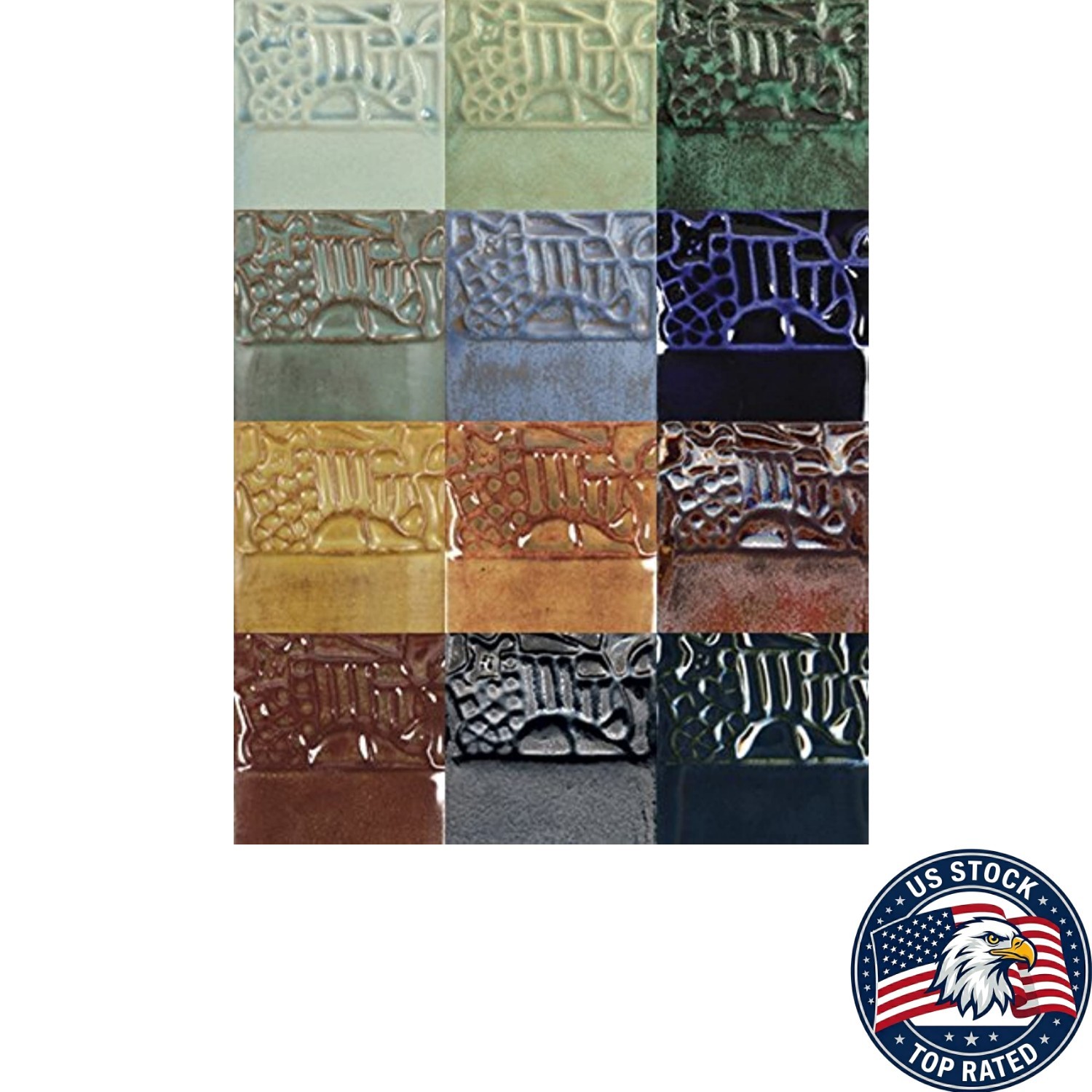

Photos from current listings. Actual item, color, and included accessories may vary.
Ceramic Glaz Buying Guide
Ceramic glazes are vitreous glass coatings applied to bisque-fired clay, and the primary trade-off is between food-safe, dinnerware-grade formulations and decorative or low-fire craft glazes with uncertain leaching resistance. The clear decision rule: buy glazes explicitly labeled dinnerware-safe, lead-free, and compatible with your clay body's firing range; treat unlabeled multi-color craft sets as decorative-only until proven otherwise.
Key takeaways
- Firing range is the first spec: low-fire (cone 06-04), mid-fire (cone 5-6), and high-fire (cone 9-10) glazes are not interchangeable and will crawl, shiver, or fail on the wrong clay body.
- Food safety hinges on chemistry: lead-free and cadmium-free formulations fired to maturity form a stable glass; underfired or over-application can leave soluble oxides that fail acid-leach testing.
- Opacity and finish are separate variables: transparent/clear glazes showcase clay and underglaze, while opaque, majolica, and specialty glazes (crawl, run, crystalline) behave differently in thickness and firing.
At a glance
- Category
- Ceramic Glazes & Colors
- Last updated
- Nov 23, 2026
Current offers
Highlights
- Firing range is the first spec: low-fire (cone 06-04), mid-fire (cone 5-6), and high-fire (cone 9-10) glazes are not interchangeable and will crawl, shiver, or fail on the wrong clay body.
- Food safety hinges on chemistry: lead-free and cadmium-free formulations fired to maturity form a stable glass; underfired or over-application can leave soluble oxides that fail acid-leach testing.
- Opacity and finish are separate variables: transparent/clear glazes showcase clay and underglaze, while opaque, majolica, and specialty glazes (crawl, run, crystalline) behave differently in thickness and firing.
- Packaging form matters: brush-on glazes are pre-mixed and beginner-friendly, while dry powdered glazes require sieving, specific water ratios, and safety gear for silica dust.
Best use cases
- Best fit: home potters firing cone 5-6 stoneware should choose mid-fire dinnerware-safe glazes; skip low-fire craft sets that will underfire and craze on mid-fire clay.
- Best fit: schools and beginners doing decorative tiles or non-food sculpture can use economical assorted-color low-fire glaze sets; avoid them on functional mugs and plates.
- Best fit: production studios needing consistent color should buy single-color pint or gallon quantities from one established glaze line; skip assorted 4 oz sampler sets for repeatable volume work.
- Wrong fit: anyone firing cone 9-10 porcelain should not use low- or mid-fire glazes unless deliberately testing; high-fire glazes require proper kiln capability and slower firing schedules.
Buying tips
- Match glaze cone rating to your clay body's maturity cone exactly; a cone 6 glaze on cone 10 clay will not mature and a cone 10 glaze on cone 6 clay may run off the pot.
- For functional dinnerware, require explicit 'food safe' and 'lead-free' labeling plus firing to the manufacturer's stated maturity cone; test with lemon juice or vinegar soak on a sample tile.
- Estimate coverage: a 4 oz brush-on jar typically covers a small test batch or several small pieces; plan on pints for mugs and bowls and gallons for repeated production.
- Check application method compatibility: brush-on glazes need 2-3 coats at leather-hard or bisque stage, while dipping glazes require a bucket volume and consistent specific gravity.
Specs
| Firing Range | Low-fire 06-04 / Mid 5-6 / High 9-10 |
|---|---|
| Food Safety | Dinnerware-safe, lead-free required |
| Form | Brush-on liquid / Dipping / Dry powder |
| Finish Type | Gloss / Satin / Matte / Specialty |
Related searches
What to check before buying
- Confirm your kiln's maximum cone and your clay body's maturity cone before choosing any glaze tier; mismatch is the top cause of failure.
- For functional ware, verify the glaze is labeled dinnerware-safe, lead-free, and cadmium-free, and plan a test tile through your full firing schedule.
- Measure your piece sizes and glaze surface area to buy sufficient volume; 4 oz jars suit tests and small accents, pints suit mugs and bowls.
- Check application tools: brush-on glazes need dedicated brushes and water, while dry glazes need sieves, masks, and a ventilated mixing area for silica safety.
FAQ
Data sources: eBay / Amazon listings and product attribute feeds. Updated Nov 23, 2026.
Some links on this page are affiliate links. If you buy after clicking one, we may earn a commission at no extra cost to you. This does not change which products appear here or their order. Affiliate disclosure.