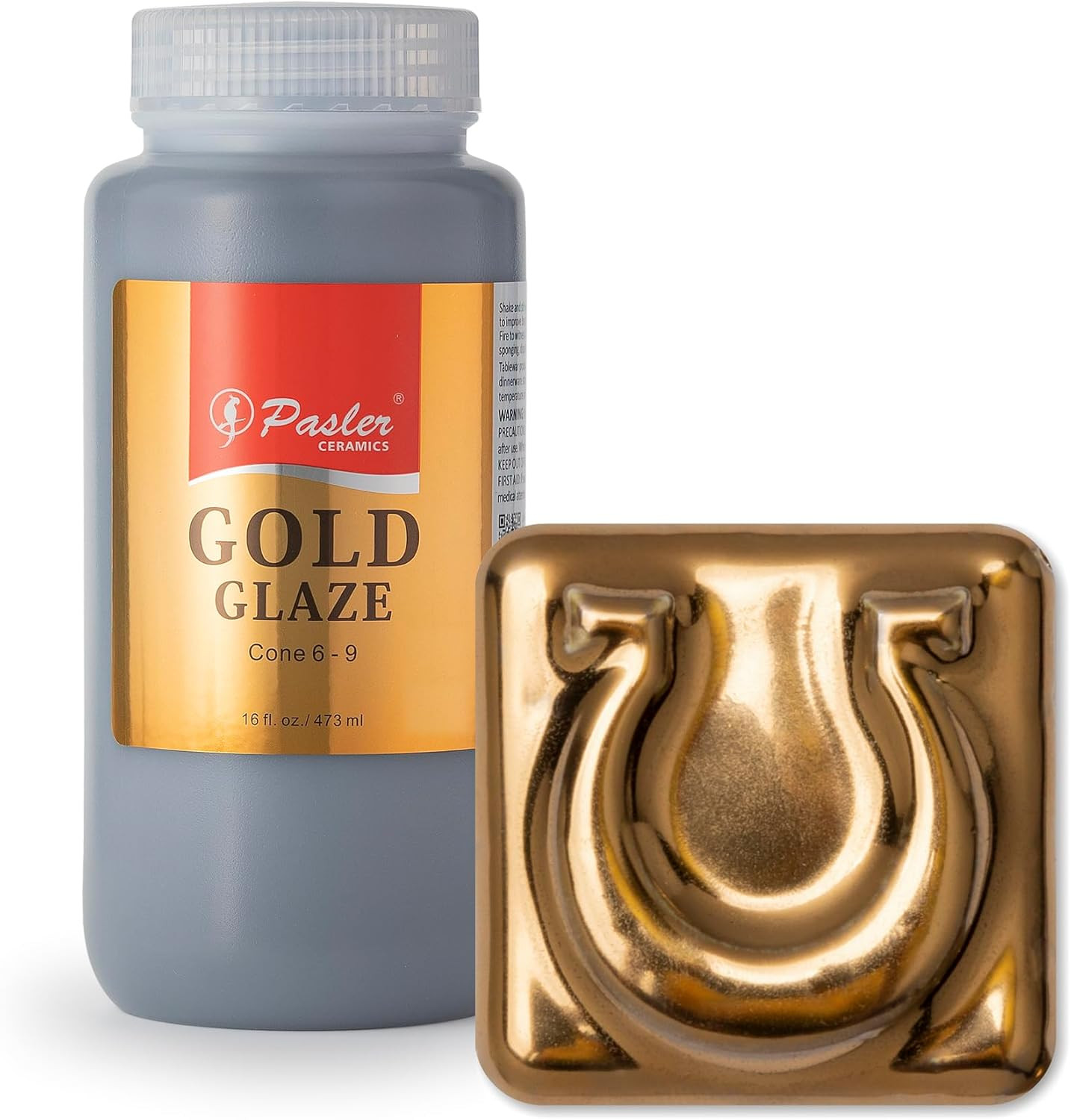

Photos from current listings. Actual item, color, and included accessories may vary.
Gold Glaze Buying Guide
Gold glaze for pottery refers to metallic gold finishes achieved either through genuine precious-metal lustres or through mica/iron-oxide metallic glazes fired in oxidation or reduction. The primary trade-off is authenticity and durability versus cost and firing complexity: real gold lustre requires a third low-temperature firing (700-800°C) and is dishwashing-sensitive, while metallic gold glazes are fired at cone 6-9 and are food-safe only when formulated and tested as such. The clear decision rule: choose genuine gold lustre for decorative, non-food-contact heirloom pieces; choose a food-safe metallic gold glaze for functional ware that must survive daily use.
Key takeaways
- Genuine gold lustre is a liquid bright gold (usually 8-12% gold content) applied over already-fired glaze and requires a separate 700-800°C firing; it is not food-safe and wears under abrasion.
- Metallic gold glazes for cone 6-9 (1200-1280°C) rely on iron oxide, manganese, or mica pigments in a durable glass matrix; food safety depends on the specific recipe's heavy-metal leaching, not the metallic look.
- Application thickness controls the result: lustre goes on thin (a little covers a lot) and pools if over-applied; metallic glazes need 2-3 coats at 0.5-1 mm dry thickness to develop continuous metallic sheen.
At a glance
- Category
- Ceramic Glazes & Colors
- Last updated
- Nov 23, 2026
Current offers
Highlights
- Genuine gold lustre is a liquid bright gold (usually 8-12% gold content) applied over already-fired glaze and requires a separate 700-800°C firing; it is not food-safe and wears under abrasion.
- Metallic gold glazes for cone 6-9 (1200-1280°C) rely on iron oxide, manganese, or mica pigments in a durable glass matrix; food safety depends on the specific recipe's heavy-metal leaching, not the metallic look.
- Application thickness controls the result: lustre goes on thin (a little covers a lot) and pools if over-applied; metallic glazes need 2-3 coats at 0.5-1 mm dry thickness to develop continuous metallic sheen.
- Firing atmosphere determines colour: oxidation yields bronze-gold tones, reduction can shift iron-based golds toward darker metallic brown; lustre firing must be in an electric kiln with good ventilation.
Best use cases
- Best fit: decorative plates, vase rims, and sculptural accents — pick a genuine gold lustre and fire it as a third firing at 700-800°C; skip it for anything that will be scrubbed or dishwashed.
- Best fit: functional mugs, bowls, and dinnerware — pick a cone 6-9 food-safe metallic gold glaze and confirm the manufacturer states food safety for that specific product; skip generic craft-store 'gold' paints.
- Best fit: high-volume studio production — use a mica-based metallic gold glaze at cone 6 in oxidation for repeatable bronze-gold results; skip lustre if you cannot dedicate a separate low-temperature firing.
- Wrong fit: microwave or dishwasher-daily use — skip gold lustre entirely and choose a tested food-safe metallic glaze, accepting a less mirror-bright finish.
Buying tips
- Match the glaze to your kiln's top temperature: cone 6-9 metallic glazes for mid-range stoneware; genuine gold lustre only if you can fire a separate 700-800°C cycle after the main glaze firing.
- For food-contact ware, require an explicit food-safe statement for the exact product; lustres are universally decorative and should be kept off rims and interiors.
- Calculate coverage: a 16 fl oz (approx. 470 ml) bottle of brushing metallic glaze covers roughly 1-1.5 square metres at 2 coats; lustre covers far more area per volume because it is applied thin.
- Check heavy-metal content: lead-free and cadmium-free formulations are the baseline for functional ware; iron- and manganese-based metallic glazes need leaching testing before sale as dinnerware.
Specs
| Gold Type | Lustre (precious metal) vs metallic glaze |
|---|---|
| Firing Range | Cone 6-9 glaze / 700-800°C lustre |
| Food Contact | Lustre decorative / glaze if tested |
| Finish | Mirror-bright lustre vs bronze-gold metallic |
Related searches
What to check before buying
- Confirm your kiln reaches and holds cone 6-9 (1200-1280°C) for metallic glazes, or 700-800°C for a lustre firing — and that you can vent the kiln for lustre fumes.
- Measure your bisque surface area to size the bottle: one 16 fl oz brushing glaze covers about 1-1.5 m² at two coats.
- Verify food-contact status for the specific product; plan lustre only on decorative zones at least 1 cm from food-contact rims.
- Check clay body compatibility: metallic glazes fit mid-range stoneware; lustre adheres best to smooth, already-fired gloss glaze, not raw clay.
FAQ
Data sources: eBay / Amazon listings and product attribute feeds. Updated Nov 23, 2026.
Some links on this page are affiliate links. If you buy after clicking one, we may earn a commission at no extra cost to you. This does not change which products appear here or their order. Affiliate disclosure.