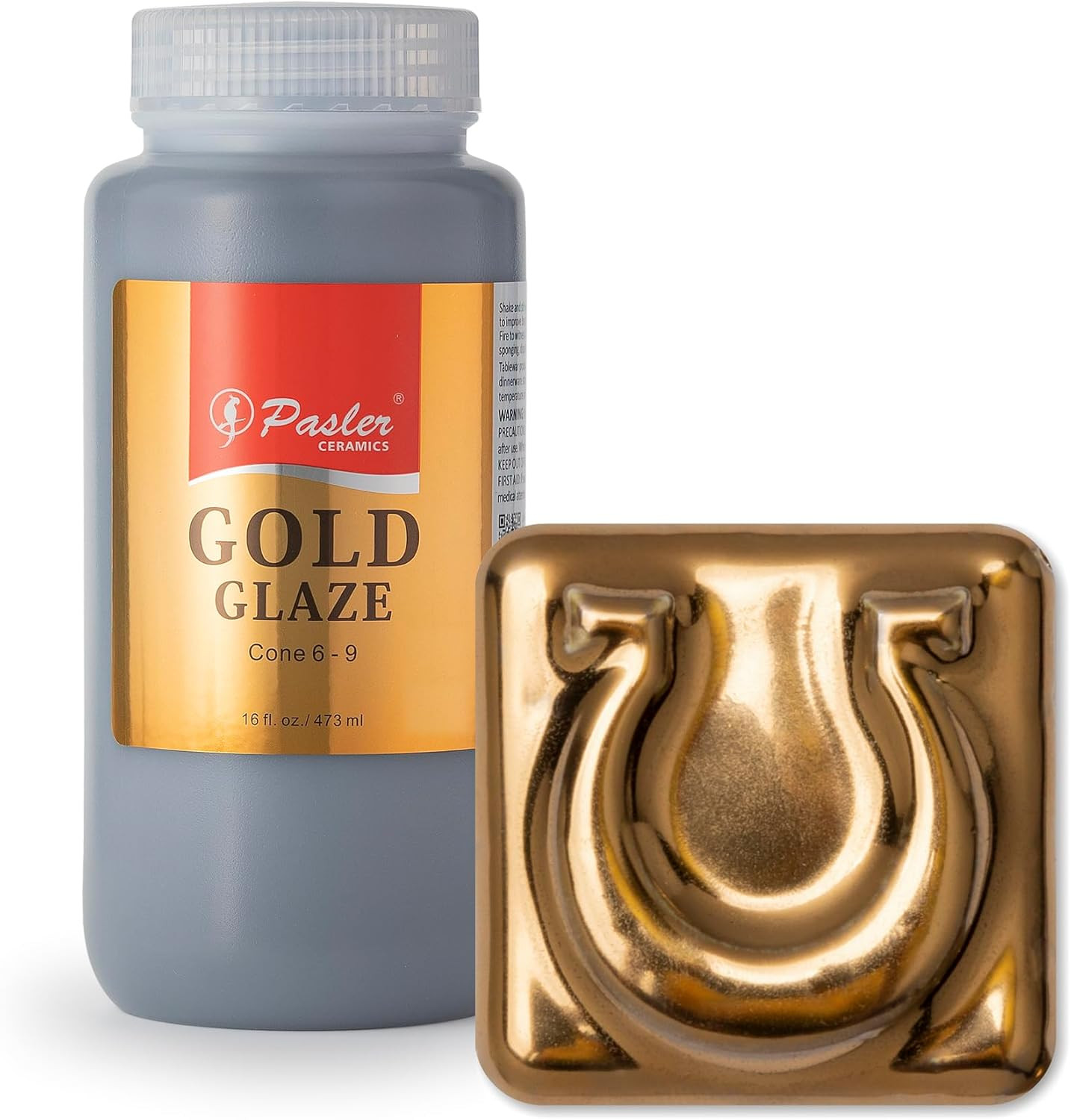

Photos from current listings. Actual item, color, and included accessories may vary.
Gold Glaze Ceramics Buying Guide
Gold glaze ceramics deliver metallic luster on bisque-fired pottery, but the chemistry and firing range dictate whether you get a food-safe gold or a decorative accent. Most buyer mistakes come from applying gold glazes too thickly, firing at the wrong cone, or expecting a bright mirror finish from a glaze that actually fires to a satin bronze. Know your clay body, your kiln's true cone, and the glaze's firing window before you commit a shelf to gold.
Key takeaways
- Gold glazes are typically metallic-oxide or luster-based systems: true gold lusters fire at low temperature (cone 018-022) over already-glazed ware, while gold-toned ceramic glazes fire at cone 6-9 in the main glaze firing.
- Food safety depends on the fired surface: a fully melted, glassy gold glaze at cone 6+ can be food safe, but lusters and raku golds are decorative-only and should never contact food.
- Application thickness controls color: thin coats read as bronze or brown, while 2-3 even coats produce the intended metallic gold; pooling causes blistering and crawling.
At a glance
- Category
- Ceramic Glazes & Colors
- Last updated
- Nov 23, 2026
Current offers
Highlights
- Gold glazes are typically metallic-oxide or luster-based systems: true gold lusters fire at low temperature (cone 018-022) over already-glazed ware, while gold-toned ceramic glazes fire at cone 6-9 in the main glaze firing.
- Food safety depends on the fired surface: a fully melted, glassy gold glaze at cone 6+ can be food safe, but lusters and raku golds are decorative-only and should never contact food.
- Application thickness controls color: thin coats read as bronze or brown, while 2-3 even coats produce the intended metallic gold; pooling causes blistering and crawling.
- Firing atmosphere matters: oxidation yields cleaner gold tones, while reduction can shift gold glazes toward copper-red or dull grey, so match the glaze to your kiln's capability.
Best use cases
- Best fit: decorative mugs, bowls, and sculptural pieces fired in an electric oxidation kiln at cone 6-9 where a food-safe metallic gold is the goal—choose a gloss gold glaze rated for that range.
- Wrong fit: raku or pit-fired work where thermal shock and reduction will destroy the metallic surface—use a low-fire gold luster over a pre-glazed piece instead.
- Best fit: accent detailing on rims and handles where a brush-applied gold glaze adds contrast—pick a glaze with good suspension so it stays put on vertical surfaces.
- Skip: high-volume dinnerware production needing uniform mirror gold—gold ceramic glazes fire to a satin-to-bronze sheen, not a chrome-like luster, so manage expectations or use commercial decals.
Buying tips
- Confirm the glaze's rated cone range against your actual firing schedule; a cone 6-9 glaze underfired to cone 5 will stay matte and underdeveloped, while overfiring can boil the metallic surface.
- Prioritize food-safe labeling only if the piece will touch food or drink; decorative gold glazes often contain barium or other non-food-safe oxides and must be kept off contact surfaces.
- Test on a small tile first: gold glazes are sensitive to clay body chemistry, and a glaze that shines on porcelain may turn muddy on dark stoneware.
- Choose between brush-on and dipping formats based on your production volume; brush-on suits small batches and detail work, while dipping gives more even coverage on larger runs.
Specs
| Firing Range | Cone 6-9 (mid-fire) vs low-fire luster |
|---|---|
| Food Safety | Food-safe if rated; lusters decorative-only |
| Finish Type | Metallic satin-to-bronze, not mirror chrome |
| Application | Brush-on 2-3 coats vs dipping |
Related searches
What to check before buying
- Measure your kiln's interior and shelf space—gold glaze firings need room for test tiles and proper venting, especially if the glaze contains metallic oxides.
- Verify your clay body's maturation temperature matches the glaze cone; a cone 6-9 gold glaze on cone 10 clay will underfire and craze.
- Check that your kiln can hold the required atmosphere (oxidation for most gold glazes) and that you have proper ventilation for metallic oxide fumes.
- Confirm you have the companion materials—proper brushes, mixing containers, and safety gear (mask, gloves) for handling metallic oxide glazes.
FAQ
Data sources: eBay / Amazon listings and product attribute feeds. Updated Nov 23, 2026.
Some links on this page are affiliate links. If you buy after clicking one, we may earn a commission at no extra cost to you. This does not change which products appear here or their order. Affiliate disclosure.