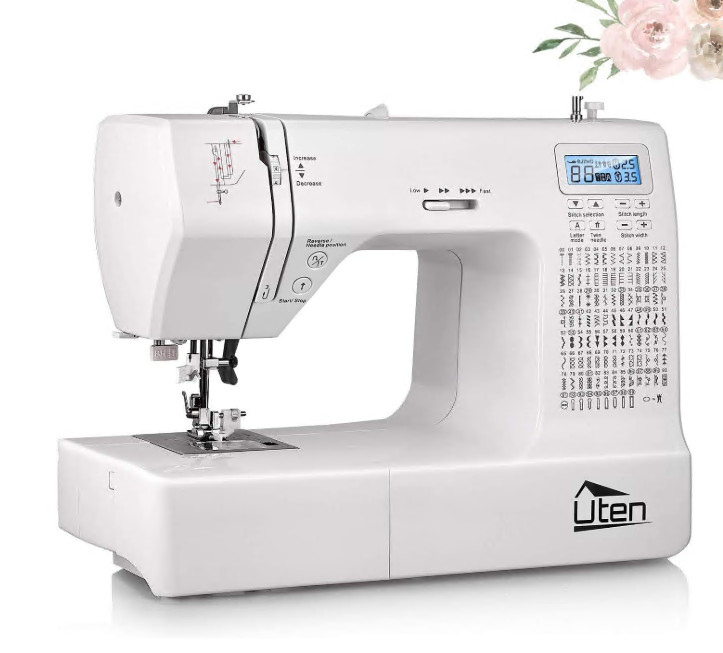

Photos from current listings. Actual item, color, and included accessories may vary.
Computerized Sewing And Embroidery Machine Buying Guide
A computerized sewing and embroidery machine combines stitch-programmable sewing with hooped embroidery, where the decisive trade-off is hoop size and stitch-file ecosystem versus motor durability and stitch quality. Entry machines cap at 4x4-inch hoops and plastic frames, while serious units offer 5x7 or larger hoops, metal bobbin cases, and USB file transfer. Choose by maximum hoop area and stitch-file compatibility first, then by motor and feed-system build.
Key takeaways
- Hoop size defines capability: 4x4-inch (100x100mm) hoops suit monograms and small motifs; 5x7-inch (130x180mm) and larger hoops are required for garment backs and multi-color designs.
- Stitch-file format determines design access: machines reading .PES/.PEC/.DST via USB or direct PC connection accept commercial design libraries; closed-format machines restrict you to built-in or cartridges.
- Bobbin system and feed dogs separate tiers: top-loading metal bobbin cases with adjustable bobbin tension and 7-point feed dogs hold stitch consistency on knits and multiple layers.
At a glance
- Category
- Craft Cutting, Embroidery & Heat Press Machines
- Last updated
- Nov 29, 2026
Current offers
Highlights
- Hoop size defines capability: 4x4-inch (100x100mm) hoops suit monograms and small motifs; 5x7-inch (130x180mm) and larger hoops are required for garment backs and multi-color designs.
- Stitch-file format determines design access: machines reading .PES/.PEC/.DST via USB or direct PC connection accept commercial design libraries; closed-format machines restrict you to built-in or cartridges.
- Bobbin system and feed dogs separate tiers: top-loading metal bobbin cases with adjustable bobbin tension and 7-point feed dogs hold stitch consistency on knits and multiple layers.
- Stitch count and speed ratings are marketing figures; real throughput depends on needle-thread combination, hoop stability, and whether the machine auto-trims jump stitches between color blocks.
Best use cases
- Best fit: home sewists embroidering monograms, kids' clothing, and small gifts should pick a 4x4-inch hoop machine with 100+ built-in stitches and USB design import; skip large-hoop models that add cost without adding usable workspace.
- Best fit: small-business crafters selling personalized towels, hats, and left-chest logos need a 5x7-inch minimum hoop, auto thread trimmer, and .PES/.DST import; skip 4x4-only machines that cannot fit standard garment placements.
- Best fit: quilters and garment sewers who mainly sew and occasionally embroider should prioritize sewing-side features—needle-up/down, speed control, and a wide extension table—over embroidery hoop count.
- Wrong fit: production embroidery of full jacket backs or continuous multi-hoop runs requires a dedicated multi-needle commercial embroidery machine; single-needle combo units require manual color changes and cannot match that throughput.
Buying tips
- Match hoop to your largest planned design: a 4x4-inch hoop embroiders roughly a 3.5-inch-wide motif; standard left-chest logos need 4x4, while cap fronts and medium back designs need 5x7 or larger.
- Confirm design transfer method before buying: USB-A flash import and direct PC connection via .PES/.DST are the practical standards; cartridge-only or app-only ecosystems limit access to purchased design files.
- Check bobbin and needle system: front-loading metal Class 15 bobbins with adjustable tension are more serviceable and consistent than proprietary snap-in plastic bobbins on budget tiers.
- For sewing-heavy use, verify feed-dog drop for free-motion work and adjustable presser-foot pressure; these two features separate capable sewing machines from embroidery-first units.
Specs
| Max Embroidery Field | 4x4 in (100x100mm) to 5x7 in (130x180mm) |
|---|---|
| Design File Formats | .PES / .PEC / .DST / .JEF via USB |
| Bobbin System | Top-loading metal Class 15 vs plastic |
| Built-in Stitch Count | 100–200 stitches; 8 buttonholes typical |
Related searches
What to check before buying
- Measure your workspace: embroidery machines need clearance behind and beside the machine for the hoop to move through its full embroidery field without hitting walls or shelving.
- Confirm your largest intended design dimensions against the machine's maximum hoop size, not the included hoop size—many machines ship with a small hoop and sell larger ones separately.
- Verify power and plug standard for your region and check that the machine's voltage label matches your outlet; embroidery motors are not universally dual-voltage.
- Account for companion parts: embroidery stabilizer, additional bobbins, embroidery-only needles, and a hoop-gripping surface are required consumables beyond the machine itself.
FAQ
Data sources: eBay / Amazon listings and product attribute feeds. Updated Nov 29, 2026.
Some links on this page are affiliate links. If you buy after clicking one, we may earn a commission at no extra cost to you. This does not change which products appear here or their order. Affiliate disclosure.