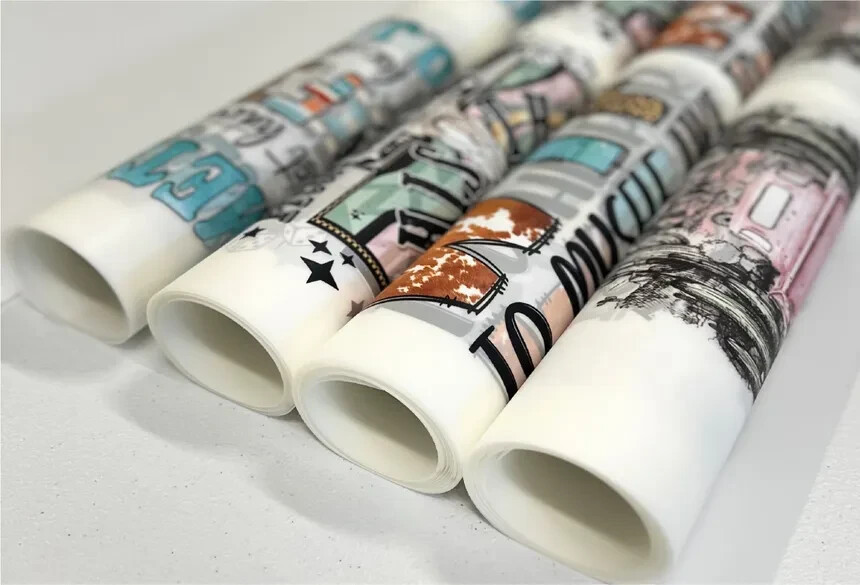

Photos from current listings. Actual item, color, and included accessories may vary.
Custom Heat Transfer Buying Guide
Custom heat transfer is the process of applying a pre-printed or cut design to fabric using heat and pressure, primarily via DTF (direct-to-film), HTV (heat transfer vinyl), or sublimation. The core trade-off is between DTF's full-color, no-weeding workflow and HTV's durable, layered vinyl approach, with sublimation limited to polyester. Choose DTF for complex multicolor designs on cotton blends; choose HTV for bold single-color graphics and athletic numbers.
Key takeaways
- DTF transfers use a PET film with TPU adhesive powder; they bond to cotton, poly, and blends but require a heat press at 300-325°F for 10-15 seconds with heavy pressure.
- HTV (polyurethane or PVC) is cut and weeded, then pressed at 305-320°F for 10-15 seconds; PU vinyl outlasts PVC on stretch fabrics and holds 50+ washes when applied correctly.
- Sublimation inks only bond to polyester or polymer-coated substrates; on 100% cotton, the design fades to near-invisible after a few washes without a poly-spray pretreatment.
At a glance
- Category
- Craft Cutting, Embroidery & Heat Press Machines
- Last updated
- Nov 29, 2026
Current offers
Highlights
- DTF transfers use a PET film with TPU adhesive powder; they bond to cotton, poly, and blends but require a heat press at 300-325°F for 10-15 seconds with heavy pressure.
- HTV (polyurethane or PVC) is cut and weeded, then pressed at 305-320°F for 10-15 seconds; PU vinyl outlasts PVC on stretch fabrics and holds 50+ washes when applied correctly.
- Sublimation inks only bond to polyester or polymer-coated substrates; on 100% cotton, the design fades to near-invisible after a few washes without a poly-spray pretreatment.
- A clamshell or swing-away heat press with digital temperature and pressure control is mandatory; household irons lack consistent pressure and typically yield partial adhesion and early peeling.
Best use cases
- Best fit: DTF for small-batch custom t-shirts with photographic or multicolor designs on cotton—no weeding, no color limits, and a single press step.
- Best fit: HTV for team jerseys, numbers, and single-color logos where durability on stretch knits matters; use PU vinyl on polyester blends.
- Wrong fit: Sublimation on dark or 100% cotton shirts—results are washed-out or invisible; stick to white polyester or coated mugs.
- Skip: Hand-cutting HTV with scissors for intricate logos; use a vinyl cutter for clean edges and consistent weeding.
Buying tips
- Match transfer type to fabric: DTF for cotton/poly blends and complex art; HTV for stretch performance and single-color; sublimation for 100% polyester only.
- Buy a heat press with at least a 15x15-inch platen and adjustable pressure (8-10 psi typical); a 12x15-inch clamshell handles most shirts but limits oversized prints.
- For DTF, order transfers sized to your platen and shirt zone—oversized films need a larger press or multiple passes that risk uneven adhesion.
- Check vinyl thickness: 2-3 mil PU vinyl is standard for shirts; 4+ mil is for heavy canvas bags and won't drape on tees.
Specs
| Transfer Type | DTF / HTV / Sublimation |
|---|---|
| Fabric Compatibility | Cotton-Poly / Knit / Poly-only |
| Press Temp Range | 300-325°F (150-160°C) |
| Press Time | 10-15 sec (DTF & HTV) |
Related searches
What to check before buying
- Measure your press platen and shirt print area—DTF films and HTV sheets must fit within the platen with 1-2 inches margin for even pressure.
- Confirm fabric composition before ordering transfers: DTF works on cotton/poly blends; sublimation requires ≥65% polyester for vivid, wash-fast color.
- Verify your heat press reaches 320°F (160°C) and holds ±5°F; DTF and HTV both need stable temperature for consistent peel.
- For DTF, ensure a ventilated workspace and a lint roller—film picks up lint and dust that cause adhesion failures.
FAQ
Data sources: eBay / Amazon listings and product attribute feeds. Updated Nov 29, 2026.
Some links on this page are affiliate links. If you buy after clicking one, we may earn a commission at no extra cost to you. This does not change which products appear here or their order. Affiliate disclosure.