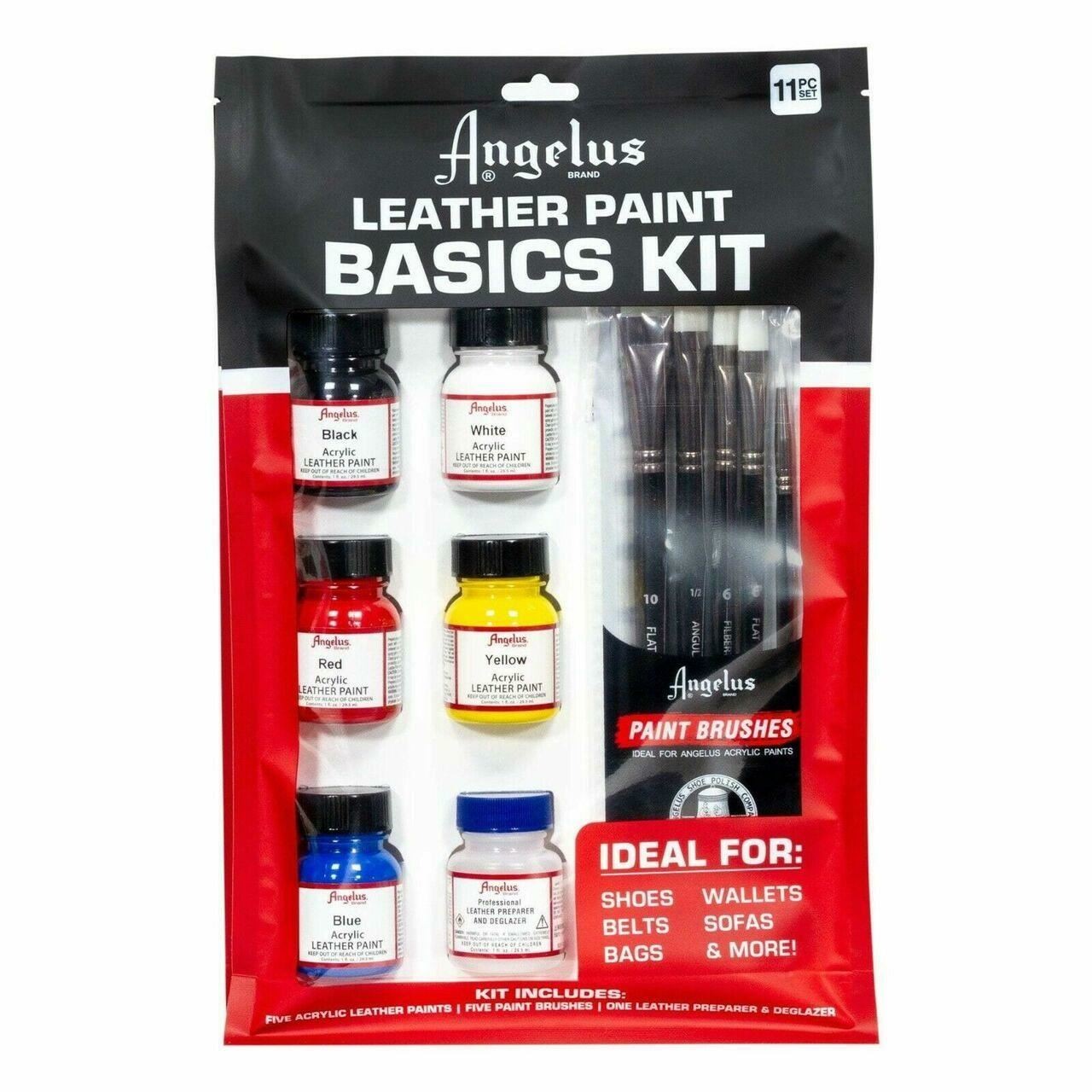

Photos from current listings. Actual item, color, and included accessories may vary.
Leather Dye Buying Guide
Leather dye is a penetrating, translucent colorant that restores or changes the color of finished leather by soaking into the hide rather than sitting on top. The core trade-off is penetration and flexibility versus surface-level coverage: alcohol-based dyes bond into the fibers for a factory-like finish, while water-based dyes are lower-odor and more forgiving for beginners. The decision rule is simple: choose a penetrating dye for color restoration on absorbent leather, and step up to a pigmented leather paint or finish only for worn, coated, or corrected-grain surfaces that dye cannot absorb.
Key takeaways
- Alcohol-based penetrating dyes (e.g., Fiebing's Leather Dye) thin with isopropyl alcohol and dry in minutes, while water-based dyes (e.g., Angelus Leather Dye) clean up with water and have far lower VOC odor.
- Acrylic leather paints (e.g., Angelus Acrylic Leather Paint) are opaque surface coatings, not penetrating dyes, and require a deglazer prep plus a sealer for durability on coated or corrected-grain leather.
- Dye absorption depends on the leather finish: full-grain and vegetable-tanned hides absorb deeply, while corrected-grain, bonded, and patent leathers resist dye and need surface paint instead.
At a glance
- Category
- Leather Dyes & Edge Finishes
- Last updated
- Nov 23, 2026
Current offers
Highlights
- Alcohol-based penetrating dyes (e.g., Fiebing's Leather Dye) thin with isopropyl alcohol and dry in minutes, while water-based dyes (e.g., Angelus Leather Dye) clean up with water and have far lower VOC odor.
- Acrylic leather paints (e.g., Angelus Acrylic Leather Paint) are opaque surface coatings, not penetrating dyes, and require a deglazer prep plus a sealer for durability on coated or corrected-grain leather.
- Dye absorption depends on the leather finish: full-grain and vegetable-tanned hides absorb deeply, while corrected-grain, bonded, and patent leathers resist dye and need surface paint instead.
- Edge finishing is a separate step: water-based edge paints and wax-based edge finishes seal cut leather edges, and a dye must be fully dry and buffed before any topcoat or finish is applied.
Best use cases
- Restoring faded black leather boots or a worn couch: choose a penetrating alcohol-based dye in the closest matching shade, and skip acrylic paint on full-grain leather where it will crack.
- Recoloring a coated or corrected-grain car seat or handbag: use a deglazer, then a flexible acrylic leather paint plus a sealer, and skip penetrating dye because it cannot absorb through the factory finish.
- Small touch-ups on purses or accents: a dye pen or small dye bottle with a wool dauber gives controlled application, and skip large kits unless you are doing a full panel or piece.
- Full furniture or automotive restoration: choose a kit with deglazer, dye or paint, and a finish in one box, and skip single-bottle dyes that lack prep and sealing products.
Buying tips
- Match the dye type to the leather finish: penetrating dyes for full-grain and vegetable-tanned leather, acrylic paints for corrected-grain, bonded, and patent leather.
- Buy a deglazer alongside any dye or paint; factory finishes and oils block absorption and cause blotchy, uneven color.
- Choose alcohol-based dyes for deep, durable color on absorbent leather and water-based dyes for low-odor indoor use with easy water cleanup.
- Plan a sealer or topcoat (acrylic finisher or wax-based edge finish) for any high-wear area such as car seats, couch cushions, and boot toes.
Specs
| Dye Chemistry | Alcohol-based vs Water-based |
|---|---|
| Leather Compatibility | Full-grain / Veg-tan vs Coated |
| Finish Type | Penetrating Dye vs Acrylic Paint |
| Kit Contents | Dye only vs Prep + Dye + Sealer |
Related searches
What to check before buying
- Identify your leather type before buying: full-grain and vegetable-tanned absorb dye, while corrected-grain, bonded, and patent leathers require surface paint.
- Check the item's size and surface area to estimate dye volume; a small bottle covers touch-ups, while full couches and car seats need larger bottles or kits.
- Confirm indoor ventilation and drying space, since alcohol-based dyes produce strong fumes and need airflow during application and curing.
- Gather application tools: wool daubers, foam brushes, gloves, and a deglazer, plus a sealer or edge finish for durability.
FAQ
Data sources: eBay / Amazon listings and product attribute feeds. Updated Nov 23, 2026.
Some links on this page are affiliate links. If you buy after clicking one, we may earn a commission at no extra cost to you. This does not change which products appear here or their order. Affiliate disclosure.