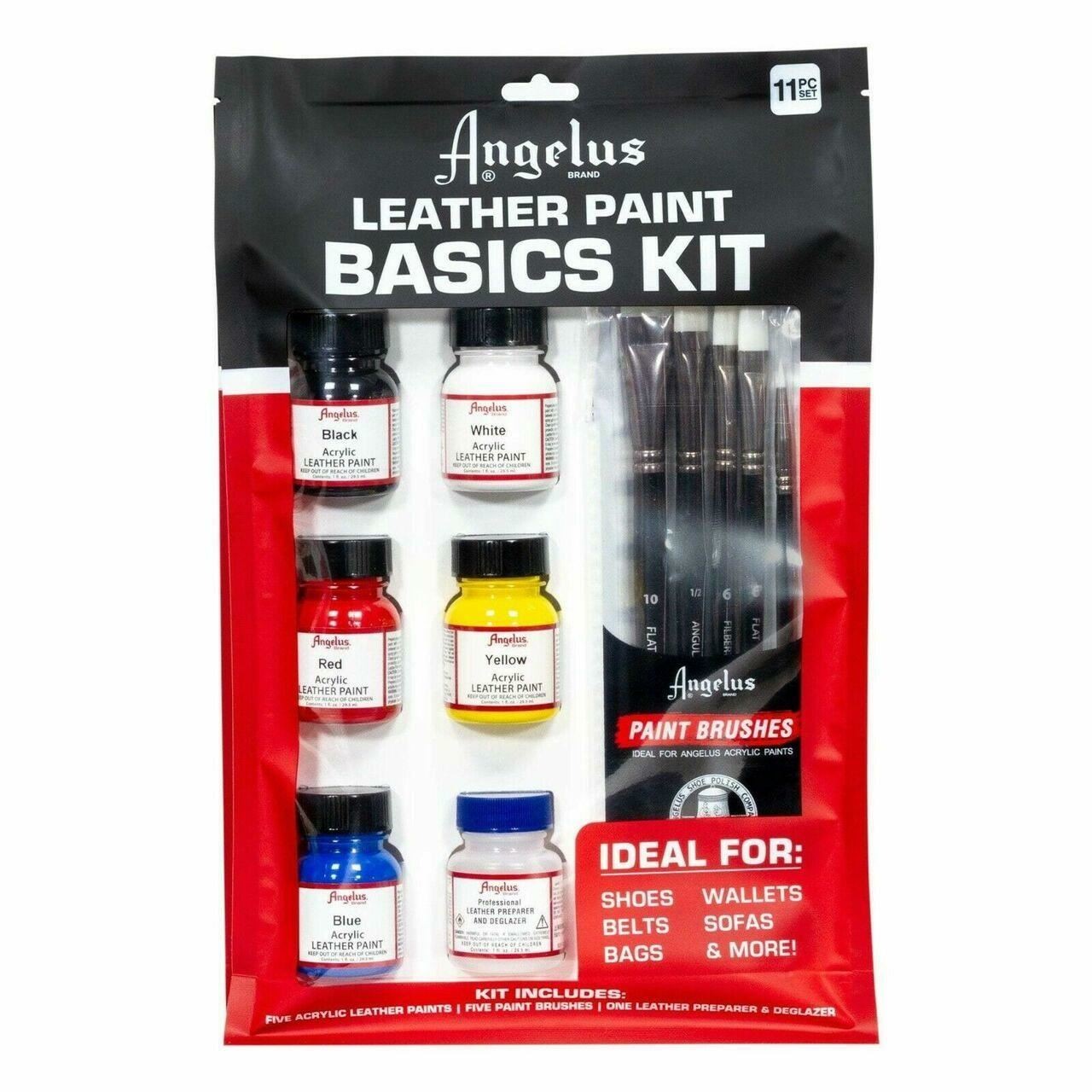

Photos from current listings. Actual item, color, and included accessories may vary.
Leather Paint Buying Guide
Leather paint is a flexible acrylic coating that restores or recolors finished leather upholstery, auto interiors, and footwear when the surface is intact but faded or dyed unevenly. Performance hinges on acrylic flexibility and adhesion, not color coverage; weak binders crack at seams and flex points. Choose a paint explicitly rated for flexing leather and pair it with a dedicated top coat; skip all-purpose craft acrylics.
Key takeaways
- Flex-rated acrylics use elastomeric binders that stretch with leather; standard craft acrylics cure rigid and crack at stitching and seat bolsters.
- Angelus acrylics are the benchmark for sneaker and auto leather, thinned with their preparer and deglazer for adhesion on factory finishes.
- Matte and satin top coats add abrasion and UV resistance; unsealed leather paint wears through on high-friction areas like bolsters and steering wheels.
At a glance
- Category
- Leather Dyes & Edge Finishes
- Last updated
- Nov 23, 2026
Current offers
Highlights
- Flex-rated acrylics use elastomeric binders that stretch with leather; standard craft acrylics cure rigid and crack at stitching and seat bolsters.
- Angelus acrylics are the benchmark for sneaker and auto leather, thinned with their preparer and deglazer for adhesion on factory finishes.
- Matte and satin top coats add abrasion and UV resistance; unsealed leather paint wears through on high-friction areas like bolsters and steering wheels.
- Water-based leather paints need 24-72 hours full cure before flex testing; solvent-based systems bite faster but require ventilation and respirators.
Best use cases
- Sofa and couch recoloring: pick a flex-rated water-based acrylic in a full-coverage kit with preparer and top coat; skip generic craft acrylics that crack at cushion seams.
- Car seats and steering wheels: use an auto-rated leather paint plus a matte or satin top coat; skip products without UV or abrasion ratings, which fade and wear on bolsters.
- Shoes and sneakers: choose Angelus-style acrylics thinned and applied in thin coats; skip thick single-pass applications that crack at toe creases.
- Not for suede, nubuck, or aniline leather: paint sits on top and alters nap; use a suede dye instead.
Buying tips
- Match the paint system to the leather finish: pigmented or corrected-grain leather accepts acrylic paint; aniline and suede need dyes, not paint.
- Buy a kit with preparer, paint, and top coat; missing prep steps is the top cause of peeling on factory-finished leather.
- For sofas, one 1000 ml kit covers roughly a two- to three-seat couch in two thin coats; order extra for sectional or dark-to-light color changes.
- Apply multiple thin coats rather than one thick coat; thick acrylic pools at seams and cracks under flex.
Specs
| Binder Type | Flex-rated acrylic vs craft acrylic |
|---|---|
| Finish | Matte / Satin / Gloss top coat |
| Coverage | ~1000 ml per 2-3 seat sofa |
| Leather Type | Finished pigmented only |
Related searches
What to check before buying
- Confirm the leather is finished (pigmented) by testing a hidden area: a drop of water beads on finished leather and absorbs on aniline.
- Measure the item's surface area and color change: dark-to-light recoloring requires more coats and additional paint volume.
- Check that the kit includes a deglazer or preparer and a top coat; these are required for adhesion and wear resistance.
- Work in a ventilated space; water-based paints are low-odor but solvent-based systems require respiratory protection.
FAQ
Data sources: eBay / Amazon listings and product attribute feeds. Updated Nov 23, 2026.
Some links on this page are affiliate links. If you buy after clicking one, we may earn a commission at no extra cost to you. This does not change which products appear here or their order. Affiliate disclosure.