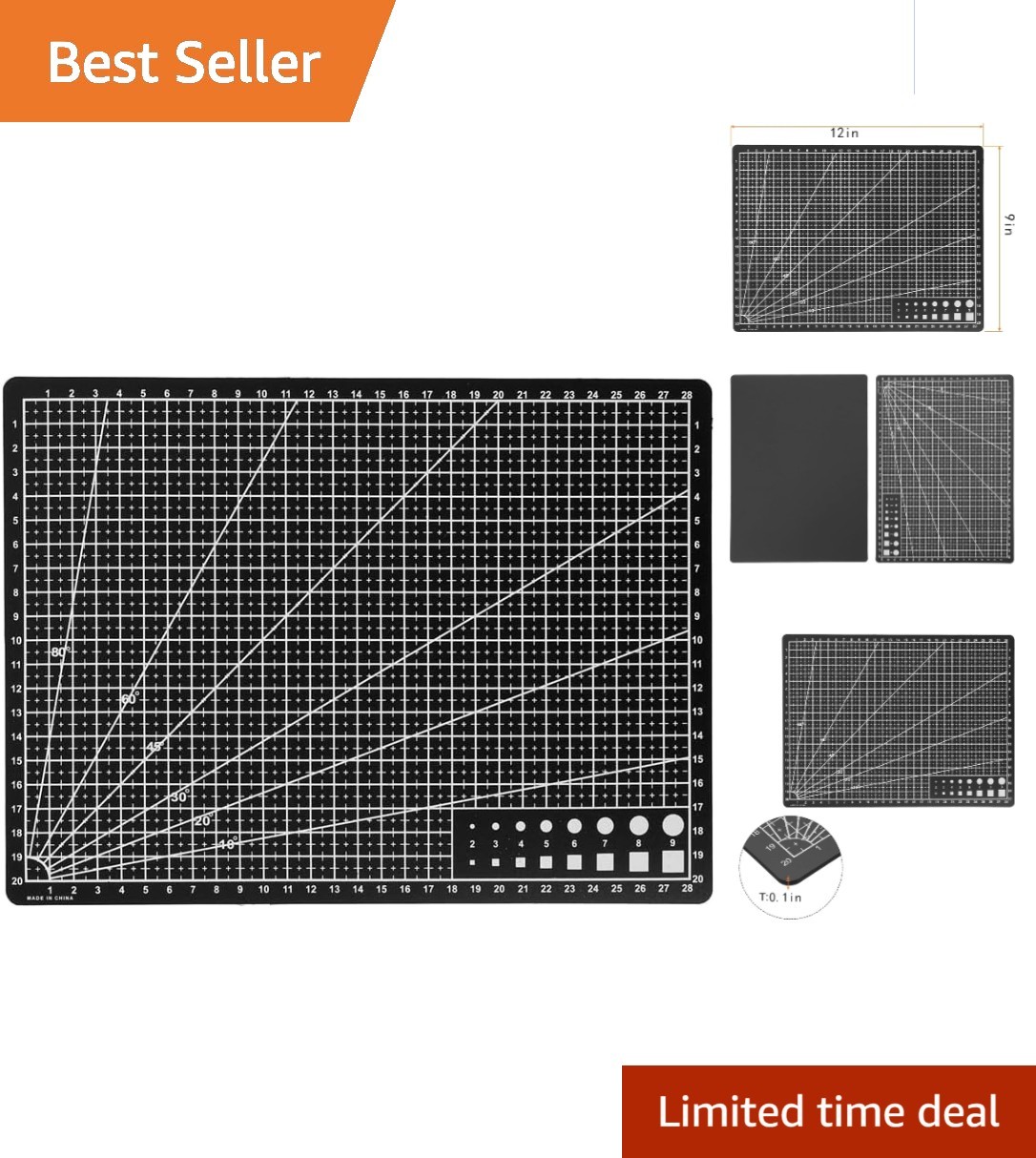

Photos from current listings. Actual item, color, and included accessories may vary.
Cutting Mat Buying Guide
A cutting mat is a sacrificial polymer surface that protects your table and keeps rotary blades sharp by self-healing after each cut. The core trade-off is mat thickness and layer count versus flatness: 3-layer mats are thin and cheap but groove and warp; 5-layer PVC mats with a rigid core stay flat and survive thousands of cuts. Buy a 5-layer double-sided mat sized to your widest fabric fold; skip 3-layer mats if you rotary cut more than occasionally.
Median $14.69
Key takeaways
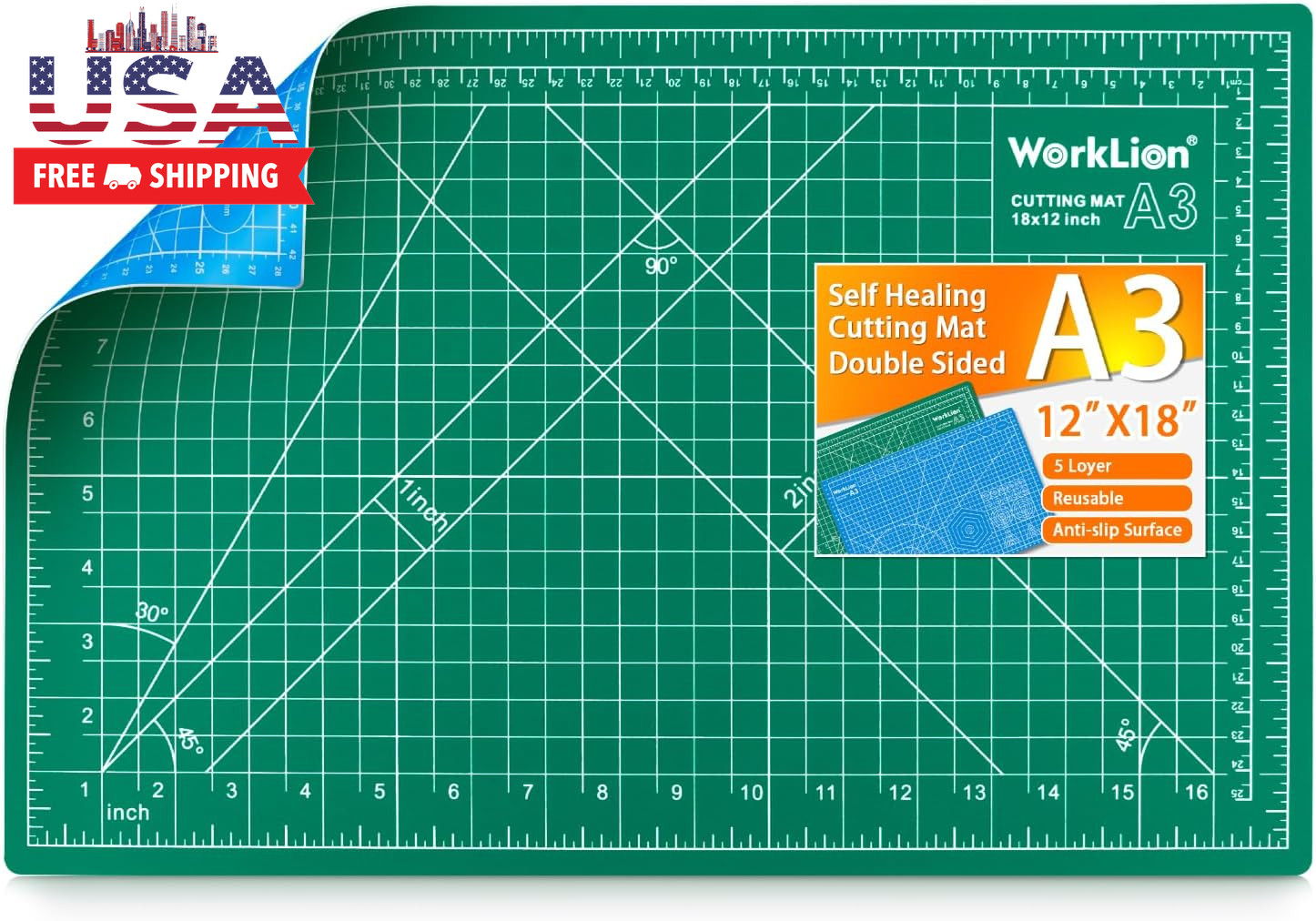
- 5-layer construction (two self-healing PVC skins, a rigid core, and two grid-printed surfaces) resists blade grooves and stays flat; 3-layer mats are single-density and cup over time.
- Thickness separates tiers: 3 mm mats suit light paper crafts; 4.5-5 mm mats absorb rotary pressure for garment and quilt cutting without cutting through.
- Double-sided mats double life: rotate to the second grid when the first shows fuzzy white grooves; single-sided mats are retired after one face wears.
At a glance
- Category
- Rotary Cutting Tools & Mats
- Last updated
- Nov 24, 2026
Current offers
Highlights
- 5-layer construction (two self-healing PVC skins, a rigid core, and two grid-printed surfaces) resists blade grooves and stays flat; 3-layer mats are single-density and cup over time.
- Thickness separates tiers: 3 mm mats suit light paper crafts; 4.5-5 mm mats absorb rotary pressure for garment and quilt cutting without cutting through.
- Double-sided mats double life: rotate to the second grid when the first shows fuzzy white grooves; single-sided mats are retired after one face wears.
- Grid accuracy depends on printed 1-inch squares with 1/8-inch subdivisions and 30/45/60-degree angle lines; mats without degree markings force separate ruler work.
Best use cases
- Quilting and garment sewing: choose an 18x24 in or larger 5-layer mat so a folded 44-in fabric width fits without repositioning; skip 9x12 mats for yardage.
- Small craft, die-cutting, and card making: a 9x12 in 3 mm double-sided mat is enough and stores flat in a drawer; skip oversize mats that overwhelm a small desk.
- Rotary cutting at a dedicated station: pick a 24x36 in 5-layer mat with grid and angle lines for full-width fabric and pattern drafting; skip thin mats that slide under pressure.
Buying tips
- Size to your fabric: a 44-in folded width needs at least 18x24 in usable grid; 24x36 in covers full yardage and pattern pieces without shifting.
- Choose 5-layer PVC over 3-layer for rotary work; the rigid core prevents the mat from bowing and keeps blade depth consistent cut to cut.
- Confirm the grid is printed on both faces with 1-inch squares and 45/60-degree lines; single-face grids halve mat life and limit angled cuts.
- Match mat thickness to blade pressure: 3 mm for light trims and paper, 4.5-5 mm for multi-layer fabric and repeated rotary passes.
Specs
| Layer Construction | 5-layer rigid core vs 3-layer single density |
|---|---|
| Mat Thickness | 3 mm craft / 4.5-5 mm rotary fabric |
| Common Sizes | 9x12 / 18x24 / 24x36 in |
| Grid & Markings | 1-in squares, 1/8-in marks, 45/60 deg lines |
Related searches
What to check before buying
- Measure your table and storage: a 24x36 in mat needs a 30x42 in clear surface and a flat storage spot; a 9x12 in mat fits a standard drawer.
- Check fabric width: standard quilting cotton is 44 in wide, so an 18x24 in mat handles folded widths while 24x36 in handles full layout.
- Verify surface material: PVC self-healing mats are standard for rotary blades; avoid thin PE mats that groove permanently under a rotary cutter.
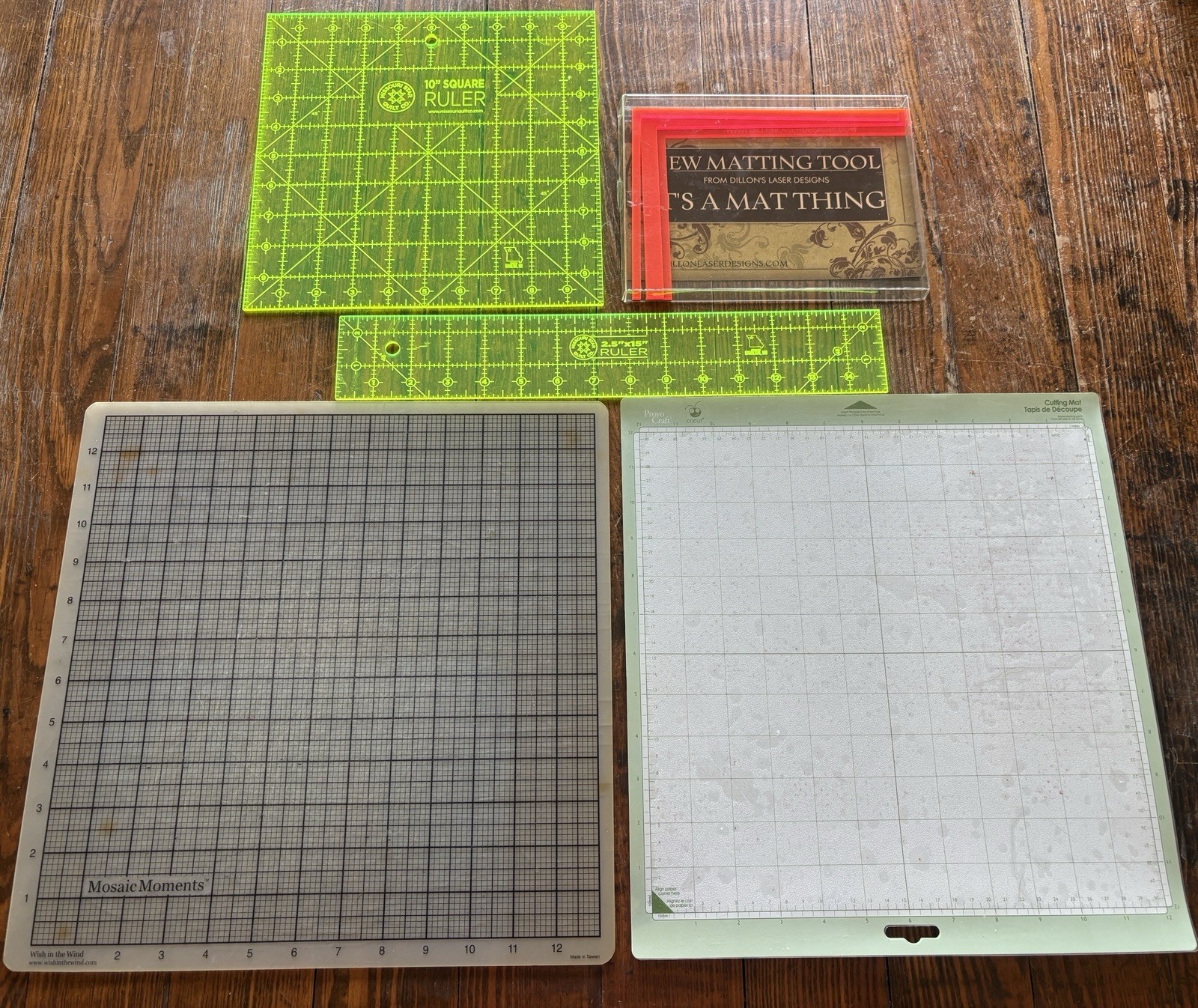
- Plan companion tools: a clear acrylic ruler at least as long as the mat's short side and a 45 mm rotary cutter fit standard mat grids.
FAQ
Data sources: eBay / Amazon listings and product attribute feeds. Updated Nov 24, 2026.
Some links on this page are affiliate links. If you buy after clicking one, we may earn a commission at no extra cost to you. This does not change which products appear here or their order. Affiliate disclosure.