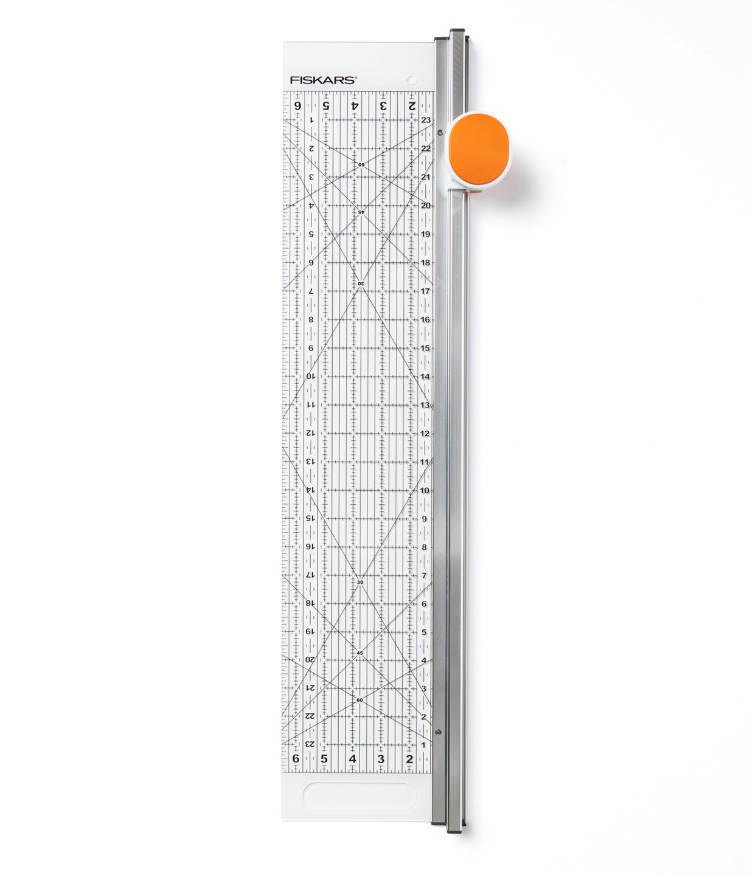

Photos from current listings. Actual item, color, and included accessories may vary.
Rotary Cutter Buying Guide
A rotary cutter is a rolling-blade fabric and craft tool defined by blade diameter (18mm, 28mm, 45mm, 60mm) and handle ergonomics; the core trade-off is between blade-size precision versus multi-layer cutting capacity and safety-lock complexity. Buy 45mm as the universal default for quilting and fabric, 60mm only for thick multi-layer or batting work, and 28mm for curves and appliqué — anything without a spring-loaded retract or dual-action safety lock is a compromise.
Key takeaways
- Blade diameter drives cut capacity: 45mm handles 6-8 fabric layers, 60mm handles 10-12 layers or thick batting, 28mm excels at curves and templates, 18mm for fine detail.
- Handle architecture splits into straight, ergonomic offset, and squeeze-trigger models; offset handles reduce wrist strain during long quilting sessions by keeping the forearm neutral.
- Blade steel grade matters: premium cutters use hardened stainless or tungsten-carbide-edged blades that hold sharpness through hundreds of cuts; budget blades dull in dozens of passes and skip threads.
At a glance
- Category
- Rotary Cutting Tools & Mats
- Last updated
- Nov 24, 2026
Current offers
Highlights
- Blade diameter drives cut capacity: 45mm handles 6-8 fabric layers, 60mm handles 10-12 layers or thick batting, 28mm excels at curves and templates, 18mm for fine detail.
- Handle architecture splits into straight, ergonomic offset, and squeeze-trigger models; offset handles reduce wrist strain during long quilting sessions by keeping the forearm neutral.
- Blade steel grade matters: premium cutters use hardened stainless or tungsten-carbide-edged blades that hold sharpness through hundreds of cuts; budget blades dull in dozens of passes and skip threads.
- Safety systems differ: spring-loaded auto-retract (blade retracts the instant grip releases) is the durable standard; manual slide-lock and screw-clamp designs are cheaper but prone to accidental exposure.
Best use cases
- Quilting and patchwork: pick a 45mm ergonomic offset cutter with auto-retract and a 6x24-inch acrylic ruler — the 45mm clears standard 6-layer quilt sandwiches and the ruler's 24-inch length handles full width-of-fabric strips.
- Thick multi-layer and batting: step up to a 60mm cutter; its larger blade and wider handle gap clear 10-12 layers or high-loft batting that stalls a 45mm mid-cut.
- Curves, appliqué, and small templates: use a 28mm cutter — the smaller diameter tracks tight curves and notches without overcutting; skip 60mm here as it cannot turn inside small radii.
- Cardboard and light craft: a 45mm cutter with a dedicated blade handles single-wall cardboard, but skip it for corrugated multi-wall — that requires a utility knife or heavy-duty 60mm with reinforced blade.
Buying tips
- Match blade to layer count: 28mm for 1-3 layers and curves, 45mm for 4-8 layers (the quilting standard), 60mm for 9-12 layers or batting; buying one 45mm covers 80% of fabric cutting.
- Choose an ergonomic offset handle if you cut more than 30 minutes per session — the raised grip keeps your wrist straight and reduces fatigue; straight handles suit short, precise work.
- Confirm blade compatibility before buying replacement packs: 45mm blades are near-universal across brands, but 60mm and 28mm mounting hubs vary — buy blades matched to your cutter's brand or a verified universal-fit pack.
- Prioritize a spring-loaded auto-retract safety mechanism over a manual slide lock; auto-retract eliminates the most common rotary-cutter injury — the blade left exposed between cuts.
Specs
| Blade Diameter | 18mm / 28mm / 45mm / 60mm |
|---|---|
| Handle Style | Straight / Ergonomic offset |
| Safety Lock | Spring auto-retract / Manual slide |
| Max Cut Layers | 45mm: 6-8 layers; 60mm: 10-12 |
Related searches
What to check before buying
- Cutting mat size: your cutter's blade diameter must clear the mat's thickness and your project width — a 45mm cutter pairs with an 18x24-inch or larger self-healing mat; a 6x24-inch ruler handles full-width strips.
- Ruler and mat compatibility: verify your acrylic ruler is at least as long as your widest cut and marked with 1/8-inch or finer grid; rotary cutting accuracy depends on ruler edge thickness matching mat groove depth.
- Hand dominance and grip: left-handed buyers need an ambidextrous or left-handed cutter — most offset ergonomic models are right-hand-only and will angle the blade incorrectly for left-hand use.
- Blade storage and replacement supply: confirm the cutter ships with a blade guard or storage case and that replacement blades are sold in multi-packs; a dull blade is the leading cause of skipped threads and fabric pulls.
FAQ
Data sources: eBay / Amazon listings and product attribute feeds. Updated Nov 24, 2026.
Some links on this page are affiliate links. If you buy after clicking one, we may earn a commission at no extra cost to you. This does not change which products appear here or their order. Affiliate disclosure.