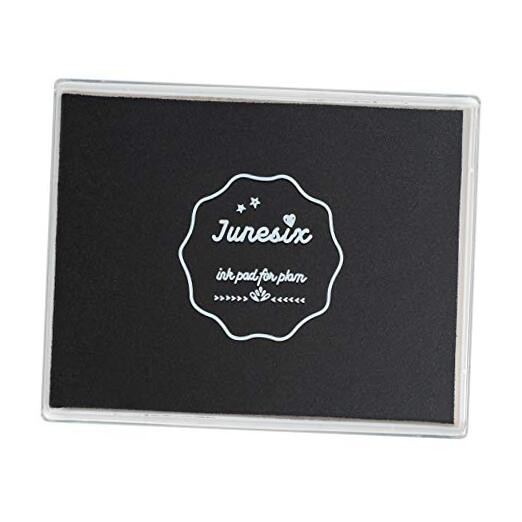

Photos from current listings. Actual item, color, and included accessories may vary.
Ink Pad Buying Guide
Ink pads are pigment- or dye-based stamping media whose formulation and pad construction determine whether images stay crisp, fade, or bleed. The core trade-off is water-based dye (fast, vibrant, fugitive) versus pigment or solvent ink (permanent, archival, slower-drying) and foam versus felt padding. Buy pigment/archival pads for keepsakes and fabric, water-based washable pads for kids, and skip generic dollar-store pads for anything requiring fade resistance.
Key takeaways
- Dye inks dry in seconds and are water-soluble but fade under UV; pigment inks are fade-resistant and archival but need heat-setting on fabric.
- Foam pads release heavy, even coverage for solid shapes; felt pads give finer control for detailed rubber stamps and embossing.
- Washable kids' pads use AP-certified water-based dye that rinses from skin and most fabrics at 40°C; non-washable pigment stains clothing permanently.
At a glance
- Category
- Stamping, Embossing & Kids' Crafts
- Last updated
- Nov 28, 2026
Current offers
Highlights
- Dye inks dry in seconds and are water-soluble but fade under UV; pigment inks are fade-resistant and archival but need heat-setting on fabric.
- Foam pads release heavy, even coverage for solid shapes; felt pads give finer control for detailed rubber stamps and embossing.
- Washable kids' pads use AP-certified water-based dye that rinses from skin and most fabrics at 40°C; non-washable pigment stains clothing permanently.
- Pad size drives stamp size: a 5x4 in pad handles stamps up to roughly 4.5x3.5 in; larger backgrounds need 6x6 in or oversized pads.
Best use cases
- Paper crafting and cardmaking: choose a pigment or hybrid ink pad in a dye/pigment combo set for crisp detail and archival scrapbooks.
- Toddler and classroom stamping: pick AP-certified washable water-based foam pads in black or rainbow sets; skip pigment pads that stain hands.
- Fabric and mixed-media stamping: use solvent or fabric pigment pads and heat-set with an iron; water-based dye pads will wash out.
- Detailed rubber-stamp art: select felt-pad dye inks for fine linework; skip thick foam pads that flood fine grooves.
Buying tips
- Match ink chemistry to substrate: dye for porous paper, pigment for cardstock and fabric, solvent for plastic and metal.
- Size the pad 0.5 in larger than your largest stamp on both axes so edges don't clip the image.
- For kids, confirm AP (Approved Product) seal and washable labeling; ink should rinse at 40°C without detergent.
- Buy refill bottles for reusable pads; a dried-out felt pad is revived with 5-10 ml of matching ink, not water.
Specs
| Ink Chemistry | Water-based dye vs pigment/solvent |
|---|---|
| Pad Surface | Foam (heavy coverage) vs felt (detail) |
| Pad Size | 5x4 in, 6x6 in, oversized 8x8 in |
| Kids Safety | AP-certified non-toxic / washable |
Related searches
What to check before buying
- Measure your largest stamp footprint and confirm pad dimensions exceed it by at least 0.5 in per side.
- Check substrate compatibility: paper/cardstock accepts water-based dye; fabric and archival work needs pigment or solvent.
- For children under 6, verify AP-certified non-toxic and washable labeling on the pad or box.
- Confirm a matching refill ink bottle exists for the pad model to avoid replacing dried pads.
FAQ
Data sources: eBay / Amazon listings and product attribute feeds. Updated Nov 28, 2026.
Some links on this page are affiliate links. If you buy after clicking one, we may earn a commission at no extra cost to you. This does not change which products appear here or their order. Affiliate disclosure.