
Photos from current listings. Actual item, color, and included accessories may vary.
Rubber Stamp Buying Guide
Rubber stamps are ink-transfer tools defined by three build decisions: the stamp face (wood-mounted or clear cling), the rubber grade (laser-cut or vulcanized), and the ink platform (dye, pigment, or solvent). The core trade-off is registration precision and durability versus visibility and placement flexibility. Choose wood-mounted for repeatable pressure and archival card work; choose clear photopolymer when exact placement on fabric or curved clay is required.
Median $9.97
Key takeaways
- Wood-mounted stamps pair a 2-3 mm laser-etched rubber die with a 15-20 mm maple block; the rigid block prevents edge smear and improves registered multi-stamp layouts.
- Clear photopolymer cling stamps require a separate acrylic block; they are 1-2 mm thin, allow see-through alignment, and are the standard for card-making and fabric placement.
- Ink platform determines substrate compatibility: water-based dye inks for paper card stock, pigment inks for heat-embossing and fabric when heat-set, solvent inks for clay and non-porous surfaces.
At a glance
- Category
- Stamping, Embossing & Kids' Crafts
- Last updated
- Nov 29, 2026
Current offers
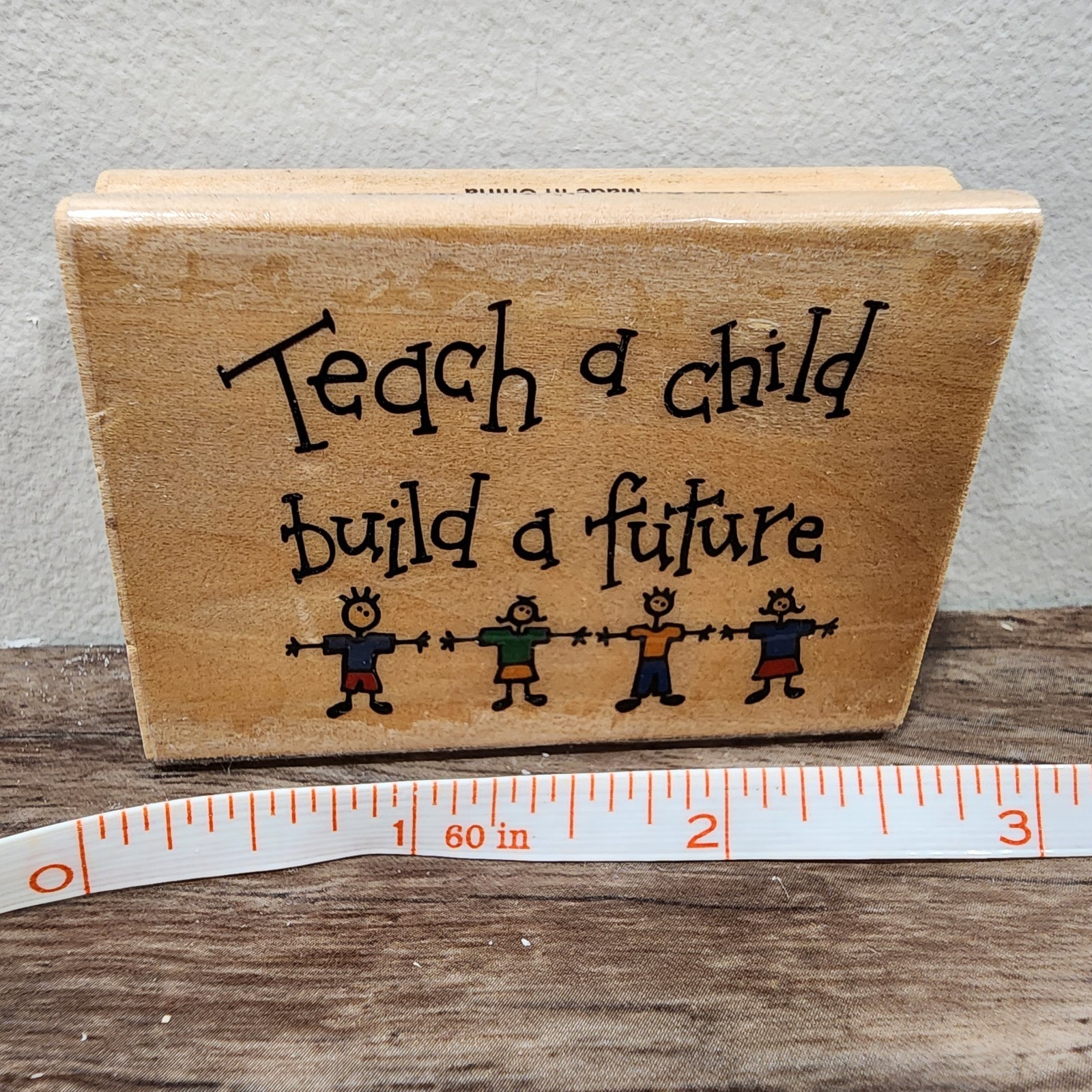 Words and Phrases Wooden Rubber Craft Stamps You Choose$2.00Last checked Nov 28, 2026View on eBay
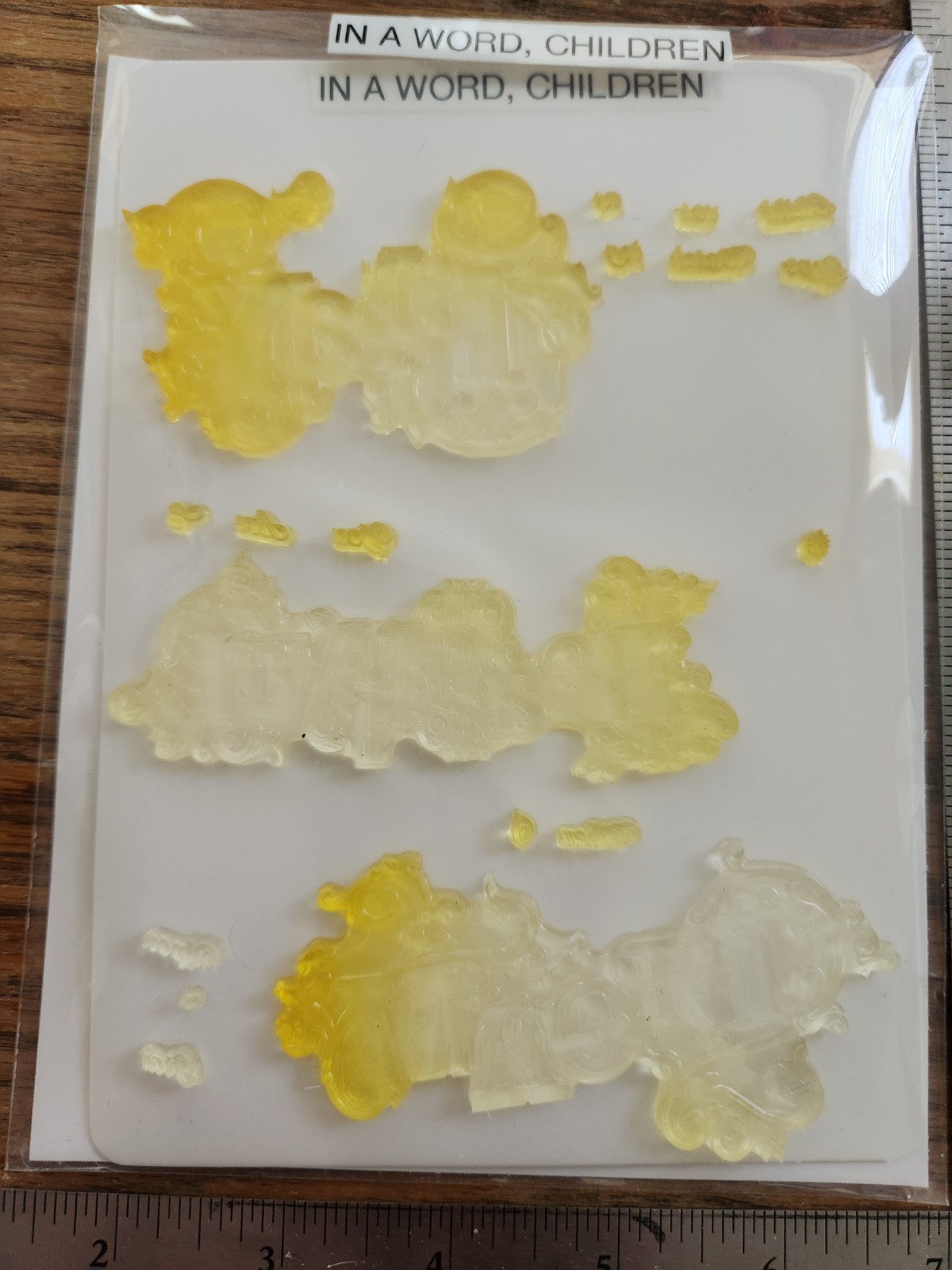 Crafting Clear Rubber Stamp Sets Variety Of Brands And Themes *You Choose* A-N$2.39Last checked Nov 28, 2026View on eBay
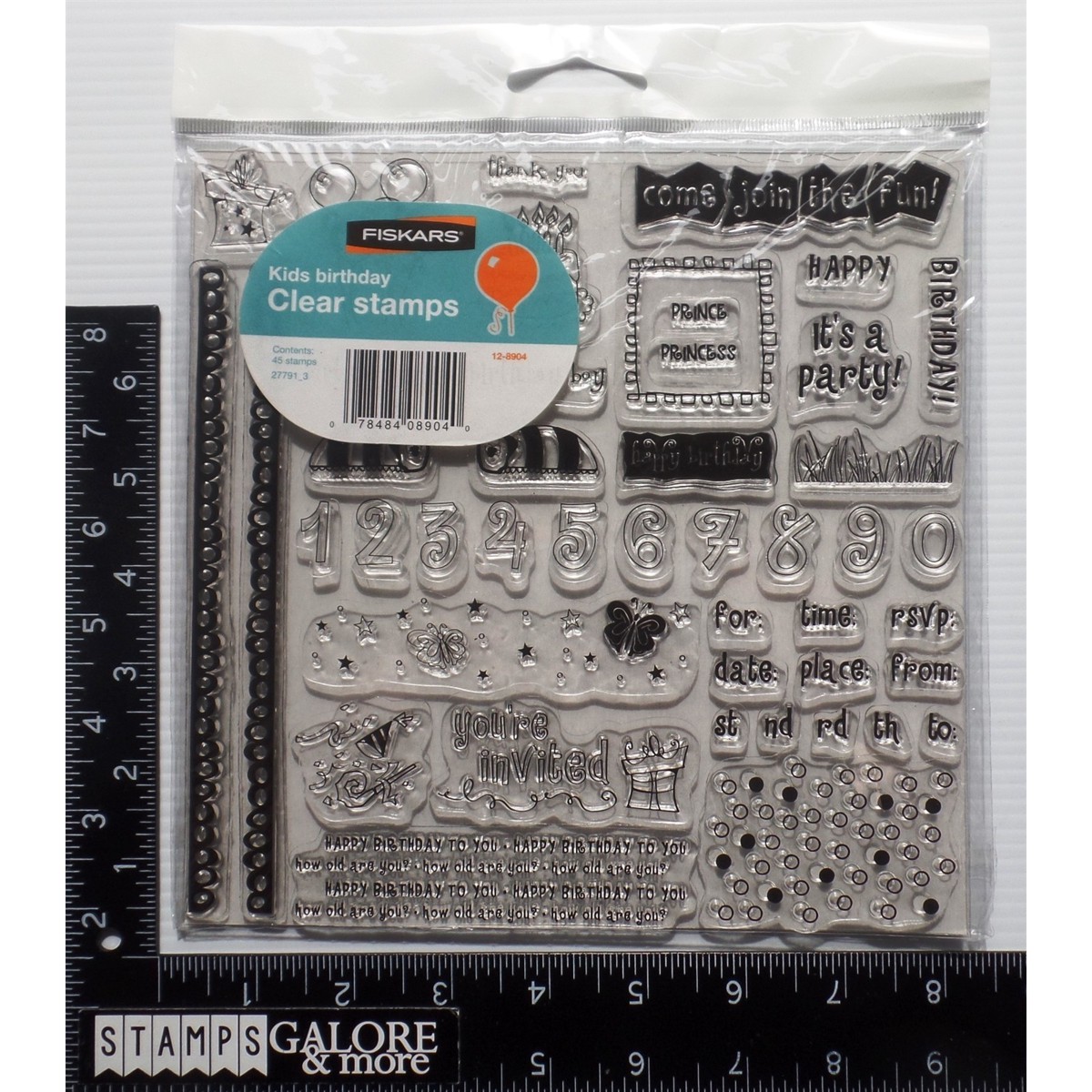 Fiskars 45 Clear Rubber Stamps New 27791-3 Kids Birthday Acrylic Cling #BINZ2$4.05View on eBay
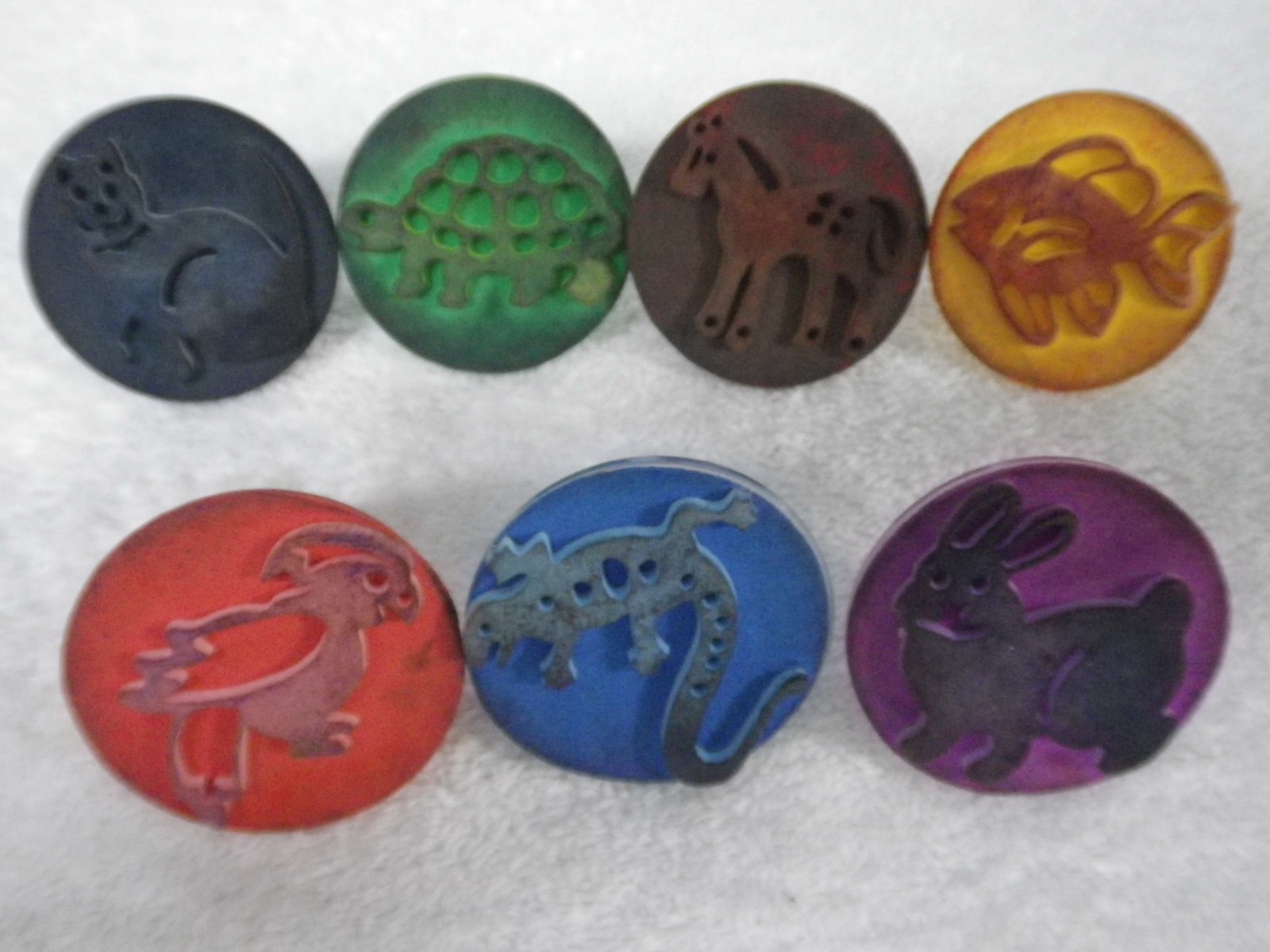 7 Ink Rubber Stamps Lot kids Arts and Crafts, Scrapbooking mixed animals turtle$6.50Last checked Nov 28, 2026View on eBay
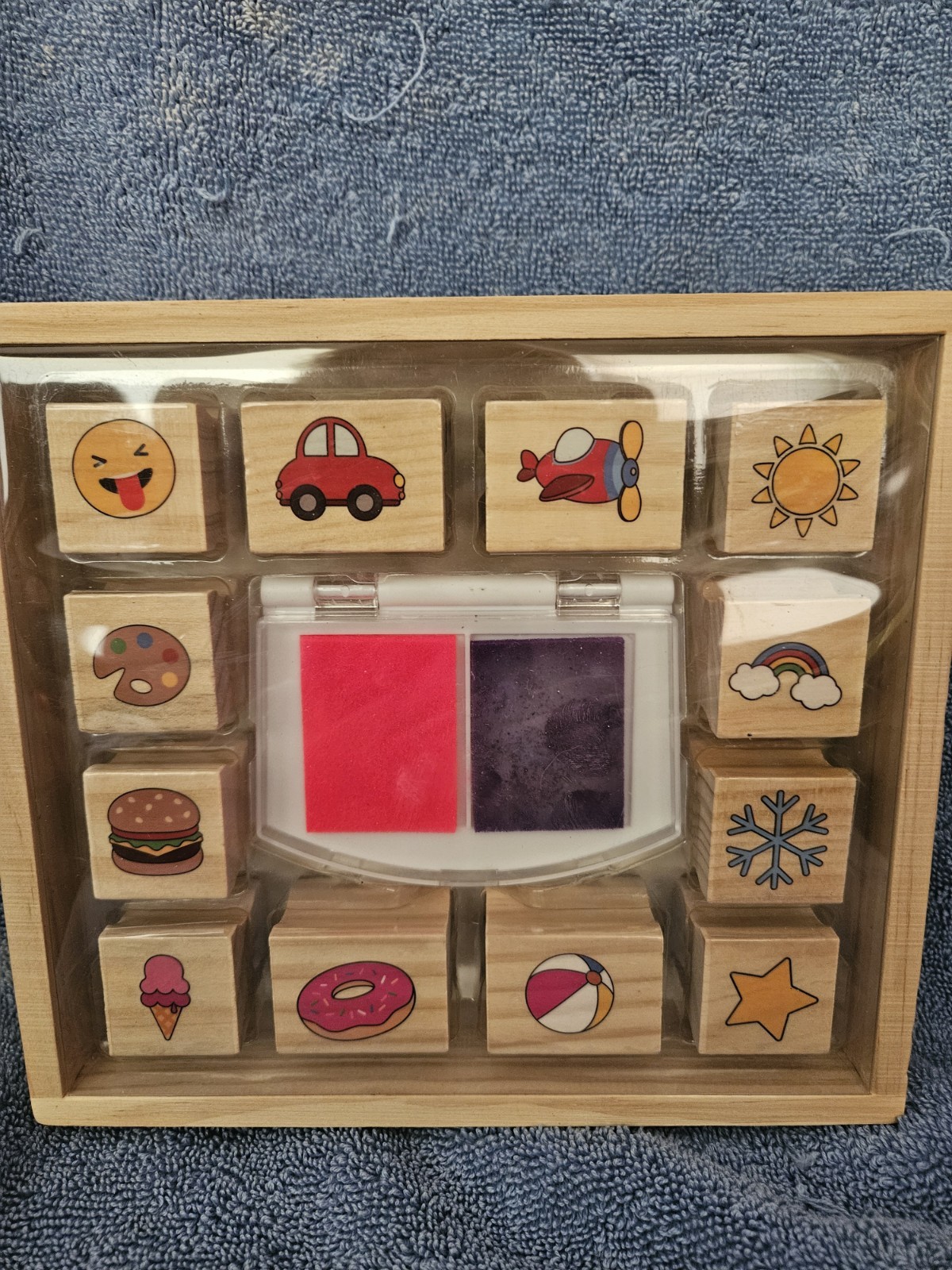 Kids Wooden Rubber Stamp Kit In A Wooden Box Craft Set New$7.75Last checked Nov 28, 2026View on eBay
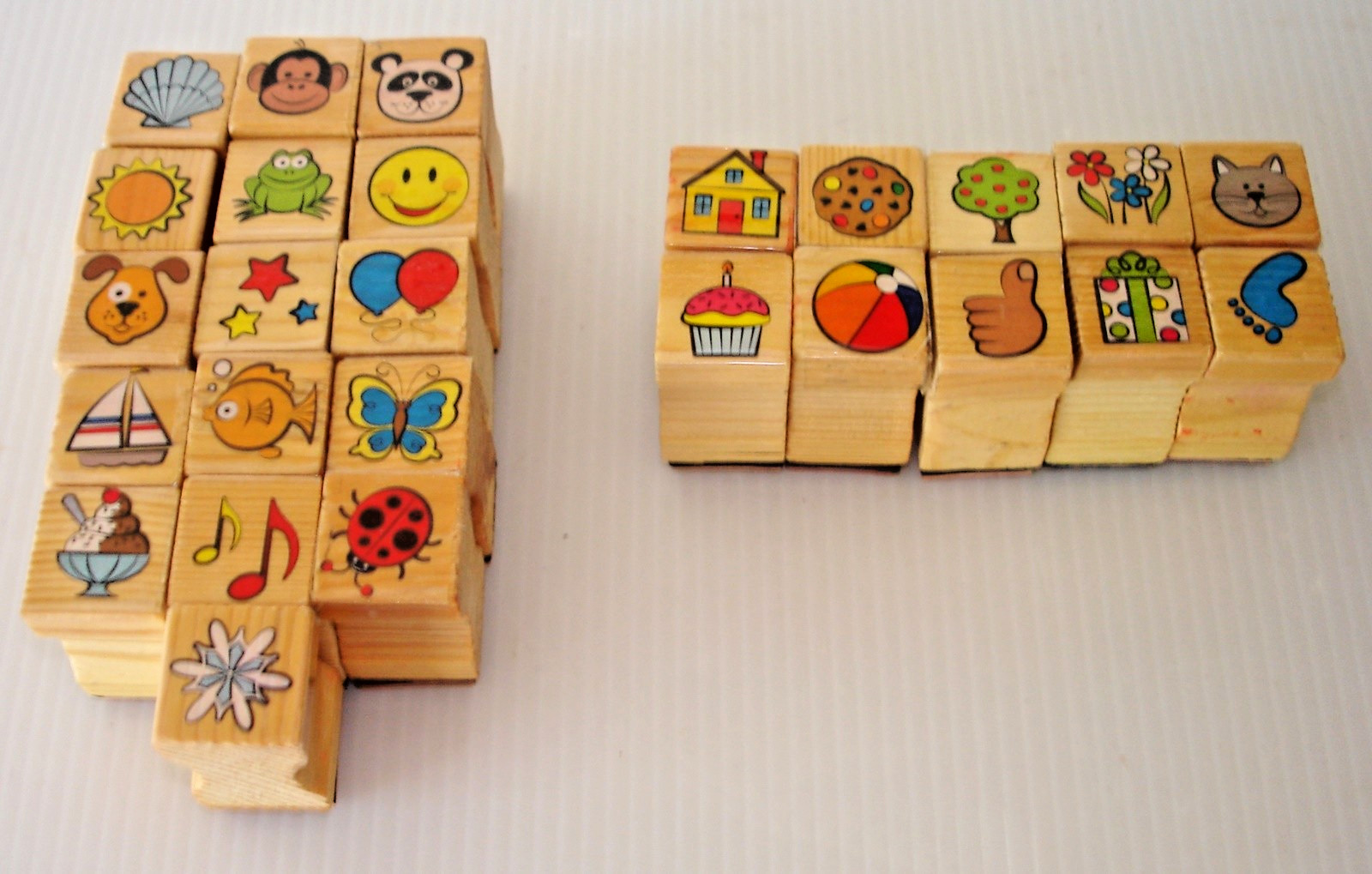 26 Rubber Stamps Lot Mini Wooden Cute Crafts Kids Scrapbooking Animals Bugs +$9.95View on eBay
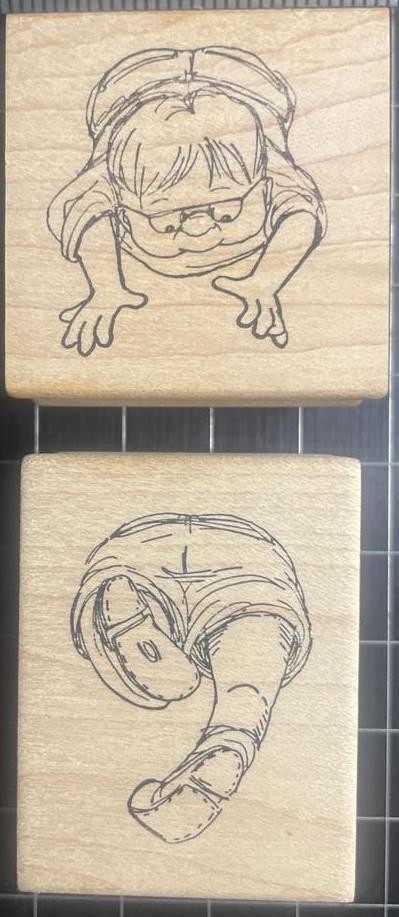 New Art Impressions rubber stamp front n backs CHILD EXPLORING SET discontinued$9.99Last checked Nov 28, 2026View on eBay
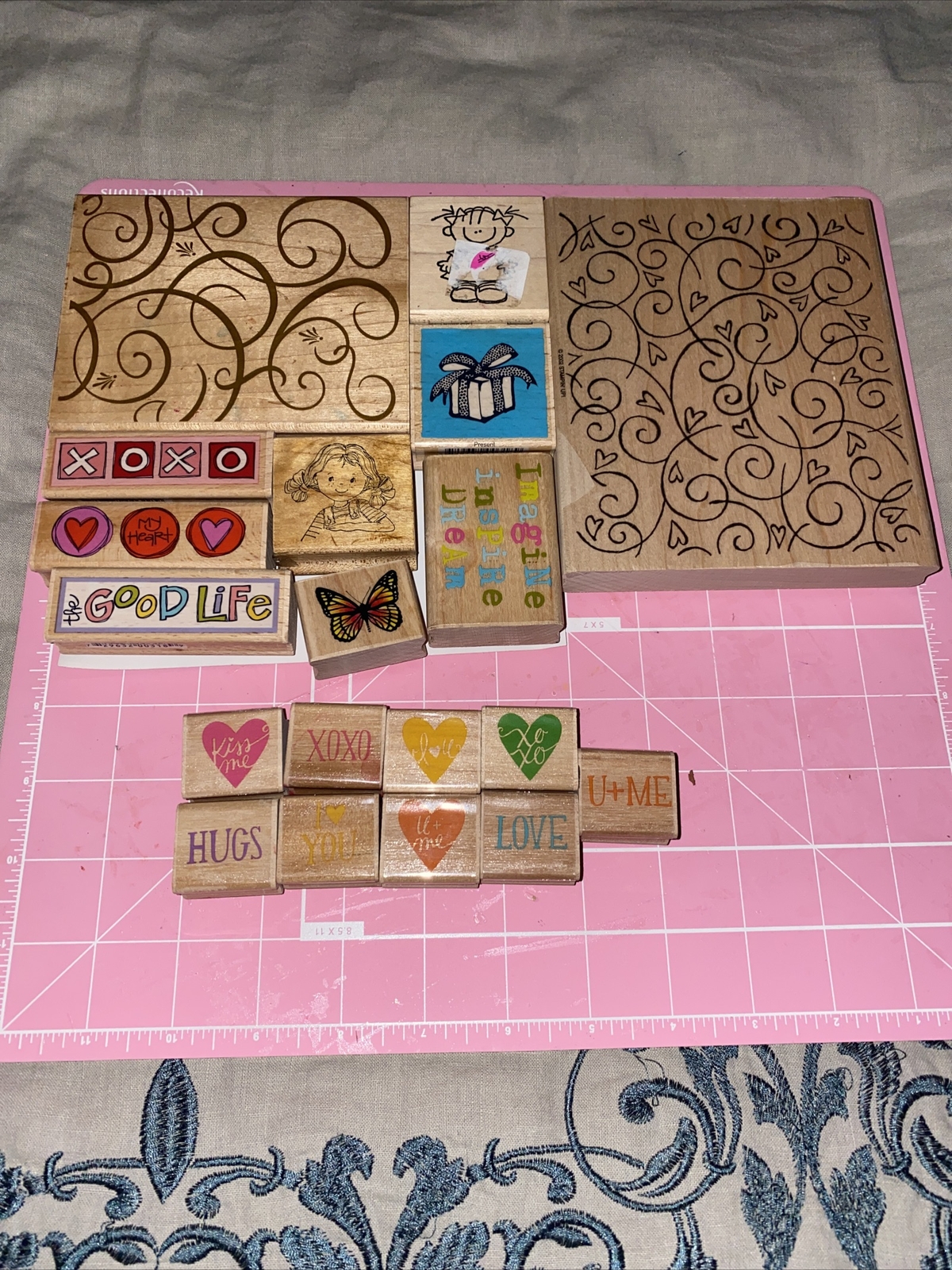 Wood Mounted Rubber Stamps Lot Hearts Scribble Child Butterfly Present$20.00View on eBay
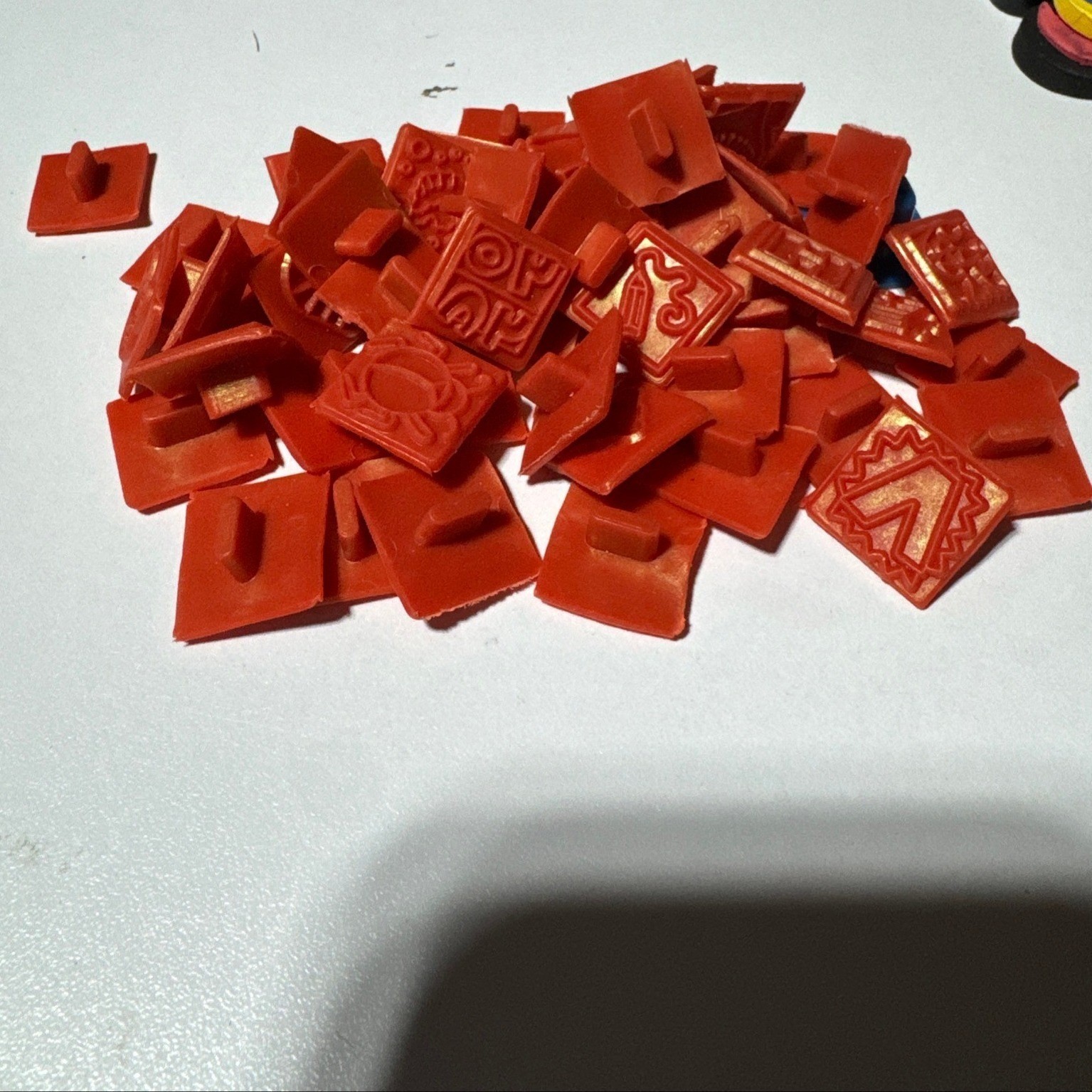 Fiskars Interchangeable Rubber Stamp Set Red Icons Symbols with Blue Base Lot$21.25View on eBay
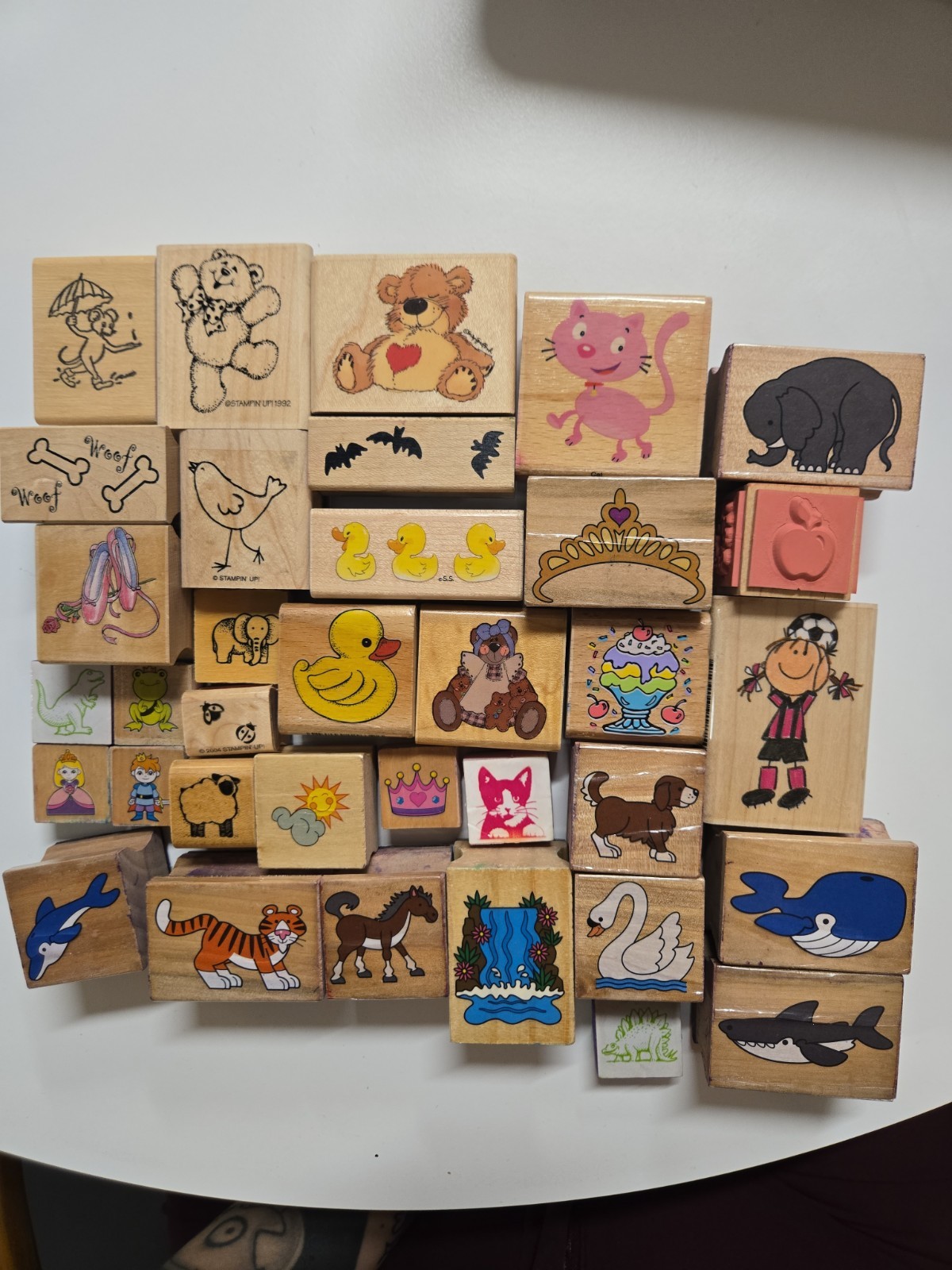 Lot Of 30+ Rubber Stamps Assorted Animals Fun Kids Scrapbooking Teacher School$29.99View on eBay
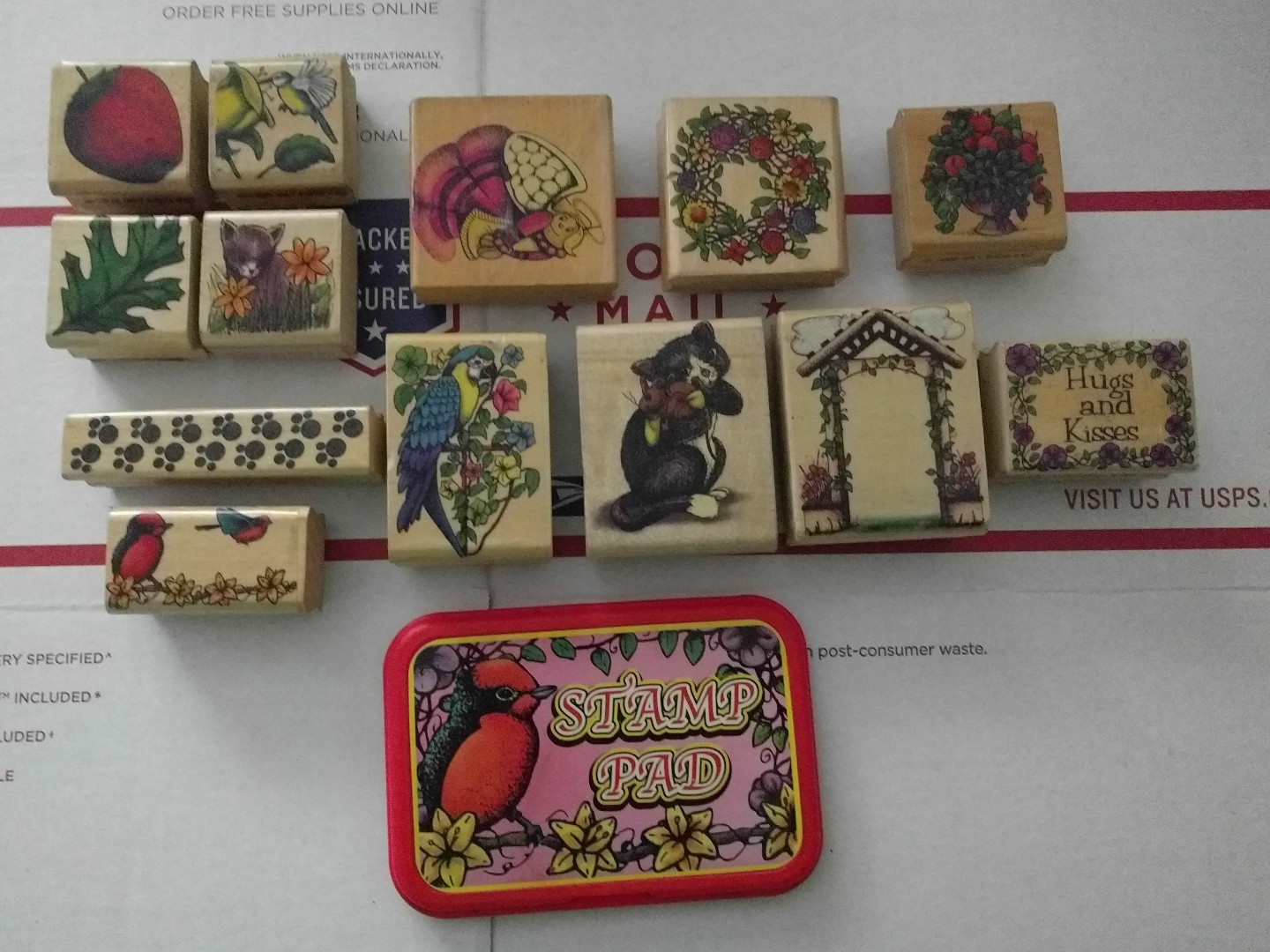 Lot of 13 RUBBER EMBOSSING STAMP (s) BY SKY KIDS 1998 Cards Appreciation$39.96View on eBay
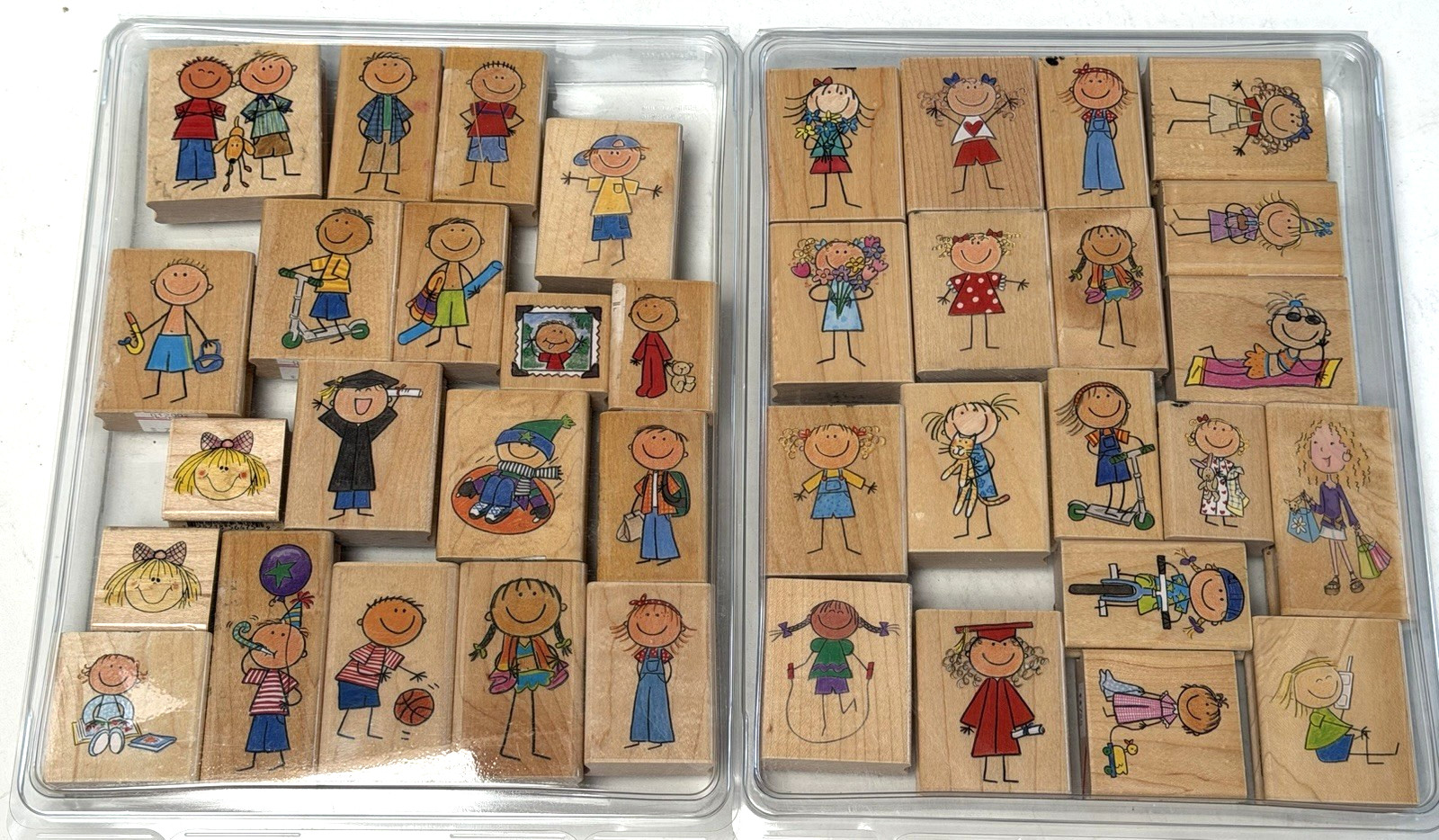 38 Cute Whimsical Stick Figure Kids Wooden Rubber Stamps, Crafts, Card Making$89.36Last checked Nov 28, 2026View on eBay
Highlights
- Wood-mounted stamps pair a 2-3 mm laser-etched rubber die with a 15-20 mm maple block; the rigid block prevents edge smear and improves registered multi-stamp layouts.
- Clear photopolymer cling stamps require a separate acrylic block; they are 1-2 mm thin, allow see-through alignment, and are the standard for card-making and fabric placement.
- Ink platform determines substrate compatibility: water-based dye inks for paper card stock, pigment inks for heat-embossing and fabric when heat-set, solvent inks for clay and non-porous surfaces.
- Rubber hardness grades separate crisp fine-line detail (softer 40-50 Shore A) from high-pressure embossing (harder 60+ Shore A) — matched to the substrate, not the design complexity.
Best use cases
- Card making and scrapbooking: pick clear photopolymer cling sets on an acrylic block for precise centering on A2 or 5x7 card bases; skip wood-mounted phrase sets that hide alignment on layered cards.
- Fabric stamping: use pigment or fabric-specific ink with a clear cling stamp and a firm acrylic block; skip water-based dye inks that wash out of cotton and linen without heat-setting.
- Kids' crafts and classroom use: choose wood-mounted stamp sets with rounded block edges and water-based washable ink; skip solvent inks and sharp-cornered clear stamps for under-8 use.
- Clay and polymer stamping: select deeper-etched (2-3 mm) rubber stamps pressed before curing; skip thin photopolymer stamps that flex and distort under clay pressure.
Buying tips
- Match stamp type to ink: dye ink for paper detail, pigment for heat-embossing, solvent for clay and plastic — the stamp rubber must be compatible with the ink carrier.
- For fabric, use a clear cling stamp with a 5-8 mm acrylic block and heat-set pigment ink at 150-160°C for 30-60 seconds for wash durability.
- Small rubber stamps under 10 mm work best for repeat patterns and bullet-journal spacing; pair with a fine-tip ink pad to avoid ink bleed beyond the die edge.
- Wood-mounted sets deliver consistent pressure for large solid-image stamps; clear cling stamps excel at multi-color layering where registration marks are printed on the carrier sheet.
Specs
| Mount Type | Wood-mounted vs Clear cling |
|---|---|
| Rubber Grade | Laser-cut (1-3 mm) vs Vulcanized |
| Ink Compatibility | Dye / Pigment / Solvent |
| Stamp Size Range | 5-60 mm image width |
Related searches
What to check before buying
- Measure your card or fabric area: A2 cards need 3-6 mm clear margins; stamps larger than 40 mm wide overflow standard card fronts.
- Confirm ink pad compatibility: water-based dye pads for paper, pigment pads for embossing, solvent pads for clay — mismatched ink causes feathering or permanent staining.
- For clear stamps, budget for a separate acrylic block in the same size range (2x2, 3x3, or 4x6 inches) — cling stamps do not include blocks.
- Check rubber depth and Shore hardness: 2-3 mm deep etch for fabric and clay, 1-2 mm for fine-line card detail; softer rubber for kids, harder for high-pressure embossing.
FAQ
Data sources: eBay / Amazon listings and product attribute feeds. Updated Nov 29, 2026.
Some links on this page are affiliate links. If you buy after clicking one, we may earn a commission at no extra cost to you. This does not change which products appear here or their order. Affiliate disclosure.