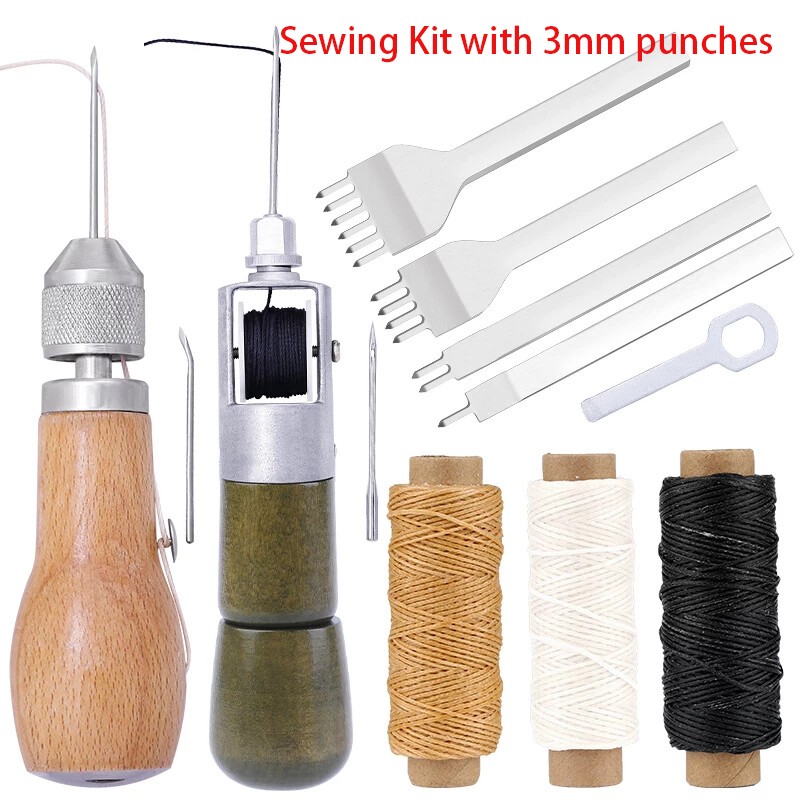

Photos from current listings. Actual item, color, and included accessories may vary.
Leather Punch Buying Guide
Leather punches are the hole-making and stitch-marking tools that determine whether your seams are straight, evenly spaced, and tear-resistant. The core trade-off is between hardened steel pricking irons with precise tooth geometry (for stitching layout) and hollow drive punches or rotary pliers (for clean round holes in belts and straps). Buy diamond- or French-style pricking irons in hardened steel for stitching work; buy hollow steel drive punches or rotary pliers for hardware holes—avoid soft stamped chisels that bend and skew spacing.
Median $59.99
Key takeaways
- Pricking irons come in diamond (45° angled teeth) and French (straight, flat-blade) styles; French irons mark cleaner, vertical slits for saddle stitching, while diamond irons suit traditional angled stitch look.
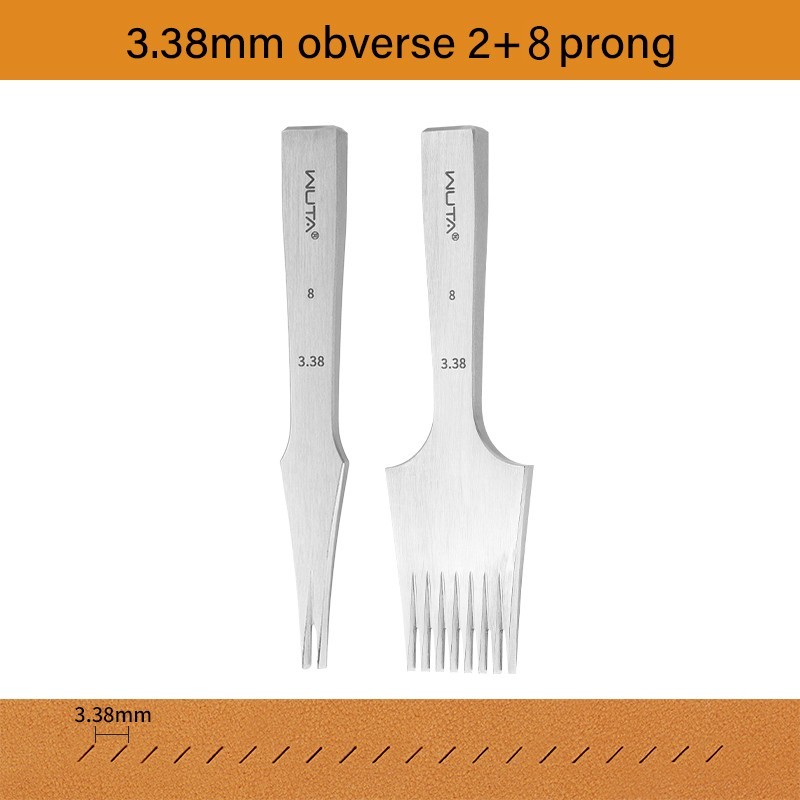
- Tooth pitch is measured in millimeters between tips—common sizes are 2.7mm, 3.0mm, 3.38mm, 3.85mm and 4.0mm—and determines stitches per inch; smaller pitch means finer, denser seams.
- Hardened steel (HRC 55–60) tooth tips resist bending and stay sharp; cheap stamped steel irons dull and splay within a few belts, ruining stitch alignment.
At a glance
- Category
- Leather Stitching Tools
- Last updated
- Nov 23, 2026
Current offers
Highlights
- Pricking irons come in diamond (45° angled teeth) and French (straight, flat-blade) styles; French irons mark cleaner, vertical slits for saddle stitching, while diamond irons suit traditional angled stitch look.
- Tooth pitch is measured in millimeters between tips—common sizes are 2.7mm, 3.0mm, 3.38mm, 3.85mm and 4.0mm—and determines stitches per inch; smaller pitch means finer, denser seams.
- Hardened steel (HRC 55–60) tooth tips resist bending and stay sharp; cheap stamped steel irons dull and splay within a few belts, ruining stitch alignment.
- Hollow drive punches cut clean round holes in 1.5–4mm leather; rotary punches handle light leather and multiple hole sizes, while pliers-style punches work on installed straps and belts.
Best use cases
- Saddle stitching belts, wallets, and straps: choose a 4-prong French or diamond pricking iron at 3.38–4.0mm pitch in hardened steel—skip rotary pliers, which cannot mark consistent stitch slits.
- Punching buckle and rivet holes in 2–4mm veg-tan: choose a hollow drive punch set (3mm, 4mm, 5mm) plus a polymer cutting board—skip soft pricking irons, which deform under mallet strikes.
- Adjusting holes on finished belts or watch straps: choose pliers-style revolving punches with 2–4.5mm tips—skip bench punches, which need the strap removed from the buckle and flat on a board.
- Fine goods at 2.7–3.0mm pitch (watch straps, small card holders): choose a 2-prong and single-prong iron in that pitch—skip 4-prong irons, which overrun short seams and small curves.
Buying tips
- Match pitch to thread: 3.85–4.0mm pitch for 0.8–1.0mm thread on belts and bags, 3.0–3.38mm for 0.6mm thread on wallets; stitch length should be roughly 2.5–3× thread diameter.
- Buy hardened steel irons rated HRC 55+ with polished teeth; avoid chrome-plated stamped chisels whose teeth splay and whose spacing drifts after repeated mallet strikes.
- For clean holes in 3mm+ leather, use hollow drive punches with a hardened cutting edge and a poly cutting board; back the leather with scrap so the punch exits cleanly without stretching.
- Choose a set with 1-, 2-, and 4-prong irons in the same pitch: 4-prong for straight runs, 2-prong for gentle curves, 1-prong for corners and exact end alignment.
Specs
| Pitch Range | 2.7–4.0 mm between teeth |
|---|---|
| Iron Style | French flat vs diamond angled |
| Steel Hardness | HRC 55–60 hardened tool steel |
| Prong Count | 1, 2, 4-prong sets |
Related searches
What to check before buying
- Confirm your leather thickness: pricking irons mark up to about 4mm comfortably; thicker skirting needs a drive punch or awl rather than a pronged iron.
- Measure the thread diameter you plan to use and pick pitch accordingly—3.85/4.0mm for 0.8–1.0mm thread, 3.0–3.38mm for 0.6mm thread.
- Ensure you have a polymer or HDPE cutting board and a mallet (rawhide or nylon) rated for striking; steel hammers damage iron heads.
- For belt hole adjustment, check the punch tip diameters match your buckle prong (commonly 3–4mm) before buying a pliers or drive punch set.
FAQ
Data sources: eBay / Amazon listings and product attribute feeds. Updated Nov 23, 2026.
Some links on this page are affiliate links. If you buy after clicking one, we may earn a commission at no extra cost to you. This does not change which products appear here or their order. Affiliate disclosure.