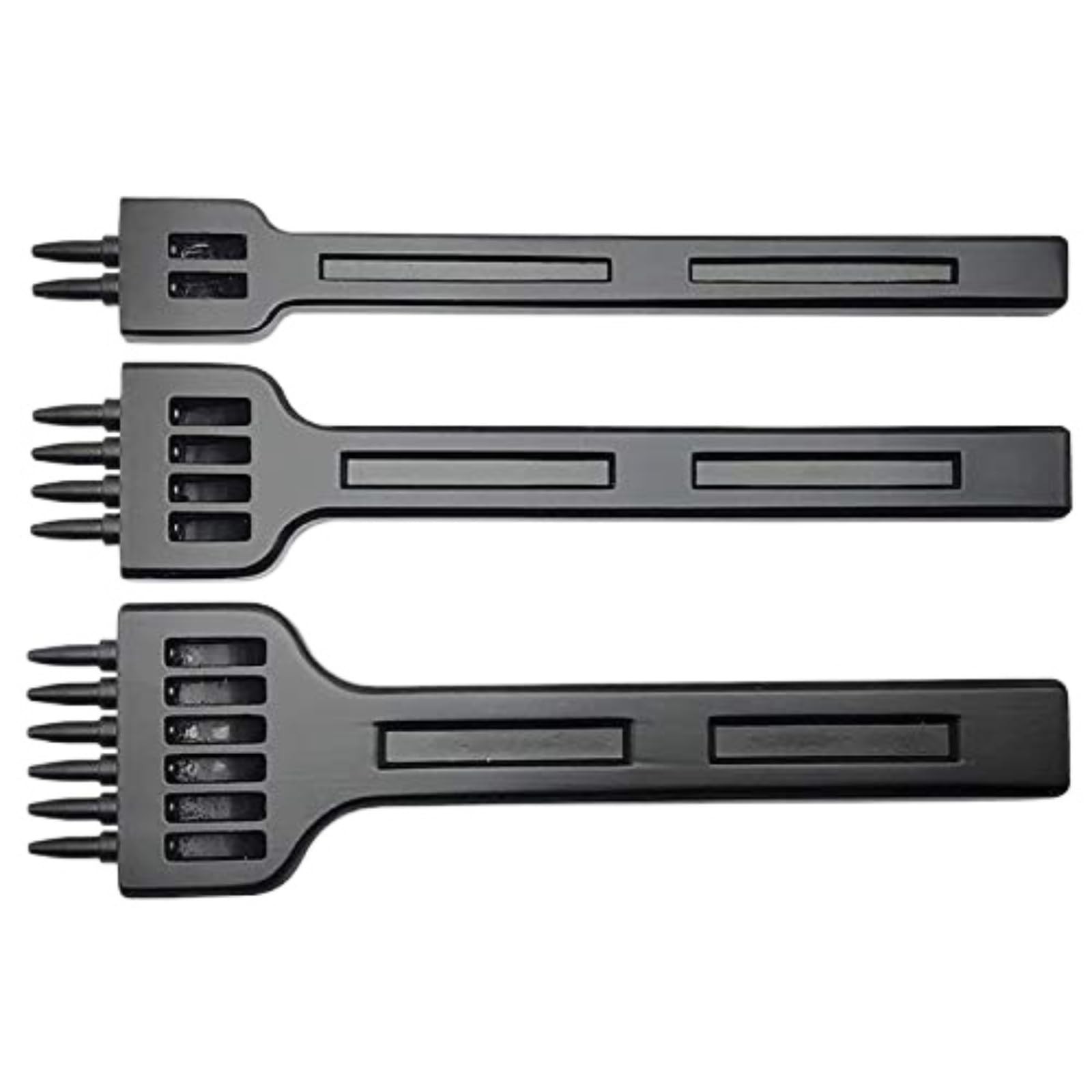

Photos from current listings. Actual item, color, and included accessories may vary.
Leather Stitching Chisel Buying Guide
Leather stitching chisels are pricking irons that punch evenly spaced holes for hand-sewn saddle stitches, and the decisive trade-off is tooth geometry: diamond/Japanese awl-profile teeth versus round-hole French-style teeth, plus pitch (spacing) and tooth count. Buy a chisel whose pitch matches your thread size and whose tooth count fits your seam length; skip decorative multi-tooth sets with soft, unhardened teeth that bend on veg-tan.
Median $59.47
Key takeaways
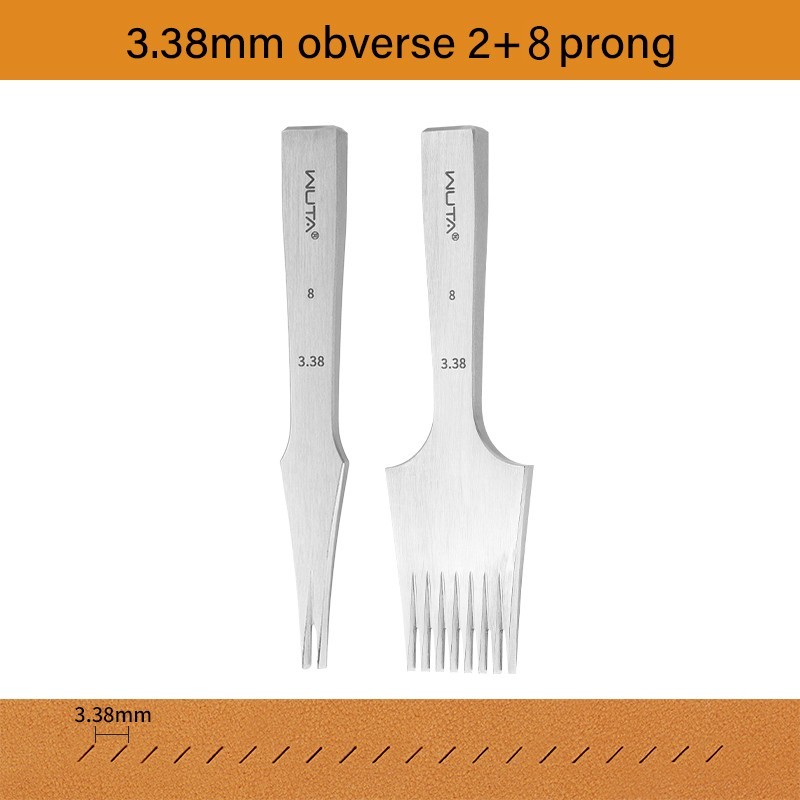
- Tooth profile determines stitch look: diamond/Japanese teeth make angled saddle stitches that lie slanted; round-hole French irons make straight, upright stitches.
- Pitch is the center-to-center tooth spacing in mm — 3mm/3.85mm for fine goods, 4mm for belts and wallets, 5mm+ for heavy straps — and must match thread diameter.
- Tooth count (2, 4, 6, 10) sets seam length per strike; 2-tooth irons are essential for curves and corners where long irons cannot follow.
At a glance
- Category
- Leather Stitching Tools
- Last updated
- Nov 23, 2026
Current offers
Highlights
- Tooth profile determines stitch look: diamond/Japanese teeth make angled saddle stitches that lie slanted; round-hole French irons make straight, upright stitches.
- Pitch is the center-to-center tooth spacing in mm — 3mm/3.85mm for fine goods, 4mm for belts and wallets, 5mm+ for heavy straps — and must match thread diameter.
- Tooth count (2, 4, 6, 10) sets seam length per strike; 2-tooth irons are essential for curves and corners where long irons cannot follow.
- Hardened steel (HRC 55+), polished taper, and a flat anvil face separate durable irons from soft stamped sets that mushroom at the tip.
Best use cases
- Best fit: 4mm diamond 2/4/6-tooth set for wallets, belts, and holsters in 2–4mm veg-tan; skip 3mm fine irons unless you sew thin chrome-tan and use 0.4–0.6mm thread.
- Best fit: French-style round-hole irons for straight, upright stitching on watch straps and card holders; skip them on curves where diamond teeth track corners better.
- Best fit: 2-tooth plus 4-tooth combo for beginners and curved work; skip 6/10-tooth only sets — long irons overrun short seams and are hard to align.
- Wrong fit: soft-cast decorative irons for 4mm+ bridle leather; they bend and tear grain — choose hardened, polished irons rated for veg-tan.
Buying tips
- Match pitch to thread: 3–3.85mm pitch for 0.4–0.6mm thread, 4mm for 0.6–0.8mm, 5mm+ for 1mm+ waxed thread — too-small holes fray thread and pucker leather.
- Pick 2-tooth and 4-tooth as the core; add a 6-tooth only if you routinely sew seams longer than 30mm straight runs.
- Choose diamond/Japanese teeth for angled saddle-stitch look and corner control; choose French round teeth for flat, upright stitch columns.
- Confirm hardened steel with polished flutes and a ground flat face; avoid chrome-plated cast zinc or unhardened stampings that dull after a few belts.
Specs
| Tooth Profile | Diamond/Japanese vs French round |
|---|---|
| Pitch (Spacing) | 3mm / 3.85mm / 4mm / 5mm+ |
| Tooth Count | 2 / 4 / 6 / 10 per iron |
| Steel Hardness | Hardened HRC 55+ vs soft cast |
Related searches
What to check before buying
- Measure leather thickness: 2–4mm veg-tan suits 4mm pitch; 4mm+ bridle needs 5mm pitch and a stout 2-tooth iron plus maul.
- Check thread diameter on the spool — pitch must be at least 3× thread diameter for clean holes without tearing.
- Plan seam layout: count teeth needed for your longest straight run; buy 2-tooth for curves and corners regardless of set size.
- Prepare a striking surface: a polymer cutting board or poundo board and a 1–2 lb maul; bare bench tops dull teeth and bounce strikes.
FAQ
Data sources: eBay / Amazon listings and product attribute feeds. Updated Nov 23, 2026.
Some links on this page are affiliate links. If you buy after clicking one, we may earn a commission at no extra cost to you. This does not change which products appear here or their order. Affiliate disclosure.