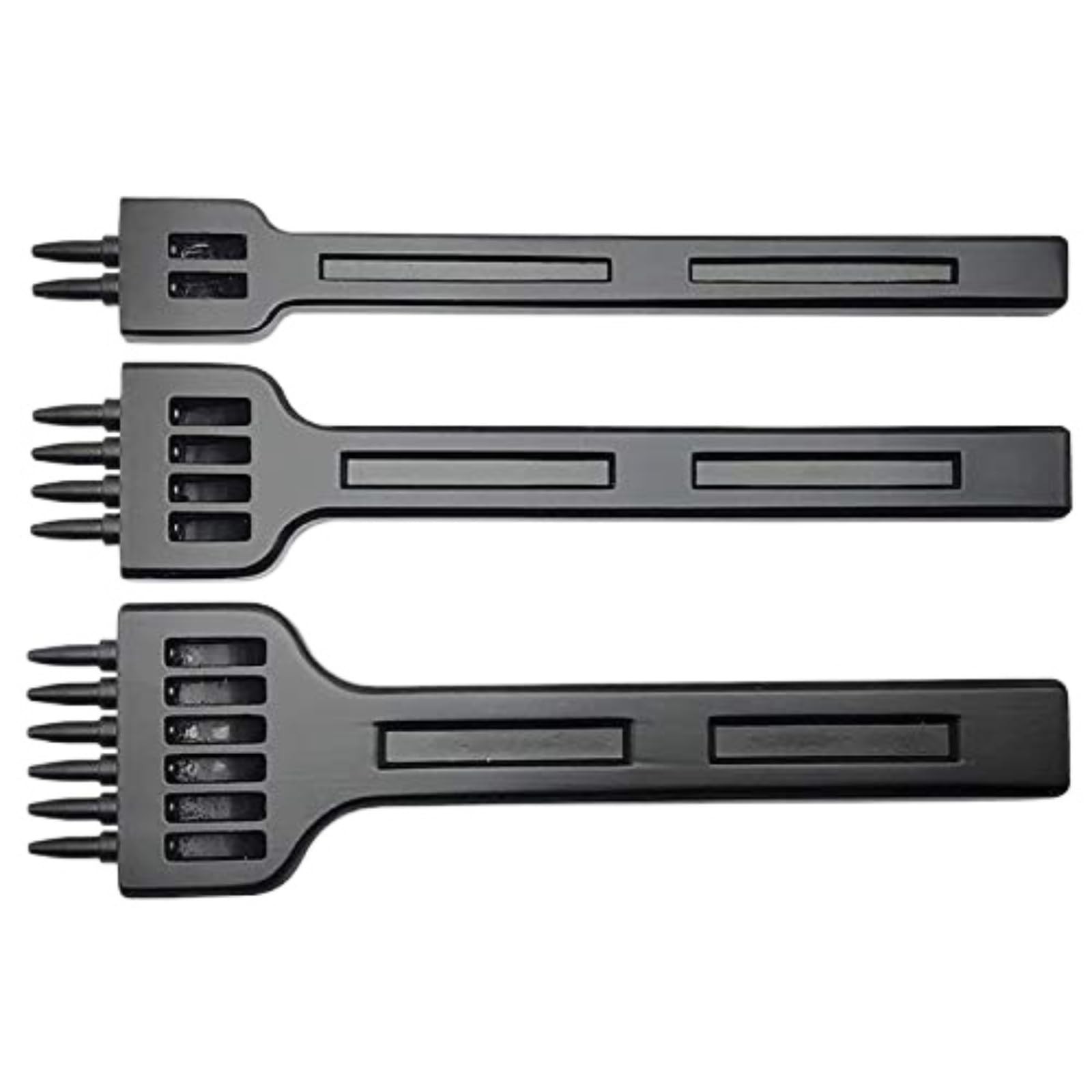

Photos from current listings. Actual item, color, and included accessories may vary.
Stitching Chisel Buying Guide
Stitching chisels are the pricking irons that set stitch hole spacing, angle, and depth before saddle stitching leather. The core trade-off is tooth geometry and steel hardness: polished round holes suit thicker thread and soft leathers, while flat diamond/Japanese blades give tight, angled stitches in firm veg-tan. Choose by pitch (mm), tooth count, and hardened polished steel; avoid soft stamped irons that bend or tear fibers.
Median $25.99
Key takeaways
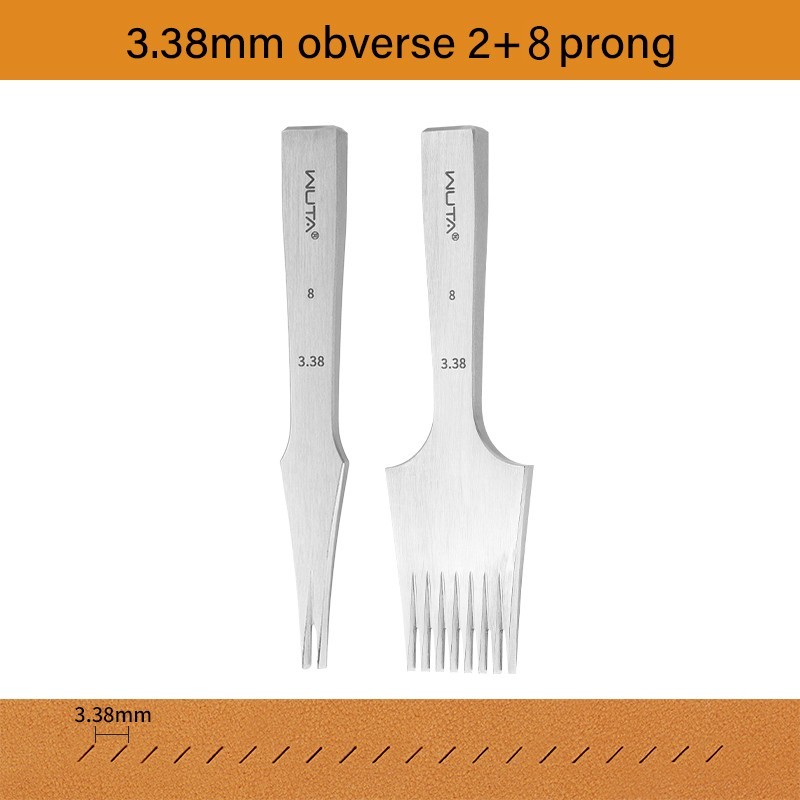
- Pitch is the stitch length center-to-center: common 3mm (fine), 4mm (standard), 5mm (chunky), 6mm (coarse); match thread diameter roughly to pitch.
- Tooth shape defines the stitch: diamond/Japanese flat blades cut angled slits; French-style round/oval pricking irons punch clean round holes for thicker thread.
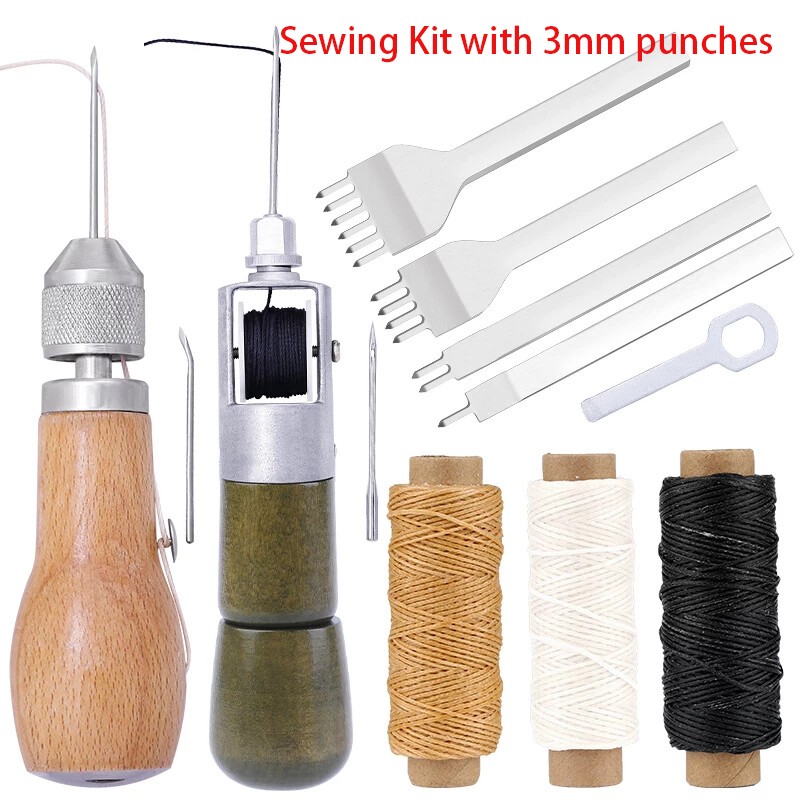
- Tooth count sets row length and corner control: 2-prong for curves and corners, 4-prong for straights, 6-prong for long runs; sets combine 2/4/6.
At a glance
- Category
- Leather Stitching Tools
- Last updated
- Nov 23, 2026
Current offers
Highlights
- Pitch is the stitch length center-to-center: common 3mm (fine), 4mm (standard), 5mm (chunky), 6mm (coarse); match thread diameter roughly to pitch.
- Tooth shape defines the stitch: diamond/Japanese flat blades cut angled slits; French-style round/oval pricking irons punch clean round holes for thicker thread.
- Tooth count sets row length and corner control: 2-prong for curves and corners, 4-prong for straights, 6-prong for long runs; sets combine 2/4/6.
- Hardened, polished tool steel with ground and tapered teeth penetrates without tearing; soft stamped irons deform and drag on thick veg-tan.
Best use cases
- Best fit: 4mm diamond 2/4/6-prong set in hardened steel for belts, wallets, and bags in 2-4mm veg-tan; skip 6mm coarse pitch for fine goods.
- Best fit: 3mm fine pitch French-style round-hole irons for small leather goods and thin 1-2mm chrome-tan with fine thread; skip on thick holsters.
- Best fit: 5-6mm coarse pitch 2-prong for heavy 4-6mm straps, sheaths, and holsters with thick waxed thread; skip on thin linings.
- Wrong fit: single 6-prong only for curved work or soft chrome-tan; add a 2-prong and use diamond blades to avoid fiber tearing.
Buying tips
- Match pitch to thread: 3mm pitch for 0.4-0.6mm thread, 4mm for 0.6-0.8mm, 5-6mm for 1.0mm+; oversized thread in fine pitch crowds holes.
- Buy a 2/4/6-prong set in one pitch first; add a second pitch only after confirming the look on scrap leather of the same thickness.
- Check tooth hardness and polish: hardened steel resists bending, and polished, tapered teeth release from thick veg-tan without levering.
- For round-hole French irons, confirm the tip is round/oval and tapered; flat diamond blades and round punches are not interchangeable for stitch angle.
Specs
| Tooth Geometry | Diamond/Japanese vs French round |
|---|---|
| Pitch | 3mm / 4mm / 5mm / 6mm |
| Tooth Count | 2 / 4 / 6 prong sets |
| Steel Build | Hardened polished tool steel |
Related searches
What to check before buying
- Measure leather thickness: under 2mm favors 3mm pitch; 2-4mm favors 4mm; over 4mm favors 5-6mm with a sturdy 2-prong.
- Confirm thread size in mm and test pitch on scrap: hole should hold thread snugly without deforming the leather surface.
- Check handle and shank: straight, centered shanks fit a mallet strike evenly; wooden or knurled handles improve grip and control.
- Plan a striking surface: a polymer or HDPE cutting board and rawhide/nylon mallet protect teeth; steel hammers dull and bend irons.
FAQ
Data sources: eBay / Amazon listings and product attribute feeds. Updated Nov 23, 2026.
Some links on this page are affiliate links. If you buy after clicking one, we may earn a commission at no extra cost to you. This does not change which products appear here or their order. Affiliate disclosure.