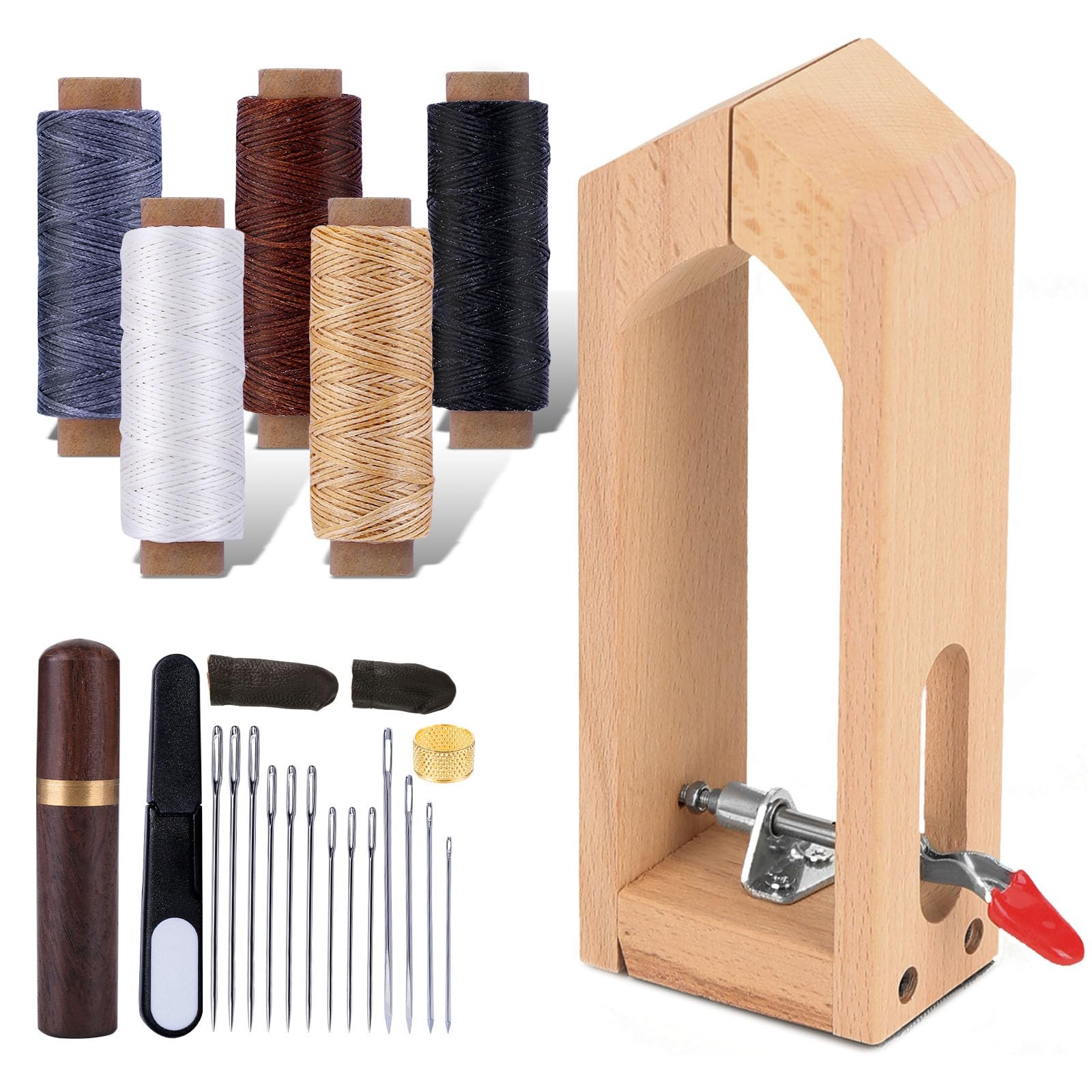

Photos from current listings. Actual item, color, and included accessories may vary.
Stitching Pony Buying Guide
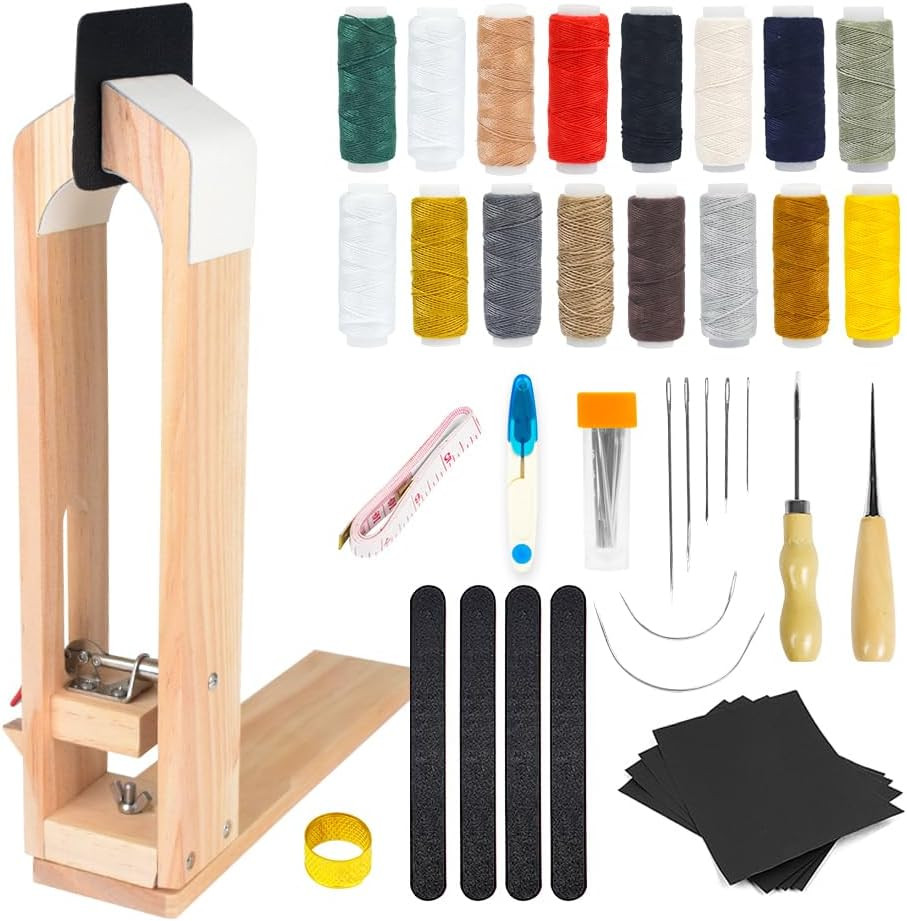
A stitching pony is a hands-free vise that clamps your leatherwork upright so both hands stay free for saddle stitching. The decisive trade-off is between a lightweight mini pony with a small throat and a full-size clamp-on or freestanding pony with deeper jaws and stronger clamping force. Buy a clamp-on model with hardwood or reinforced jaws and a throat deeper than your widest panel; skip thin plastic or tiny craft ponies if you regularly sew belts, bags, or holsters.
Median $38.59
Key takeaways
- Jaw opening and throat depth, not overall height, determine whether a pony can hold a belt, wallet, or bag gusset without repositioning mid-stitch.
- Hardwood jaws (beech, maple, oak) with leather-lined faces grip veg-tan without marring; plastic or thin plywood jaws flex and slip under stitching tension.
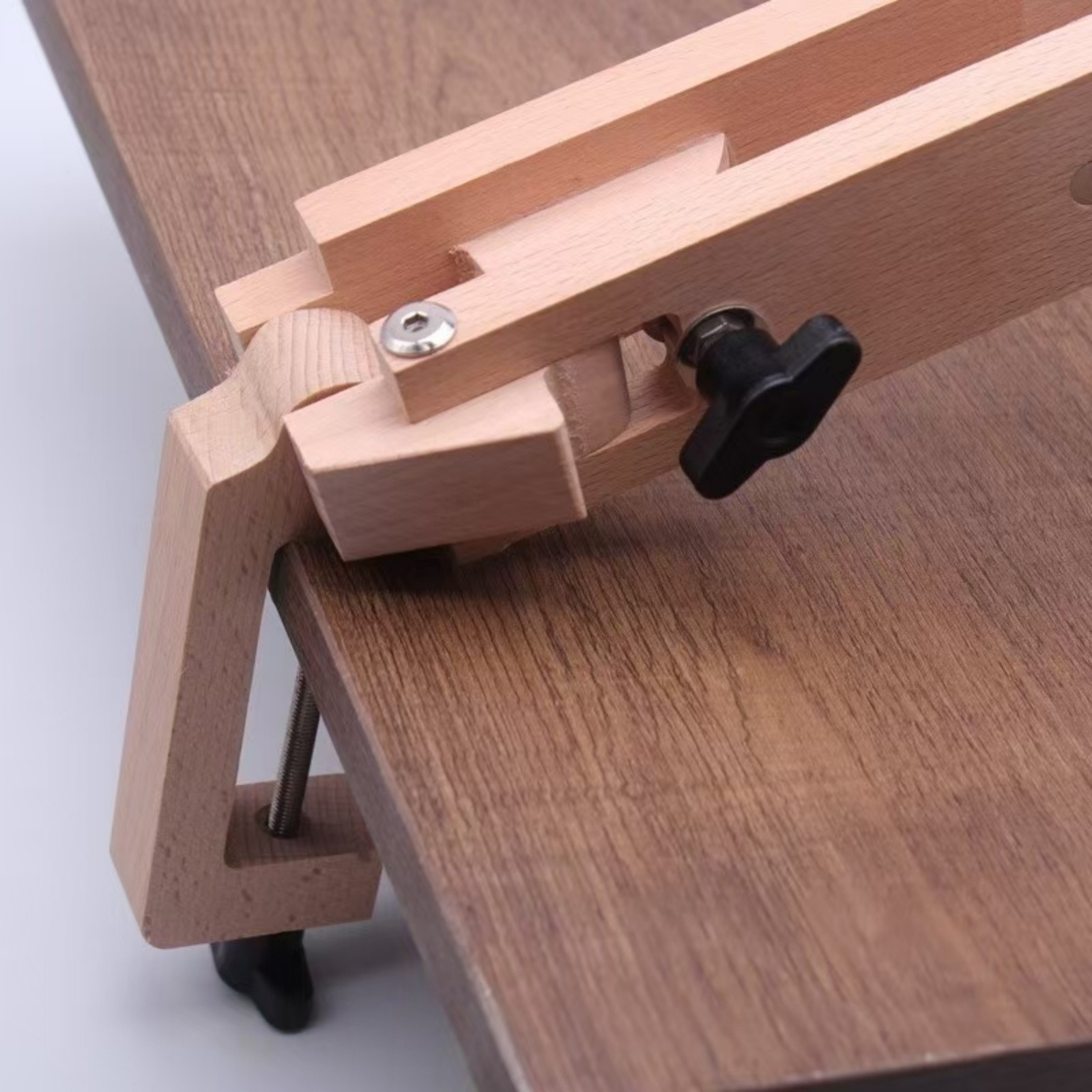
- Clamp-on ponies need a tabletop or bench edge with 1.5-2 in of overhang and a flat underside; freestanding or lap ponies trade stability for portability.
At a glance
- Category
- Leather Stitching Tools
- Last updated
- Nov 23, 2026
Current offers
Highlights
- Jaw opening and throat depth, not overall height, determine whether a pony can hold a belt, wallet, or bag gusset without repositioning mid-stitch.
- Hardwood jaws (beech, maple, oak) with leather-lined faces grip veg-tan without marring; plastic or thin plywood jaws flex and slip under stitching tension.
- Clamp-on ponies need a tabletop or bench edge with 1.5-2 in of overhang and a flat underside; freestanding or lap ponies trade stability for portability.
- Adjustable jaw width via a threaded rod or cam lever lets one pony cover thin wallets through thick skiving stacks; fixed-width mini ponies are limited to small goods.
Best use cases
- Best fit: clamp-on hardwood pony with 4-6 in jaw width and 3+ in throat for belts, wallets, and bag gussets; skip mini 8 in ponies for anything wider than a card holder.
- Best fit: mini or lap pony for small goods, repairs, and travel classes where portability matters; skip it for production runs or thick multi-layer holster work.
- Best fit: freestanding or bench-mounted pony with a wide base for saddle stitching at a dedicated workbench; skip clamp-on models if your bench has no overhanging edge.
- Wrong fit: plastic-jaw or suction-base ponies for firm veg-tan above 3 mm; they flex and release under pull, causing uneven stitches.
Buying tips
- Measure your widest panel plus 1 in; choose a jaw opening at least that wide so the work sits flat without crushing edges.
- Pick jaw faces lined with 2-3 mm veg-tan or cork; bare wood jaws compress leather and leave marks on finished surfaces.
- For clamp-on models, confirm your bench edge is 1.5-2 in thick and flat; a loose clamp lets the pony rotate under stitching pull.
- Prefer a threaded-rod or cam-lever tension adjuster over wing-nut friction locks; it holds jaw pressure consistently across thick and thin stacks.
Specs
| Mount Type | Clamp-on / freestanding / lap |
|---|---|
| Jaw Opening | 2-6 in adjustable |
| Jaw Material | Hardwood / plywood / plastic |
| Tension Adjust | Threaded rod / cam lever / wing nut |
Related searches
What to check before buying
- Measure bench or tabletop overhang: clamp-on ponies need 1.5-2 in of flat edge and clearance below for the clamp screw.
- Check your widest leather panel plus 1 in against the pony's jaw opening and throat depth before choosing a mini versus full-size model.
- Confirm jaw lining material (leather, cork, or rubber) suits finished veg-tan; bare wood or hard plastic can mar show surfaces.
- Verify the pony's base footprint fits your workspace and that a freestanding model won't tip when you pull thread firmly.
FAQ
Data sources: eBay / Amazon listings and product attribute feeds. Updated Nov 23, 2026.
Some links on this page are affiliate links. If you buy after clicking one, we may earn a commission at no extra cost to you. This does not change which products appear here or their order. Affiliate disclosure.