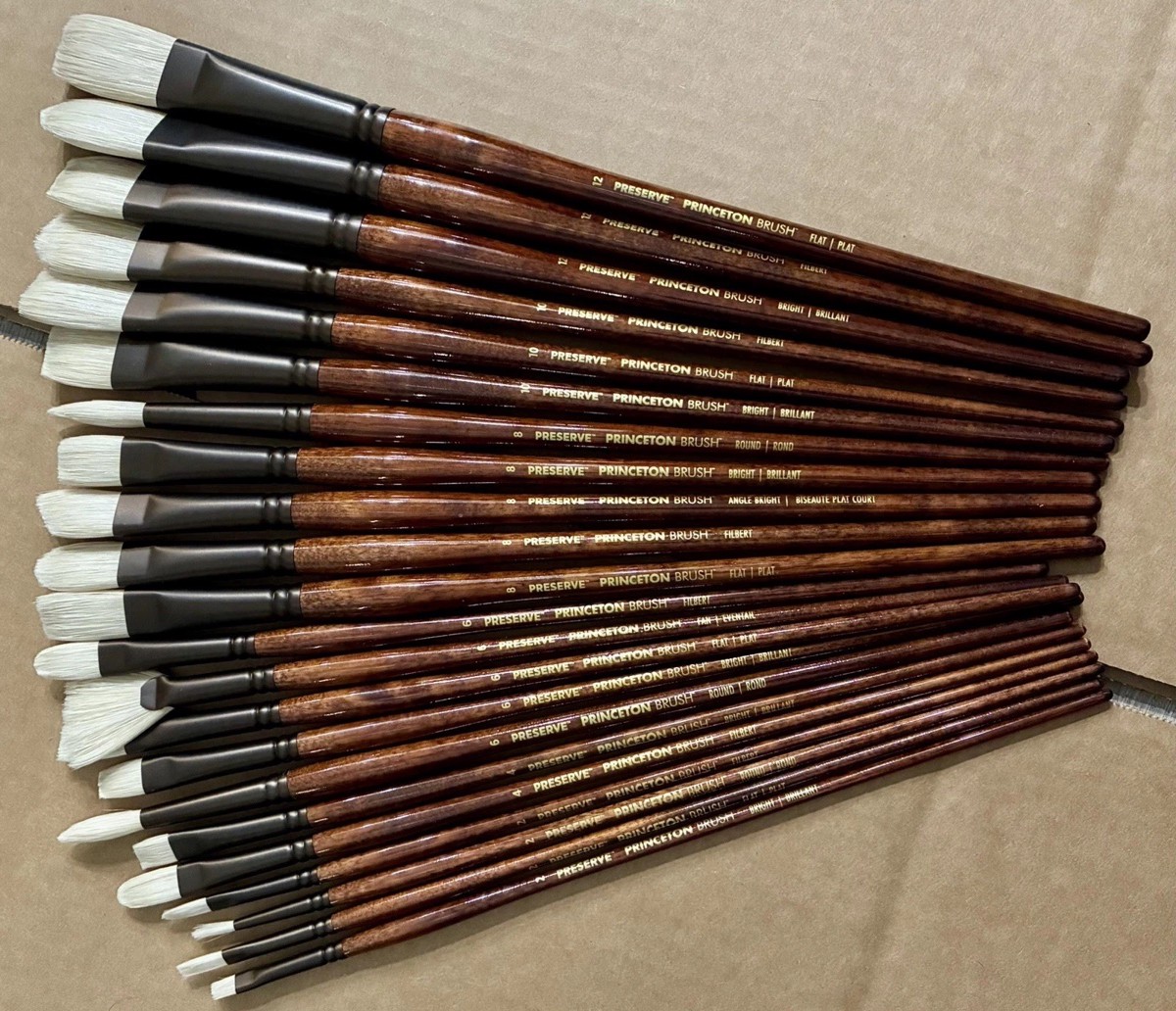

Photos from current listings. Actual item, color, and included accessories may vary.
Acrylic Paint Brush Buying Guide
Acrylic paint brushes are the primary tool for applying water-based acrylics, where synthetic filaments and ferrule construction determine shape retention and durability. The core trade-off is between cheap dyed nylon that sheds and splays versus tapered synthetic blends (often PBT or Taklon) that mimic natural hair with spring and fine points. The decision rule: buy brushes with a seamless metal ferrule, a well-balanced handle, and filaments described as synthetic for acrylics; skip bargain multi-packs with glued ferrules and loose bristles.
Key takeaways
- Synthetic filaments (Taklon, PBT, nylon) outperform natural hair for acrylics because they don't absorb water, hold shape, and resist the medium's alkalinity.
- Seamless, double-crimped metal ferrules prevent water from loosening the filament bundle; glued or plastic ferrules are the top failure point.
- Brush shapes matter more than brand: flat for washes and blocks, round for detail and line work, filbert for blending, and liner/rigger for fine strokes.
At a glance
- Category
- Art Supplies
- Last updated
- Nov 28, 2026
Current offers
Highlights
- Synthetic filaments (Taklon, PBT, nylon) outperform natural hair for acrylics because they don't absorb water, hold shape, and resist the medium's alkalinity.
- Seamless, double-crimped metal ferrules prevent water from loosening the filament bundle; glued or plastic ferrules are the top failure point.
- Brush shapes matter more than brand: flat for washes and blocks, round for detail and line work, filbert for blending, and liner/rigger for fine strokes.
- Dual-tip acrylic paint markers (brush and chisel/fine) offer controlled application for rock painting, lettering, and crafts but lack the load capacity of traditional brushes.
Best use cases
- Best fit: canvas and panel painters should buy a 10-12 piece synthetic set with round, flat, and filbert shapes in sizes 2-12; skip paint-pen bundles that lack large wash brushes.
- Best fit: rock, wood, and craft painters should choose dual-tip acrylic markers with brush and fine tips for opaque coverage and control; skip traditional brushes that require separate paint and water.
- Wrong fit: miniature and model painters need kolinsky-style synthetic detail brushes in sizes 0-2 with sharp points; avoid broad flat sets marketed for wall painting or party crafts.
- Wrong fit: airbrush users should not buy hand brushes as a substitute; select a dedicated airbrush kit with compressor and dual-action guns for acrylic atomization.
Buying tips
- Match brush size to stroke width: a round size 4 makes lines about 2-3 mm wide, size 8 about 4-5 mm; flats are measured by width in mm or inches.
- Choose synthetic filaments labeled for acrylics (Taklon, PBT, nylon) over natural hog or sable, which are better for oil or watercolor and degrade in acrylic.
- Inspect the ferrule: seamless metal with two crimps holds filaments tight; avoid ferrules that are glued, painted, or single-crimped on budget sets.
- For paint pens, look for dual-tip brush and chisel/fine combinations with opaque, waterproof acrylic ink; single-tip pens limit coverage and detail versatility.
Specs
| Brush Filament | Synthetic Taklon / PBT / Nylon |
|---|---|
| Ferrule Type | Seamless double-crimped metal |
| Brush Shapes | Round / Flat / Filbert / Liner |
| Paint Pen Tips | Dual brush & chisel/fine |
Related searches
What to check before buying
- Measure your working surface: canvas sizes up to 16x20 in need brushes up to 1 inch wide; larger canvases need wash brushes 2 inches or more.
- Confirm your medium: water-based acrylics clean up with soap and water and work with synthetic brushes; oil-based or heavy-body acrylics may need stiffer filaments.
- Check handle length and weight: long handles for easel painting, short handles for close detail work; balanced handles reduce fatigue on long sessions.
- For marker use, verify the ink is acrylic-based and waterproof for outdoor or archival projects; water-based markers are not permanent on non-porous surfaces.
FAQ
Data sources: eBay / Amazon listings and product attribute feeds. Updated Nov 28, 2026.
Some links on this page are affiliate links. If you buy after clicking one, we may earn a commission at no extra cost to you. This does not change which products appear here or their order. Affiliate disclosure.