
Photos from current listings. Actual item, color, and included accessories may vary.
Acrylic Paint Pen Buying Guide
Acrylic paint pens are opaque, water-based pigment markers that bond to porous and non-porous surfaces for rock, wood, glass, fabric, and canvas work. The core trade-off is tip architecture versus pigment load: dual-tip brush/fine pens cover more techniques but hold less paint and clog faster, while single-tip broad or chisel pens deliver heavier, more even coverage for large fills. Choose a dual-tip set with replaceable or re-priming valves for mixed-detail work, and a single-tip or pump-action pen for heavy-coverage base layers.
Median $28.49
Key takeaways
- Dual-tip (brush + fine) pens dominate multi-surface sets; brush tips lay broad opaque strokes, fine tips handle outlines and lettering
- Water-based acrylic binder is the standard; it dries waterproof and permanent on sealed and unsealed surfaces but can be reactivated before curing
- Pigment load and opacity vary sharply: 12-24 color sets are usually hobby-grade, while 48-120 color sets add metallics, pastels, and skin tones at thinner consistency
At a glance
- Category
- Art Supplies
- Last updated
- Nov 27, 2026
Current offers
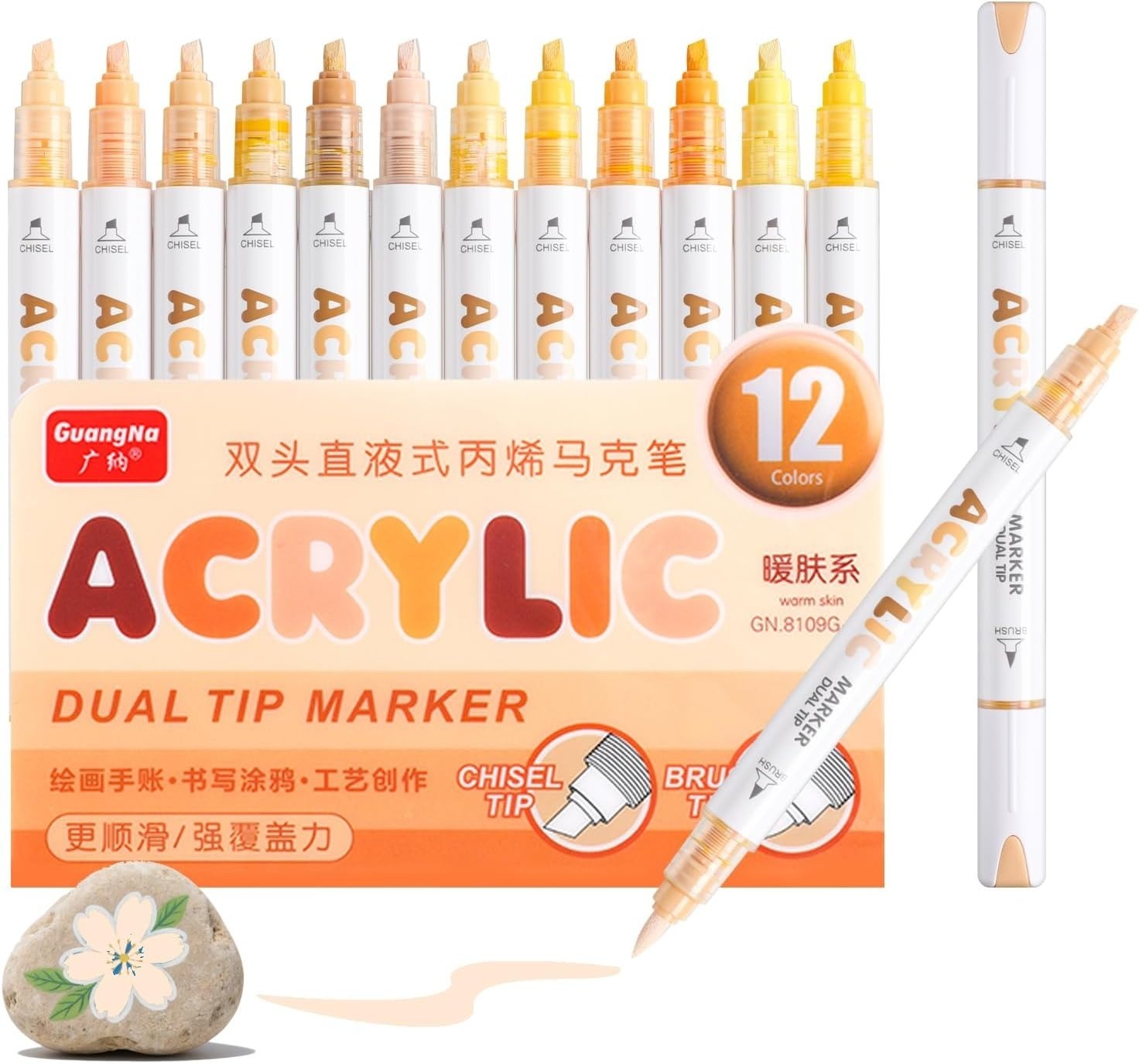 12 Colors Dual Tip Acrylic Paint Pens - Brush & Chisel Tip Acrylic Markers$10.90Last checked Nov 21, 2026View on eBay
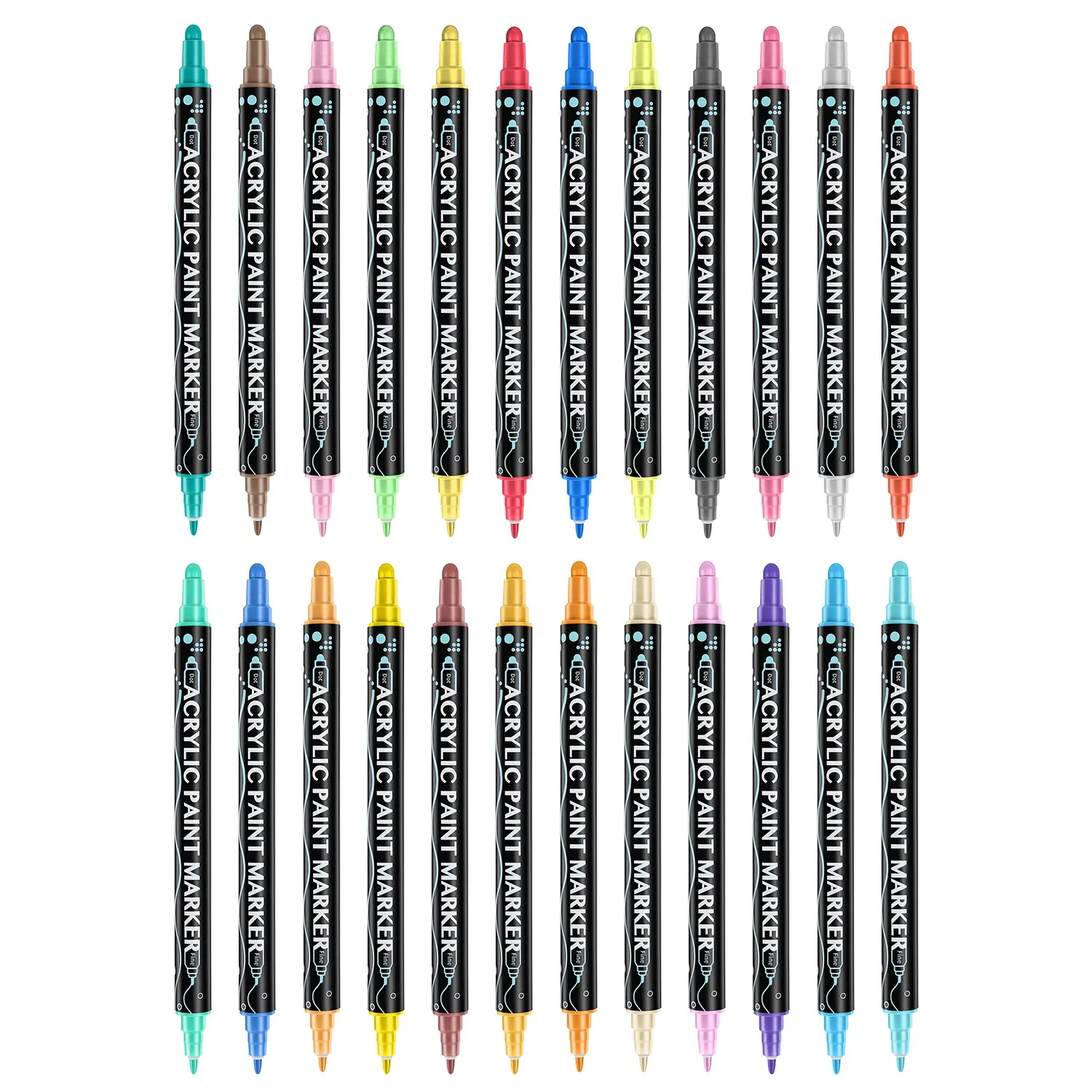 24/48 Colors Dual Tip Acrylic Paint Markers Set, Water-Based Pens with Fine & Broad Tips, Quick-Dry Waterproof Art for Rock Painting, Wood, Glass, Fabric, Ceramic, Canvas & DIY Crafts$27.99View on Mallflare
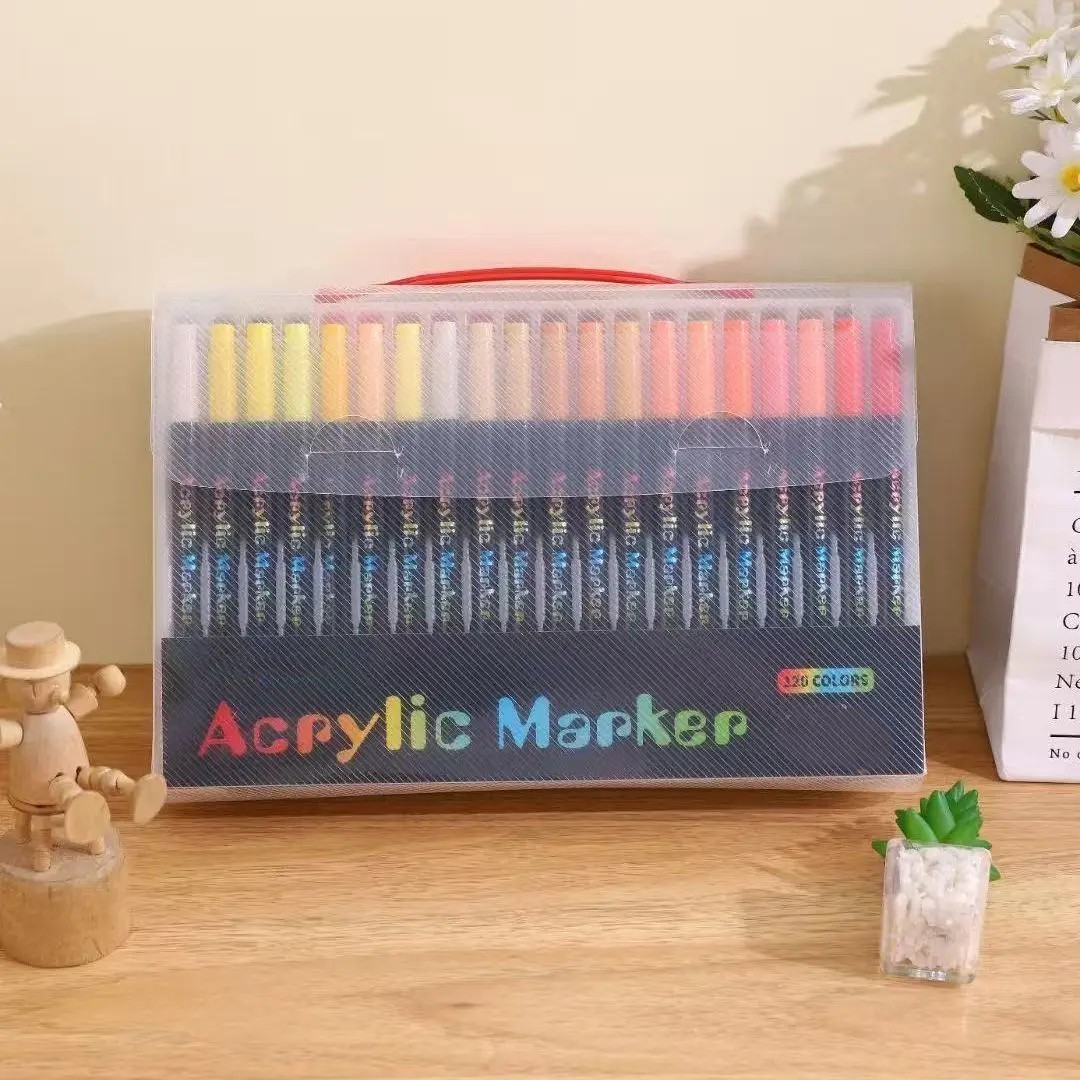 120 Color Acrylic Paint Markers Dual Tip Brush Fine Pens Art Rock Wood Craft Set$27.75View on eBay
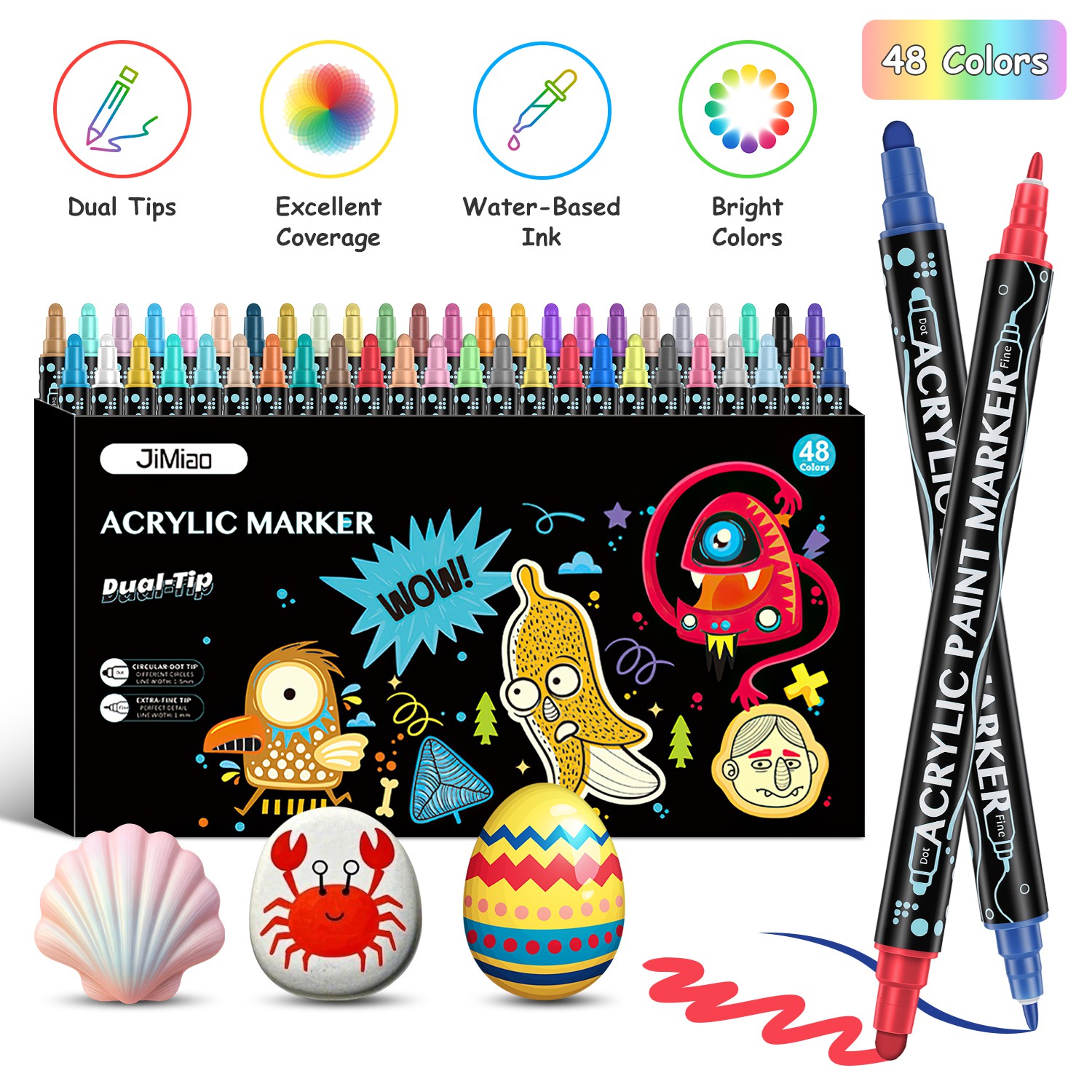 48 Colors Or 24 Options Dual Tip Acrylic Paint Markers Set, Quick-Dry Waterproof Art For Rock Painting, Wood, Glass, Fabric, Ceramic, Canvas & DIY Crafts$28.99View on Mallflare
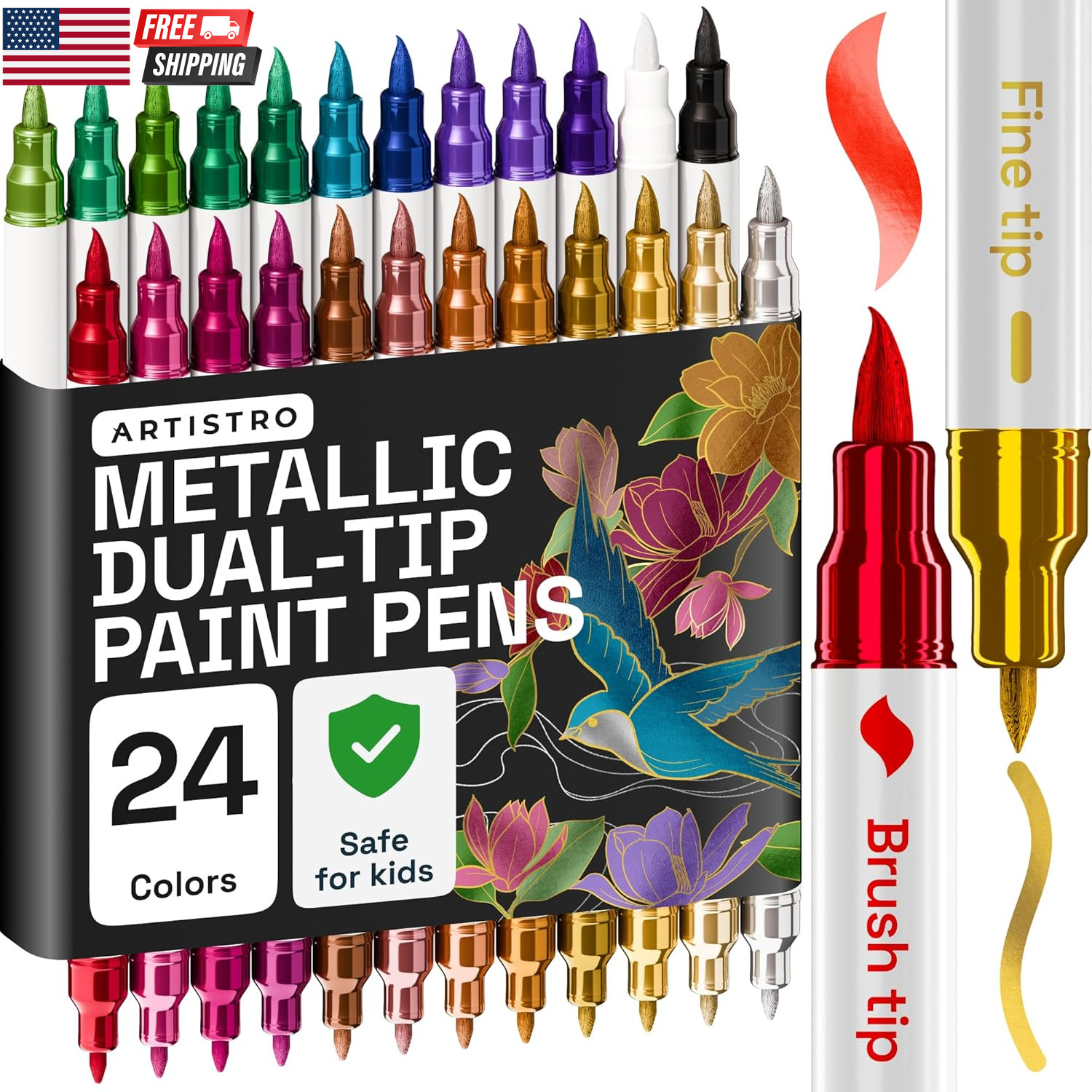 24 Metallic Acrylic Paint Markers - Paint Pens for Drawing, Brush + Fine Tips -$39.04View on eBay
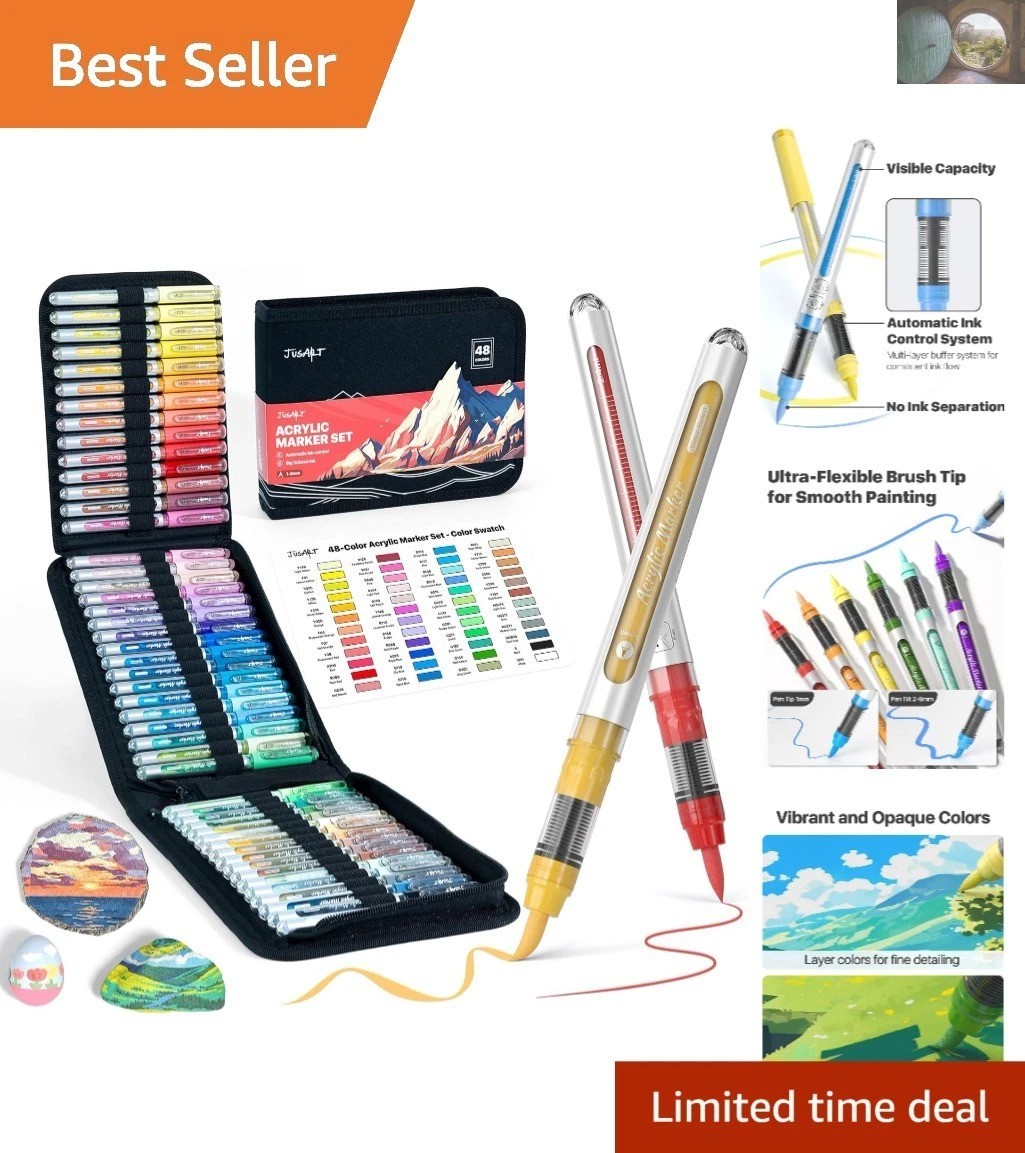 48 Vibrant Colors Acrylic Paint Markers Set - Multi-Surface Art Supplies$51.54Last checked Nov 21, 2026View on eBay
Highlights
- Dual-tip (brush + fine) pens dominate multi-surface sets; brush tips lay broad opaque strokes, fine tips handle outlines and lettering
- Water-based acrylic binder is the standard; it dries waterproof and permanent on sealed and unsealed surfaces but can be reactivated before curing
- Pigment load and opacity vary sharply: 12-24 color sets are usually hobby-grade, while 48-120 color sets add metallics, pastels, and skin tones at thinner consistency
- Valve-action or pump-style pens deliver more controlled paint flow than fiber-wick pens, which dry out faster when uncapped
Best use cases
- Rock painting and garden markers: pick a 24-48 color dual-tip set with a fine tip for detail and a brush tip for base coats; skip 120-color sets that thin pigment for volume.
- Canvas, wood, and glass art: choose a pump-action or valve pen with broad chisel or brush tip for heavy opaque coverage; skip fine-only fiber-tip pens that streak on textured surfaces.
- Fabric and ceramic customization: use water-based acrylic pens labeled waterproof and heat-set after curing; skip oil-based or solvent markers that bleed on fabric.
- Lettering and journaling: a dual-tip brush/fine set in 12-24 colors is the right pick; skip broad chisel-only pens that cannot produce thin hairlines.
Buying tips
- Check tip pairings: brush/fine dual-tip is the most versatile; brush/chisel suits bold fills; fine/fine doubles detail but limits coverage.
- Prioritize water-based acrylic with a stated waterproof claim; water-based pens clean up with water before drying and cure permanent after 24 hours.
- Match set size to use: 12-24 colors for accents and lettering, 48+ for skin tones, metallics, and full palettes; large sets often thin pigment for color count.
- Look for valve-action or shake-and-pump mechanisms; fiber-wick pens are cheaper but dry out and lose opacity faster under repeated use.
Specs
| Tip Type | Dual brush/fine, chisel, or single broad |
|---|---|
| Binder | Water-based acrylic, waterproof after cure |
| Set Size | 12-120 colors; 24-48 core range |
| Flow Mechanism | Valve/pump-action vs fiber-wick |
Related searches
What to check before buying
- Confirm surface type: porous (wood, canvas, rock) accepts water-based acrylic directly; non-porous (glass, ceramic, plastic) needs a clean, degreased surface and a full cure.
- Check tip size against project scale: fine 0.5-1 mm for outlines, brush 2-5 mm for fills, chisel 4-6 mm for broad strokes and calligraphy.
- Verify the pen body is refillable or re-primable if buying a large set; non-refillable fiber pens are consumables with short working life.
- Plan heat-setting or sealing for fabric, ceramic, and outdoor rock pieces; water-based acrylic is waterproof but abrasion resistance improves with a clear topcoat.
FAQ
Data sources: eBay / Amazon listings and product attribute feeds. Updated Nov 27, 2026.
Some links on this page are affiliate links. If you buy after clicking one, we may earn a commission at no extra cost to you. This does not change which products appear here or their order. Affiliate disclosure.