
Photos from current listings. Actual item, color, and included accessories may vary.
Large Rock Tumbler Buying Guide
Large rock tumblers are rotary or vibratory machines with barrels rated 4 lb and up, built to polish stones, glass, and metal over multi-day cycles. The core trade-off is barrel capacity versus motor torque and duty-cycle rating: oversized barrels on undersized motors stall, overheat, or wear out belts prematurely. Choose a tumbler whose motor and frame are rated for the full loaded barrel weight, not just the empty barrel size.
Median $108.99
Key takeaways
- Rotary tumblers use a rubber or plastic barrel on rubber rollers; barrel capacity is rated in pounds of rock plus grit and water, so a 4 lb barrel holds roughly 3 lb of stone.
- Duty cycle is the key durability metric: hobby units are rated for continuous 24/7 multi-week runs, while light-duty motors need cooldown cycles and fail early under full loads.
- Speed settings (often 4) change barrel RPM; harder stones like agate and jasper need slower rotation, while softer material and burnishing stages run faster.
At a glance
- Category
- Art Supplies
- Last updated
- Nov 28, 2026
Current offers
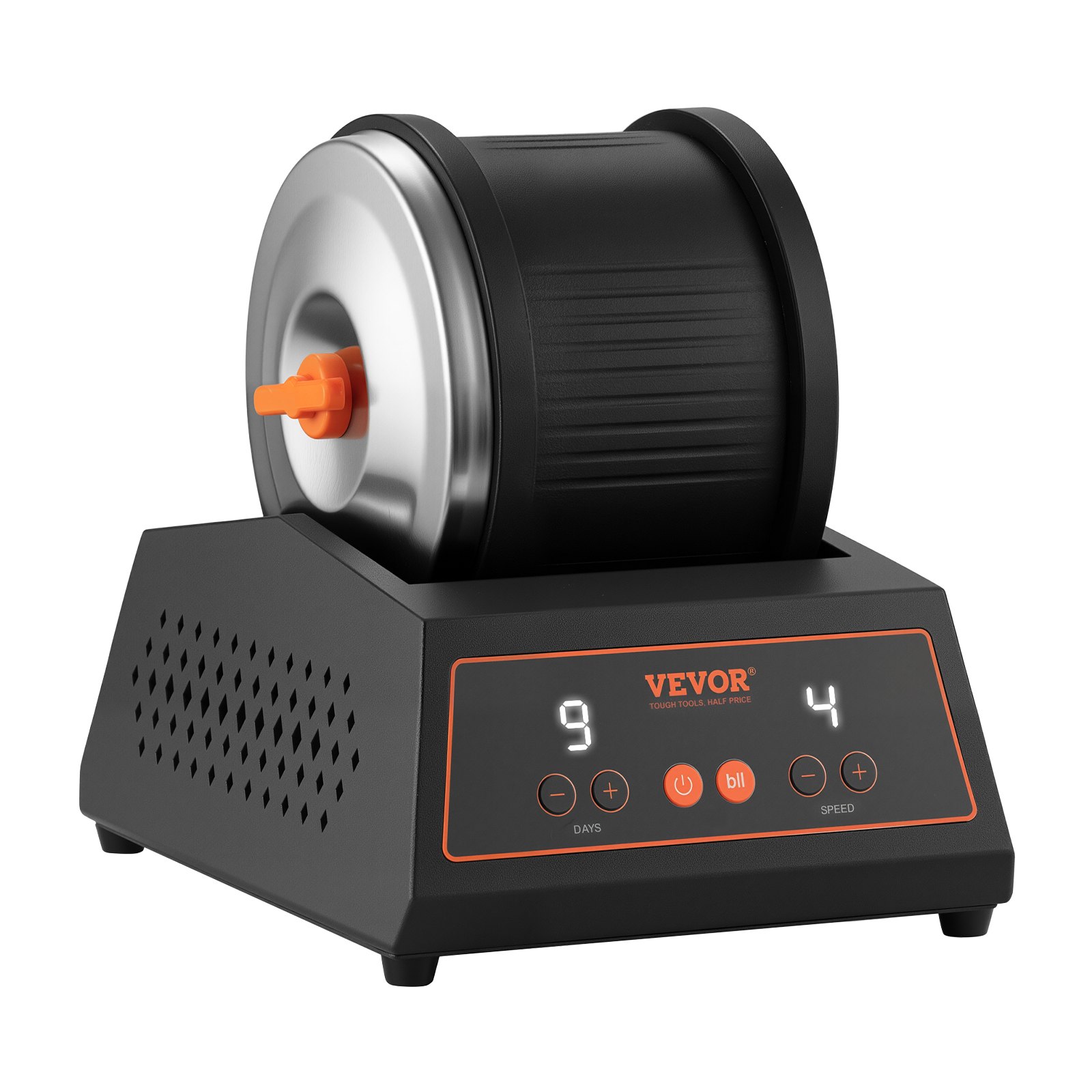 Rock Tumbler 4 lbs Large Barrel 4 Speed Settings Polishing Kit, for Adults Beginners and Hobbyists, 9-Day Timer, Double Capacity, Polisher Kit with Adapter$75.99View on Mallflare
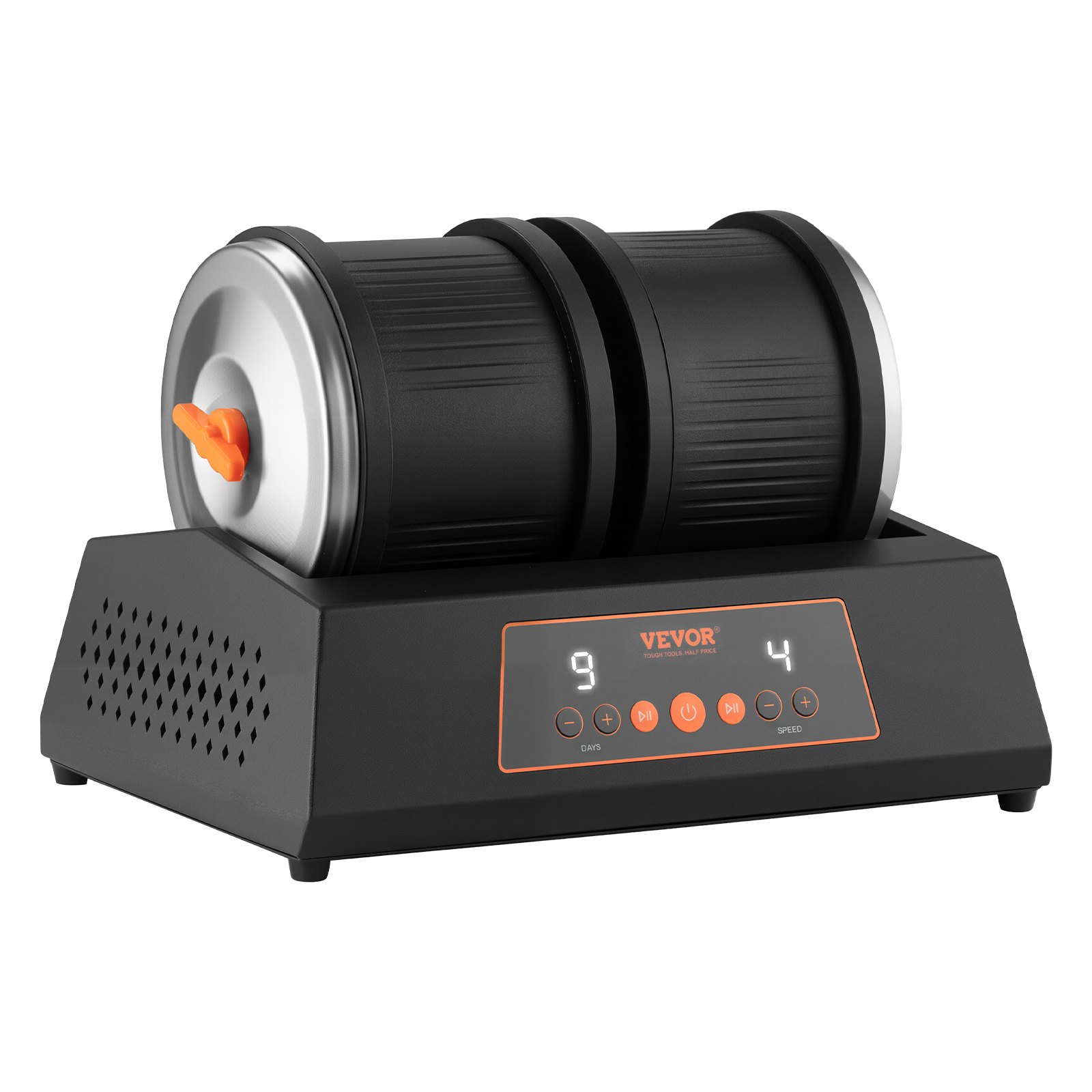 Rock Tumbler 8 lbs Double Barrel 4 Speed Settings Polishing Kit, for Adults Beginners and Hobbyists, 9-Day Timer, Large Capacity, Polisher Kit with Adapter$141.99View on Mallflare
Highlights
- Rotary tumblers use a rubber or plastic barrel on rubber rollers; barrel capacity is rated in pounds of rock plus grit and water, so a 4 lb barrel holds roughly 3 lb of stone.
- Duty cycle is the key durability metric: hobby units are rated for continuous 24/7 multi-week runs, while light-duty motors need cooldown cycles and fail early under full loads.
- Speed settings (often 4) change barrel RPM; harder stones like agate and jasper need slower rotation, while softer material and burnishing stages run faster.
- Double-barrel models split capacity across two smaller barrels, letting you run separate grit stages or stone types simultaneously instead of one large batch.
Best use cases
- Pick a 4 lb single-barrel unit for one batch of small-to-medium stones at a time; skip it if you routinely tumble fist-sized rocks that need more volume to cushion impacts.
- Choose an 8 lb double-barrel model when you want to run coarse grind and polish stages in parallel or keep different stone types separated without cross-contamination.
- Skip large rotary tumblers for mirror-finish flats and delicate specimens; a vibratory tumbler finishes faster and preserves shape, but rotary is better for rounding rough tumbled stones.
Buying tips
- Match barrel weight to motor rating: a loaded barrel weighs about 1.3–1.5x its rock capacity once grit, water, and media are added, so confirm the motor is rated for that total.
- Prefer barrels with a thick rubber liner or solid rubber construction; thin plastic barrels wear through at the rim and leak grit slurry within a few seasons.
- Check the drive system: direct-drive motors with a thermal cutoff survive long runs better than exposed belt drives that slip and stretch under heavy 8 lb loads.
- Buy a model with a built-in multi-day timer (7–9 day cycles) so you can run coarse grind unattended without manually restarting the machine daily.
Specs
| Barrel Capacity | 4 lb single to 8 lb double barrel |
|---|---|
| Drive Type | Direct-drive motor vs belt drive |
| Speed Settings | 4-speed variable RPM control |
| Timer Cycle | 7–9 day programmable timer |
Related searches
What to check before buying
- Measure your workspace: large tumblers run loud for weeks, so confirm a stable, level surface away from living areas and that the barrel diameter fits your bench depth.
- Confirm the power adapter matches your regional voltage and plug type; many kits ship with a wall adapter, and a mismatched plug means sourcing a replacement.
- Plan for grit and media: large barrels consume more silicon carbide grit per stage, so budget for coarse, medium, fine, and polish grit plus ceramic media.
- Check barrel access and sealing: a screw-on lid with a rubber gasket is easier to seat correctly than press-fit lids, which leak slurry if not perfectly aligned.
FAQ
Data sources: eBay / Amazon listings and product attribute feeds. Updated Nov 28, 2026.
Some links on this page are affiliate links. If you buy after clicking one, we may earn a commission at no extra cost to you. This does not change which products appear here or their order. Affiliate disclosure.