
Photos from current listings. Actual item, color, and included accessories may vary.
Paint Brush Buying Guide
Paint brushes are the primary interface between paint and surface, and the core trade-off is filament quality: synthetic filaments resist water and chemicals for acrylics, while natural hair holds oils and watercolors. Buying decision hinges on matching filament type to your medium—buy synthetic for acrylics, natural hair for oils/watercolors, and avoid mystery-fiber bulk packs for serious work.
Median $55.00 · New listings
Key takeaways
- Synthetic filaments (nylon, polyester, taklon) are engineered for acrylics and water-mixable oils; they resist swelling and retain shape through repeated water exposure.
- Natural hair (hog bristle, sable, squirrel) holds oil and watercolor loads better but degrades with acrylics because the polymer binder is difficult to clean out.
- Brush shapes dictate marks: flats for broad strokes and edges, rounds for detail and lining, filberts for soft blends, and angled shaders for corners and cut-in work.
At a glance
- Category
- Art Supplies
- Last updated
- Nov 29, 2026
Current offers
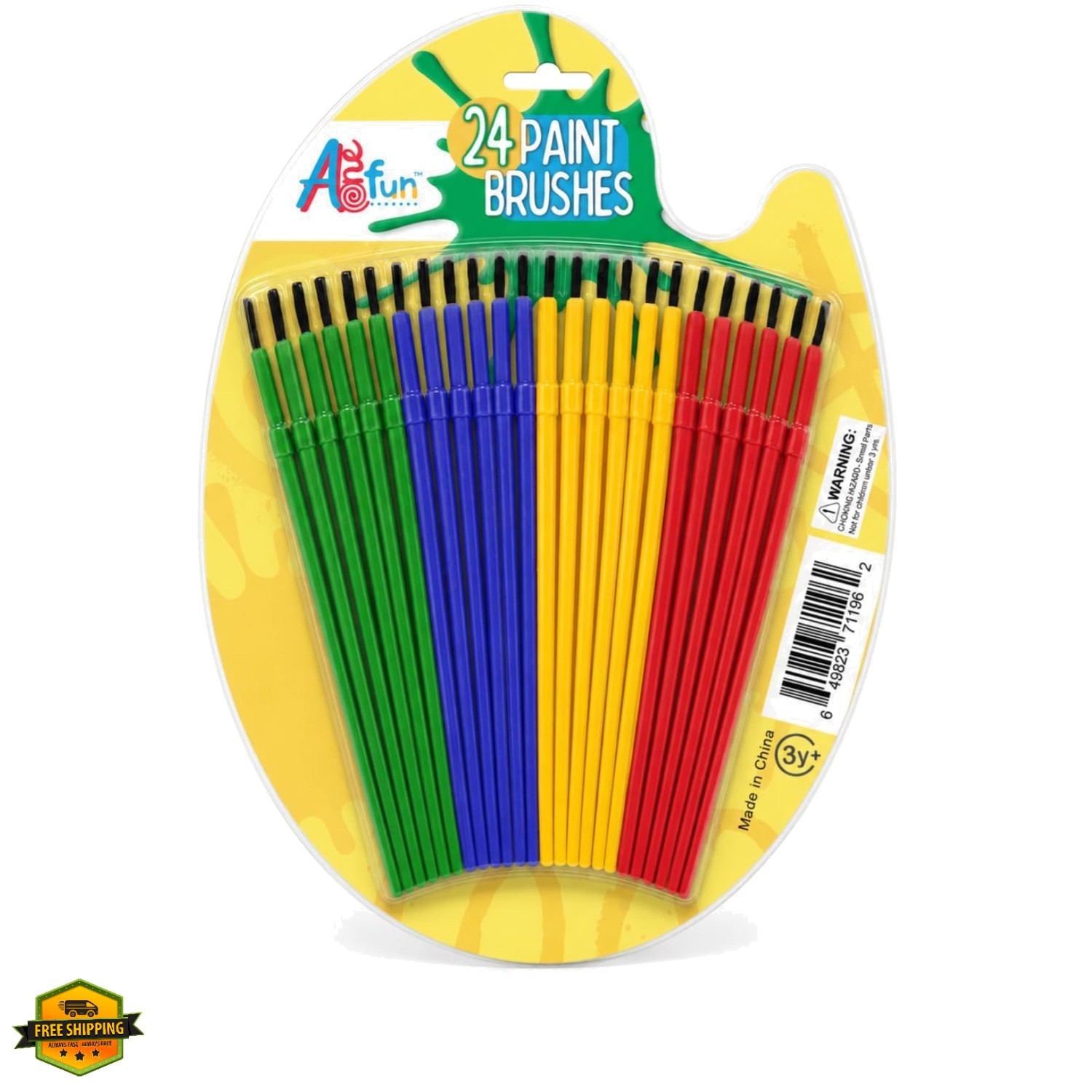 Kids Paint Brushes - Paintbrushes for Kids Toddler Paint Brushes Bulk for Wat...$8.65Last checked Nov 25, 2026View on eBay
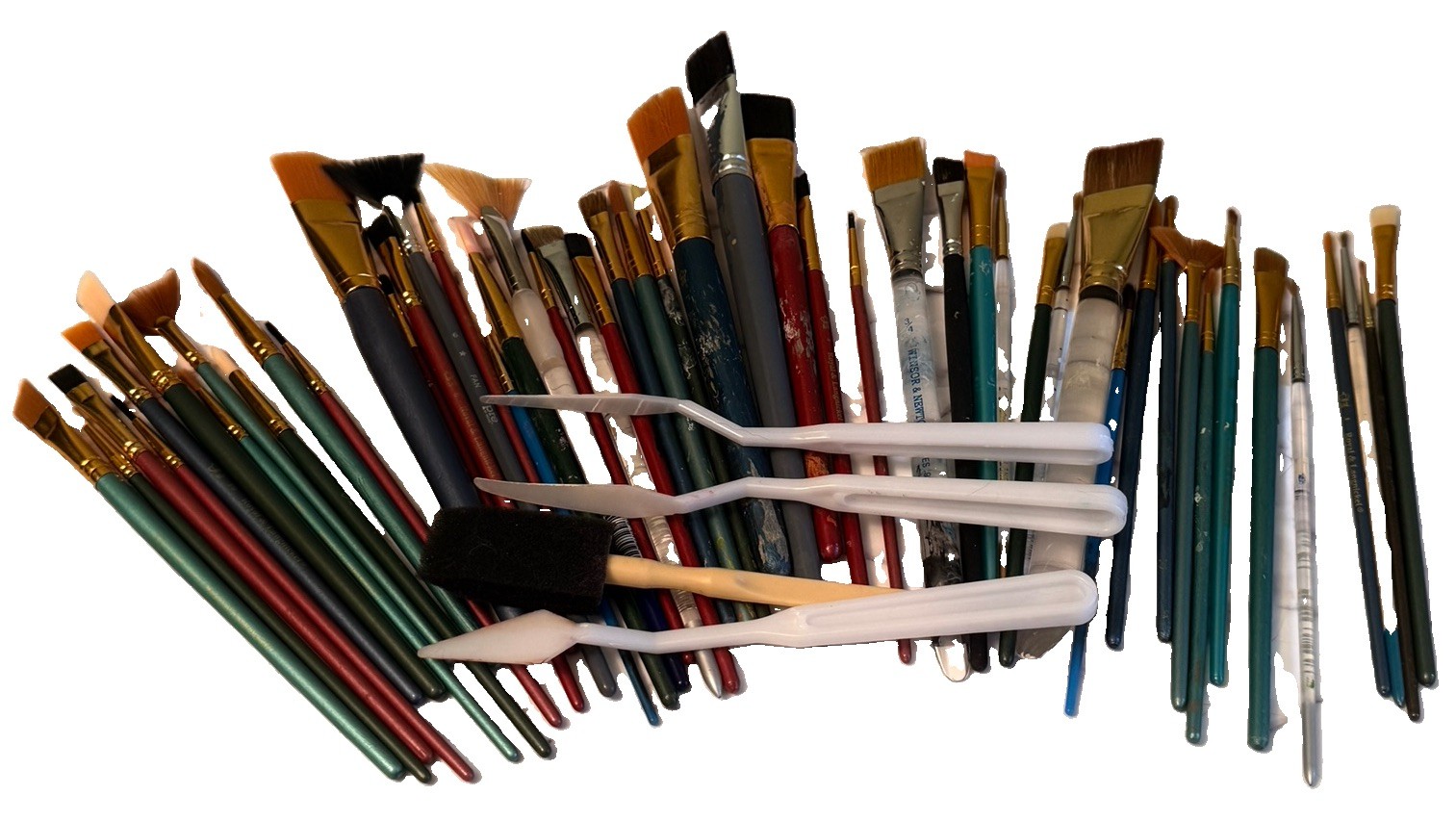 Paint Brush Lot 53 Piece Artist Brushes, Plastic Palette Knives.$55.00View on eBay
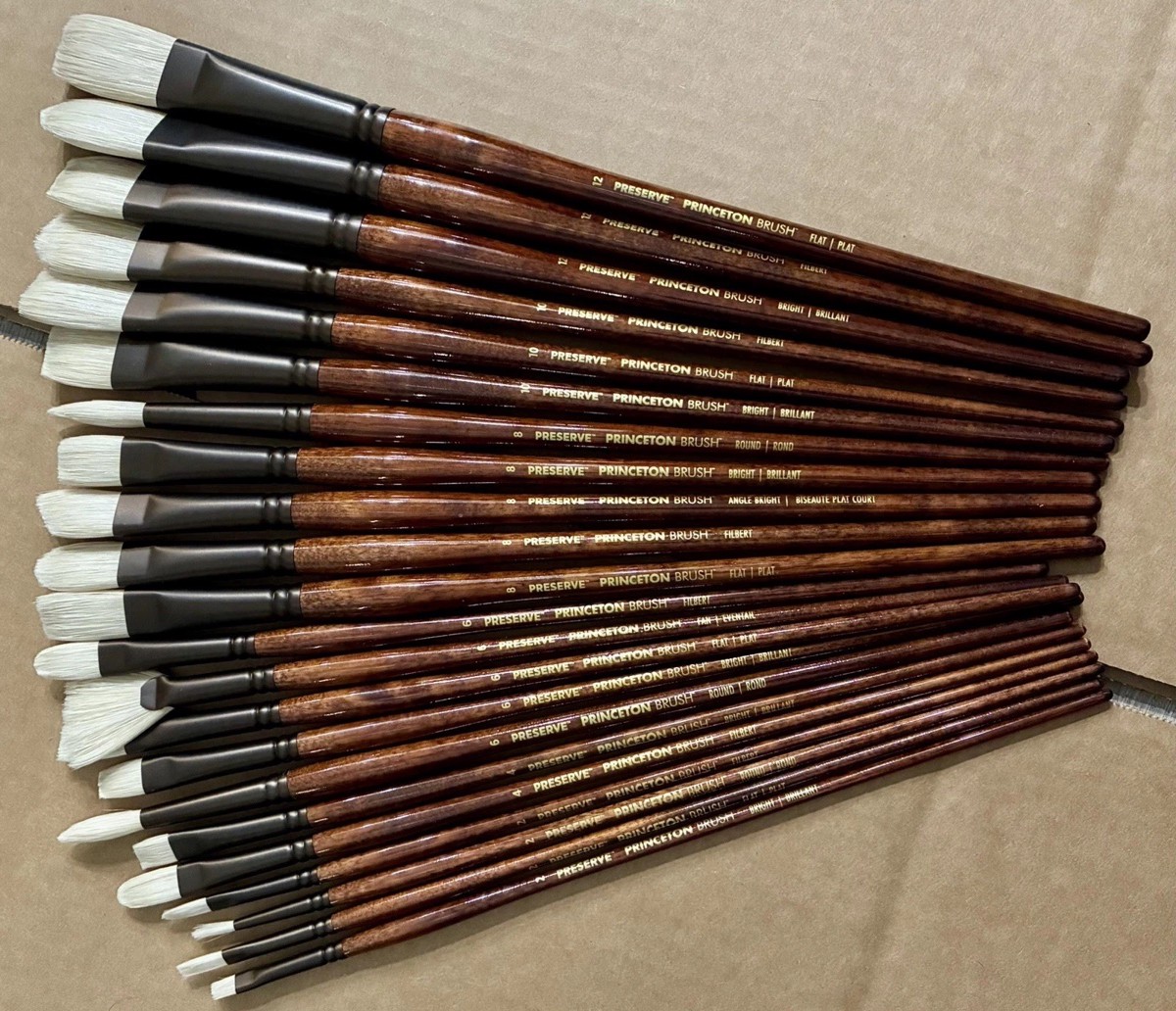 22 Princeton Preserve Oil & Acrylic Art Paint Brushes NEW Golden Liquitex$200.00New · Last checked Nov 21, 2026View on eBay
Highlights
- Synthetic filaments (nylon, polyester, taklon) are engineered for acrylics and water-mixable oils; they resist swelling and retain shape through repeated water exposure.
- Natural hair (hog bristle, sable, squirrel) holds oil and watercolor loads better but degrades with acrylics because the polymer binder is difficult to clean out.
- Brush shapes dictate marks: flats for broad strokes and edges, rounds for detail and lining, filberts for soft blends, and angled shaders for corners and cut-in work.
- Handle and ferrule construction separates durable brushes from disposables: double-crimped seamless metal ferrules prevent wobble, and lacquered hardwood handles resist water without cracking.
Best use cases
- Acrylic painters: choose synthetic taklon or nylon brushes in flat, round, and filbert shapes—skip natural hair, which clogs and stiffens with acrylic polymer.
- Oil and watercolor painters: choose natural hog bristle for heavy-body oils and sable or squirrel for watercolor washes—skip stiff synthetic flats that repel oil-based media.
- Kids and classroom bulk: choose value packs of large synthetic brushes with plastic handles—skip fine-art natural hair sets, which are wasted on rough handling and poor cleaning.
- Miniature and model painters: choose a dual-action airbrush kit with compressor for coverage plus a detail round brush (size 0–2) for edges—skip broad household brushes.
Buying tips
- Match filament to medium: synthetic for acrylics and water-mixable oils, hog bristle for oils, sable or synthetic squirrel for watercolor.
- Sizing follows a standard scale: round brushes size 0–20 (higher number = larger belly), flats measured in inches (1/8 to 1 inch); buy a range rather than one size.
- Ferrule quality check: look for seamless, double-crimped metal ferrules—single-crimp or plastic ferrules are the top failure point on cheap brushes.
- For airbrush work, specify compressor type: tankless units pulse; tank-equipped units (e.g., 1/6 HP with tank) deliver steady pressure for consistent atomization.
Specs
| Filament Type | Synthetic / Natural Hair / Blend |
|---|---|
| Brush Shapes | Flat, Round, Filbert, Angled |
| Ferrule Material | Seamless double-crimp metal |
| Airbrush Compressor | Tankless vs Tank (1/6 HP) |
Related searches
What to check before buying
- Measure your intended stroke width and detail size to select brush sizes; a size 10 round is roughly 3–4 mm at the belly, a 1-inch flat covers broad areas.
- Confirm your medium (acrylic, oil, watercolor, airbrush) before buying—filament compatibility is the single biggest performance factor.
- For airbrush kits, verify local power (120V vs 220V) and that the included hose fits your airbrush thread (standard 1/8 BSP).
- Ensure you have compatible cleaner: brush soap for natural hair, isopropyl or dedicated acrylic cleaner for synthetics, and airbrush cleaner for airbrush systems.
FAQ
Data sources: eBay / Amazon listings and product attribute feeds. Updated Nov 29, 2026.
Some links on this page are affiliate links. If you buy after clicking one, we may earn a commission at no extra cost to you. This does not change which products appear here or their order. Affiliate disclosure.