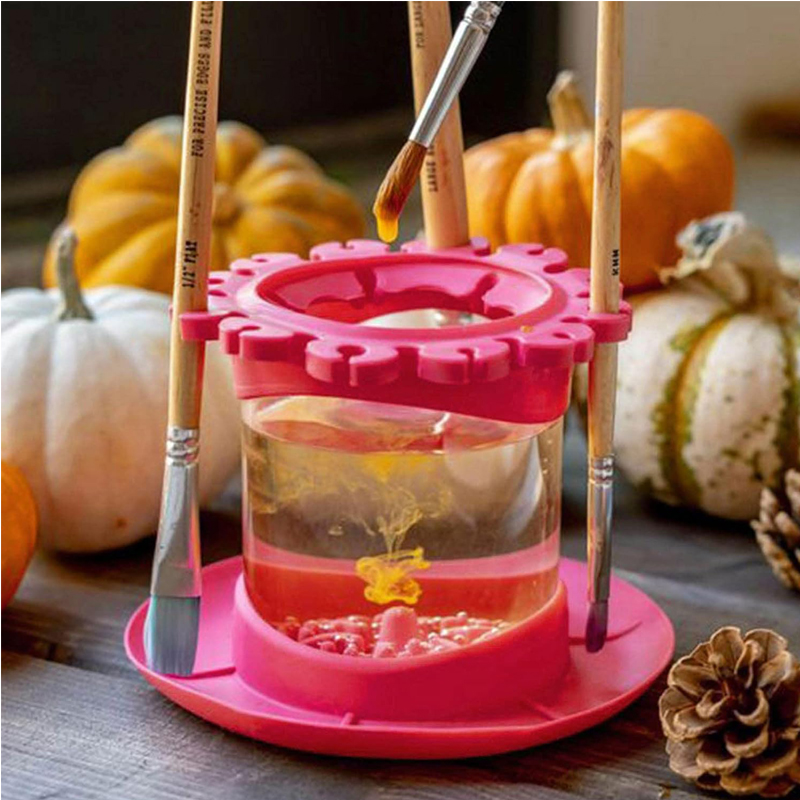

Photos from current listings. Actual item, color, and included accessories may vary.
Paint Brush Cleaner Buying Guide
A paint brush cleaner is a dedicated tool or chemical system that removes dried and wet paint from bristles without damaging ferrules or filaments. The core trade-off is between mechanical scrubbers (durable, water-based paints) and solvent-based rinsing stations (effective on oils and enamels but require ventilation and waste handling). Buy a scrubber with molded ridges and a detachable basin for water-based acrylics; choose a sealed solvent jar with a suspended strainer for oil and enamel work.
Key takeaways
- Scrubber boards use molded plastic ridges or stainless pins; plastic ridges suit synthetic bristles, metal pins risk splitting natural hair.
- Solvent rinse jars rely on a suspended mesh basket that keeps bristles off settled sludge, extending solvent life 2-3x versus open trays.
- Detachable basins with a pour spout let you dump paint solids without dislodging the scrubber; fixed one-piece units clog at the drain seam.
At a glance
- Category
- Art Supplies
- Last updated
- Nov 28, 2026
Current offers
Highlights
- Scrubber boards use molded plastic ridges or stainless pins; plastic ridges suit synthetic bristles, metal pins risk splitting natural hair.
- Solvent rinse jars rely on a suspended mesh basket that keeps bristles off settled sludge, extending solvent life 2-3x versus open trays.
- Detachable basins with a pour spout let you dump paint solids without dislodging the scrubber; fixed one-piece units clog at the drain seam.
- For water-based acrylics, warm water plus a textured silicone or plastic scrub pad removes 90% of residue; solvents are unnecessary and degrade glue in ferrules.
Best use cases
- Best fit: Acrylic and watercolor painters using synthetic brushes — pick a plastic scrubber board with medium ridges and a detachable water basin; skip solvent jars.
- Best fit: Oil and enamel painters — choose a sealed glass or solvent-resistant jar with a wire mesh basket that suspends bristles above settled pigment; skip open plastic trays.
- Wrong fit: Restoring fossilized paint on vintage natural-hair brushes — neither scrubbers nor jars dissolve hardened oil safely; use a dedicated brush restorer and avoid metal pins.
- Wrong fit: Large flat wash brushes over 2 inches — most scrubber boards are sized for rounds and filberts up to size 12; oversized brushes need a wide basin or sink-based cleaning.
Buying tips
- Match scrubber ridge spacing to bristle size: fine ridges for size 0-4 detail brushes, wide ridges for flats and rounds size 8 and up.
- Choose solvent jars with a gasket-sealed lid and at least 8 oz capacity; smaller jars saturate with pigment sludge in one session.
- Detachable basins must have a smooth interior seam under 1 mm; raised seams trap dried acrylic and crack within months.
- Plastic scrubber boards should be ABS or polypropylene; polystyrene cracks when flexed during scrubbing and is not solvent-resistant.
Specs
| Cleaner Type | Scrubber board vs solvent rinse jar |
|---|---|
| Scrubber Material | ABS/polypropylene vs polystyrene |
| Basin Detachability | Detachable pour-spout vs fixed one-piece |
| Solvent Jar Seal | Nitrile/PTFE gasket vs rubber |
Related searches
What to check before buying
- Measure your largest brush width and confirm the scrubber board or jar opening exceeds it by at least 0.5 inch.
- Confirm sink or workspace clearance for a detachable basin — most boards are 6-9 inches wide and need a flat, drainable surface.
- For solvent jars, verify the lid gasket material is nitrile or PTFE, not natural rubber, which swells and leaks with turpentine.
- Check that the scrubber has non-slip feet or a suction base; sliding boards during scrubbing bend ferrules and loosen bristles.
FAQ
Data sources: eBay / Amazon listings and product attribute feeds. Updated Nov 28, 2026.
Some links on this page are affiliate links. If you buy after clicking one, we may earn a commission at no extra cost to you. This does not change which products appear here or their order. Affiliate disclosure.