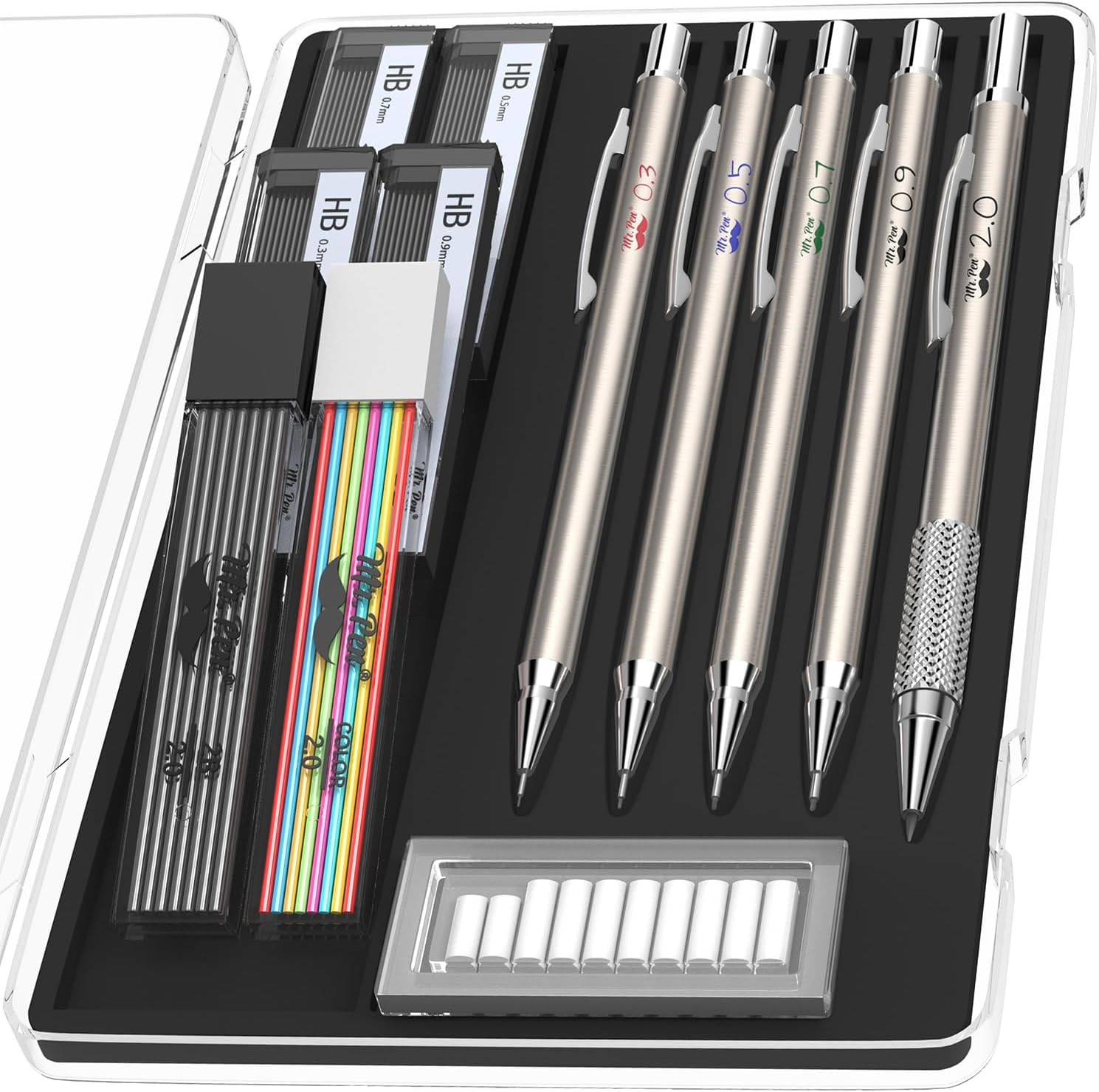

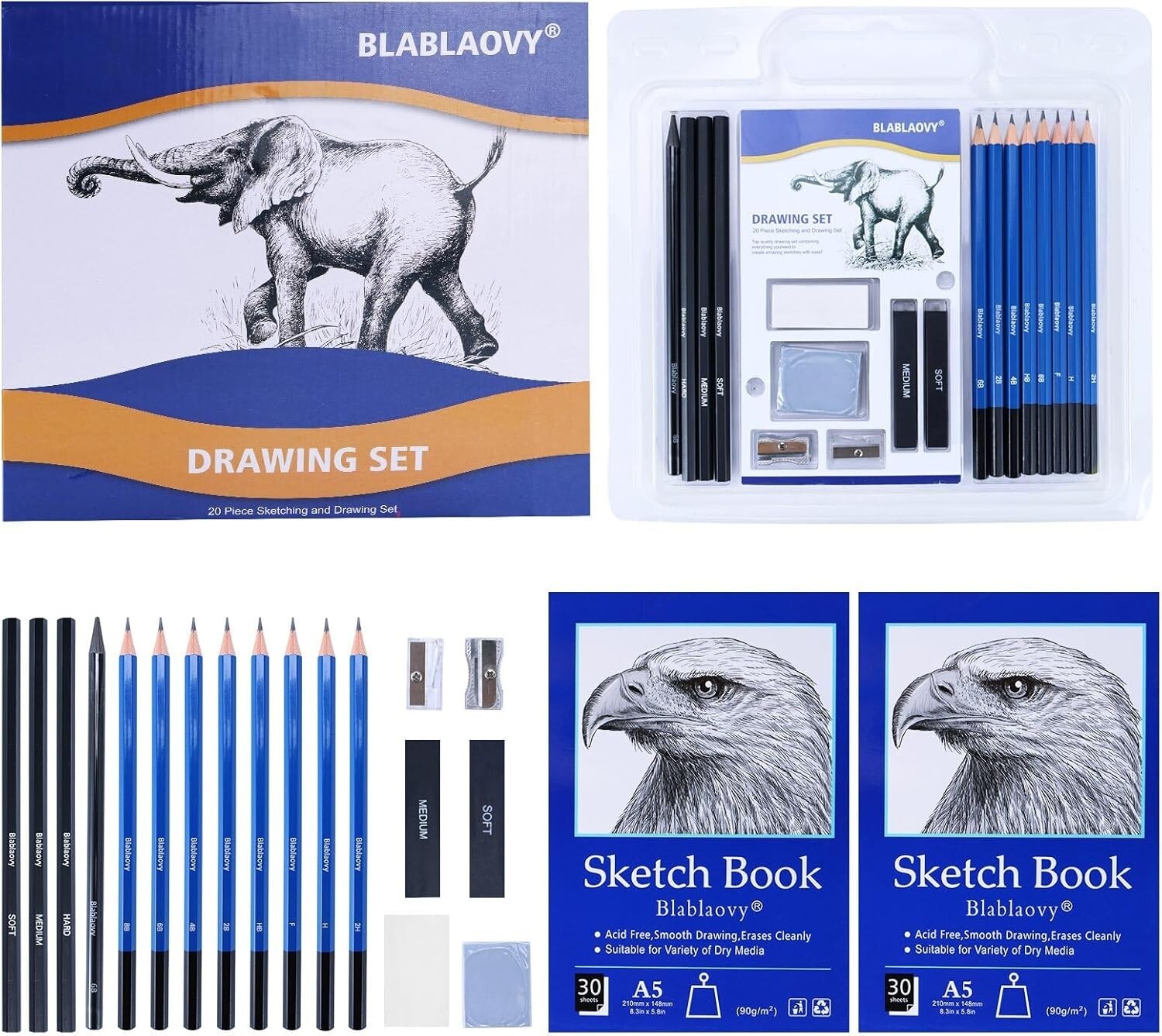
Photos from current listings. Actual item, color, and included accessories may vary.
Sketching Pencil Buying Guide
Sketching pencils are graphite or charcoal drawing tools graded by core hardness, binder quality, and wood casing; the core trade-off is pigment consistency and point retention versus price. Durable options use calibrated graphite grades (2H–8B) with cedar or basswood barrels and break-resistant bonded cores, while compromises show gritty, inconsistent grading and splinter-prone casings.
Median $13.52
Key takeaways
- Graphite grading runs 9H (hardest, lightest) to 9B (softest, darkest); sketching sets typically span 2H–8B for full value-range control.
- Bonded core pencils resist breakage under pressure; cheap cores snap and crumble at the sharpener, wasting half the pencil.
- Cedar and basswood sharpen cleanly without splintering; low-grade casings chip and expose off-center cores that produce scratchy lines.
At a glance
- Category
- Art Supplies
- Last updated
- Nov 28, 2026
Current offers
Highlights
- Graphite grading runs 9H (hardest, lightest) to 9B (softest, darkest); sketching sets typically span 2H–8B for full value-range control.
- Bonded core pencils resist breakage under pressure; cheap cores snap and crumble at the sharpener, wasting half the pencil.
- Cedar and basswood sharpen cleanly without splintering; low-grade casings chip and expose off-center cores that produce scratchy lines.
- Charcoal pencils use compressed charcoal or charcoal-graphite blends; they lay down matte black but smudge readily and need fixative.
Best use cases
- Best fit: a graded graphite set (2H–8B) for general sketching, life drawing, and value studies — skip single-pencil buys that lack range.
- Best fit: charcoal pencil packs for expressive, tonal, large-format work — but keep them separate from graphite to avoid cross-contamination and smudging.
- Wrong fit: soft-core colored pencils for adult coloring books — they are pigment pencils, not sketching graphite, and behave differently under erasure and blending.
- Wrong fit: mechanical drafting pencils for expressive shading — fixed small leads suit technical linework, not broad tonal sketching.
Buying tips
- Match grade range to purpose: 2H–2B for light construction lines, 4B–8B for deep shadows; a set covering 2H–8B handles all sketching.
- Choose 2.0 mm lead holders for technical sketching and 3–4 mm graphite sticks for broad strokes; standard 0.5/0.7 mm mechanical pencils are too fine for tonal work.
- Cedar or basswood barrels sharpen without splintering; avoid lightweight mystery-wood pencils that crack at the ferrule and off-center the core.
- Charcoal pencils need a fixative and a dedicated sketchbook; graphite erases cleanly but charcoal stains paper permanently once burnished.
Specs
| Grade Range | 2H–8B graphite grading scale |
|---|---|
| Core Type | Graphite / charcoal / charcoal-graphite |
| Barrel Material | Cedar or basswood, hexagonal |
| Lead Diameter | 2.0–4.0 mm (wood-cased) |
Related searches
What to check before buying
- Confirm the set's grade range spans at least 2H through 6B; sets missing soft grades limit shadow depth.
- Check barrel shape: hexagonal resists rolling and gives edge control; round is comfortable but rolls off sloped drawing boards.
- For charcoal, stock workable fixative and a toothy paper (cold-press or charcoal paper); smooth paper barely holds charcoal.
- Verify sharpener compatibility: standard 8 mm sharpeners fit most pencils, but oversized 3–4 mm graphite sticks need a dedicated sharpener.
FAQ
Data sources: eBay / Amazon listings and product attribute feeds. Updated Nov 28, 2026.
Some links on this page are affiliate links. If you buy after clicking one, we may earn a commission at no extra cost to you. This does not change which products appear here or their order. Affiliate disclosure.