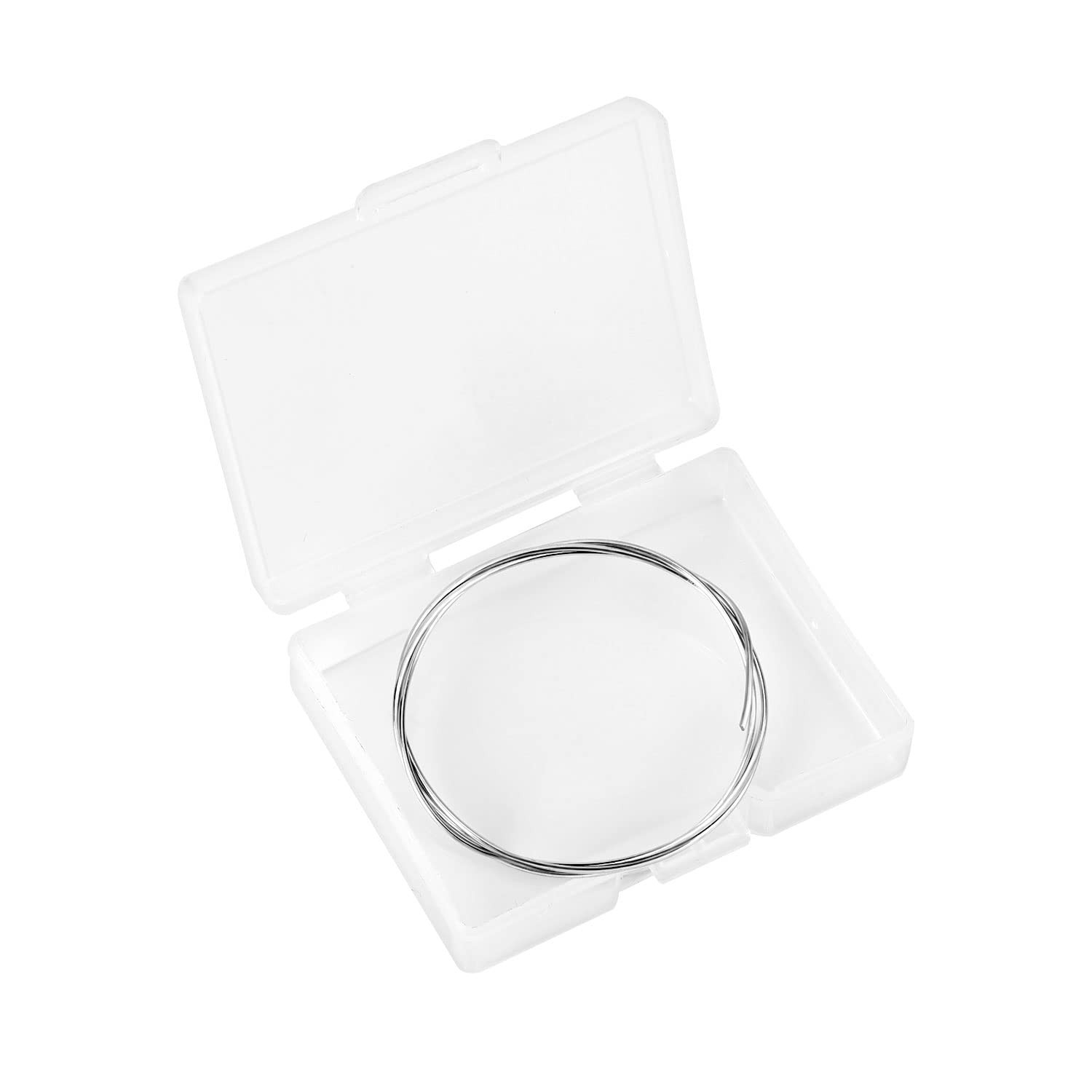

Photos from current listings. Actual item, color, and included accessories may vary.
Jewelry Wire Buying Guide
Jewelry wire is a dead-soft-to-half-hard metal strand sold by gauge and temper, where the core trade-off is workability versus structural memory; dead-soft bends without resistance but dents easily, while half-hard springs back and holds wraps. The decisive rule: match temper and gauge to the mechanical job — 18–22 gauge half-hard for load-bearing loops and clasps, 24–28 gauge dead-soft for wire-wrapping and coiling — and never substitute craft-store aluminum for precious-metal wire on skin-contact pieces.
Key takeaways
- Gauge runs inverse to diameter: 18g ≈ 1.0 mm (structure), 20g ≈ 0.8 mm (all-purpose), 22g ≈ 0.6 mm (ear wires), 26–28g ≈ 0.4–0.3 mm (coiling and weaving).
- Temper is the durability driver: dead-soft work-hardens with bending, half-hard resists deformation, full-hard is spring-tempered for memory wire and heavy clasps.
- Precious alloys differ by skin and patina: sterling silver (92.5% Ag) tarnishes and is solderable; 14k gold-filled carries a thick bonded gold layer that outlasts gold-plated brass by years.
At a glance
- Category
- Beads & Jewelry Making
- Last updated
- Nov 28, 2026
Current offers
Highlights
- Gauge runs inverse to diameter: 18g ≈ 1.0 mm (structure), 20g ≈ 0.8 mm (all-purpose), 22g ≈ 0.6 mm (ear wires), 26–28g ≈ 0.4–0.3 mm (coiling and weaving).
- Temper is the durability driver: dead-soft work-hardens with bending, half-hard resists deformation, full-hard is spring-tempered for memory wire and heavy clasps.
- Precious alloys differ by skin and patina: sterling silver (92.5% Ag) tarnishes and is solderable; 14k gold-filled carries a thick bonded gold layer that outlasts gold-plated brass by years.
- Copper-core craft wire is soft and color-coated; bare copper and brass are affordable practice metals but oxidize and can leave green skin marks.
Best use cases
- Choose 20g or 22g half-hard sterling silver for ear wires, French hooks, and clasp components — it holds shape under daily wear; skip dead-soft here because ear wires bend out of alignment.
- Choose 24–28g dead-soft copper or gold-filled for wire-wrapped briolettes, woven bezels, and coiled pendants; skip half-hard in these gauges because it kinks instead of flowing around stones.
- Choose 16–18g half-hard or full-hard for bangles, ring shanks, and heavy structural frames; skip 28g for any piece that must bear weight or survive a pocket.
- Choose gold-filled or sterling for skin-contact and heirloom pieces; reserve color-coated copper and aluminum for practice, display models, and non-skin accessories.
Buying tips
- Size by job, not by kit: 18g = 1.02 mm, 20g = 0.81 mm, 22g = 0.64 mm, 24g = 0.51 mm, 26g = 0.41 mm, 28g = 0.32 mm — a two-gauge jump halves stiffness noticeably.
- For ear wires and posts, 20g or 21g fits standard pierced holes; 18g requires stretched piercings and 22g feels thin in lobe-wear.
- Gold-filled (14/20) means 1/20 of total weight is 14k gold bonded to a brass core — a real durability tier above gold-plated, which is a micron flash that wears through.
- Length-per-weight is fixed by density: sterling and copper are heavy, aluminum roughly one-third the weight of copper, so buy aluminum for volume and precious metals by the troy ounce.
Specs
| Gauge Range | 16–28 AWG (1.3–0.3 mm) |
|---|---|
| Temper | Dead-soft / Half-hard / Full-hard |
| Metal Options | Sterling, Gold-filled, Copper, Brass |
| Wire Shape | Round, Half-round, Square |
Related searches
What to check before buying
- Match wire gauge to your hole and finding sizes: 20–22g passes most bead holes and ear wires; 18g needs 2 mm+ holes and heavier jump rings.
- Confirm temper before purchase — dead-soft, half-hard, and full-hard are separate SKUs and the same gauge behaves very differently.
- Check skin compatibility: nickel-free sterling, gold-filled, and niobium for sensitive ears; avoid nickel-bearing base metals and unknown plating on ear wires.
- Plan tools for the temper: nylon-jaw pliers for dead-soft to avoid marring, hardened flush cutters for full-hard memory wire, and a mandrel set for consistent loops.
FAQ
Data sources: eBay / Amazon listings and product attribute feeds. Updated Nov 28, 2026.
Some links on this page are affiliate links. If you buy after clicking one, we may earn a commission at no extra cost to you. This does not change which products appear here or their order. Affiliate disclosure.