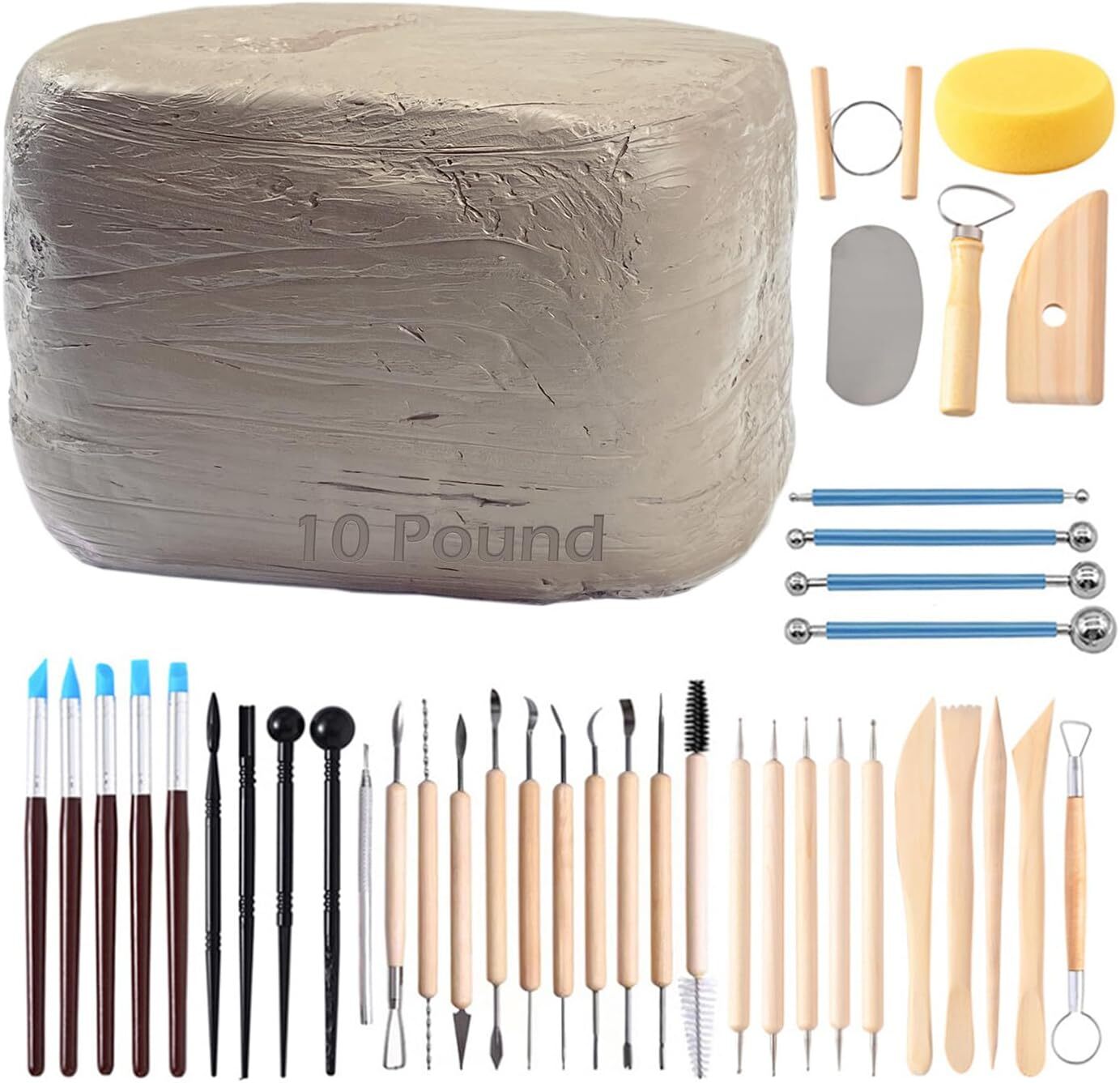

Photos from current listings. Actual item, color, and included accessories may vary.
Air Dry Modeling Clay Buying Guide
Air dry modeling clay is a water-based, self-hardening body that cures at room temperature without a kiln, making it the default choice for hand-built sculpture, kids' crafts, and armature work. The core trade-off is between fiber/paper-reinforced clays that shrink less and hold fine detail versus smooth porcelain-like clays that finish cleaner but crack and shrink more during drying. Buy reinforced, sealed-bag clay in the 1–10 lb working range for structural pieces, and reserve smooth non-reinforced bodies only for small, thin, low-stress forms.
Key takeaways
- Paper/fiber-reinforced bodies shrink roughly 3–8% and resist cracking on armatures; smooth porcelain-type air dry clays shrink 8–15% and need slow, even drying.
- Air dry clay is water-based and re-wettable during working; once fully cured it is not food-safe, not waterproof, and needs acrylic or polyurethane sealer for outdoor or handled pieces.
- A 10 lb block supports roughly a 6–8 inch solid figure; hollow builds or foil-and-wire armatures stretch the same clay much further and dry faster with fewer cracks.
At a glance
- Category
- Pottery Clay & Ceramic Bodies
- Last updated
- Nov 28, 2026
Current offers
Highlights
- Paper/fiber-reinforced bodies shrink roughly 3–8% and resist cracking on armatures; smooth porcelain-type air dry clays shrink 8–15% and need slow, even drying.
- Air dry clay is water-based and re-wettable during working; once fully cured it is not food-safe, not waterproof, and needs acrylic or polyurethane sealer for outdoor or handled pieces.
- A 10 lb block supports roughly a 6–8 inch solid figure; hollow builds or foil-and-wire armatures stretch the same clay much further and dry faster with fewer cracks.
- Most air dry clays are non-toxic and AP-certified for ages 6+, but they are not kiln-fired ceramics—do not expect stoneware strength, food contact, or oven use.
Best use cases
- Best fit: choose reinforced 5–10 lb air dry clay plus a stainless loop-and-rib tool set for hand-built figures, models, and classroom projects that must cure without a kiln.
- Best fit: use smooth non-reinforced air dry clay for thin decorative tiles, jewelry blanks, and stamp/imprint work where fine surface detail and a clean finish matter more than crack resistance.
- Wrong fit: skip air dry clay for functional mugs, planters, or outdoor garden pieces—cured clay is porous and water-sensitive unless heavily sealed, and it cannot be fired.
- Wrong fit: skip solid 10 lb blocks for large hollow sculpture; foil-core armatures and hollow coil building reduce weight, drying time, and shrinkage cracks.
Buying tips
- Match weight to project: 2–5 lb for small figures and classroom use, 10 lb for a single 6–8 inch solid sculpt or multiple small pieces; buy re-sealable bags to prevent premature hardening.
- Choose paper/fiber-reinforced clay when building over wire or foil armatures—reinforcement absorbs shrinkage stress and cuts crack failures on joints and thin appendages.
- Smooth clay bodies take finer impressions and sand cleanly; plan on slower drying (3–7 days for 1-inch thickness) and seal finished pieces with acrylic or polyurethane.
- Confirm the tool set includes stainless steel loop and ribbon tools—carbon-steel tools rust with water-based clay; a 40-piece set should cover shaping, cutting, smoothing, and detailing.
Specs
| Body Type | Paper/fiber-reinforced vs smooth |
|---|---|
| Shrinkage | 3-8% reinforced / 8-15% smooth |
| Cure Time | 24-72 hr per 1 in thickness |
| Sealer Required | Acrylic or polyurethane topcoat |
Related searches
What to check before buying
- Measure your largest planned piece: solid forms over 3 inches thick need hollowing or an armature to dry without cracking.
- Plan a dust-free, room-temperature drying area with airflow; air dry clay cracks in drafts, direct sun, or cold garages.
- Have acrylic paint, primer, and a water-based polyurethane sealer on hand before starting—cured clay is chalky and porous without a topcoat.
- Check the clay bag for AP non-toxic certification and age grading; keep water bowls and finished dust away from young children.
FAQ
Data sources: eBay / Amazon listings and product attribute feeds. Updated Nov 28, 2026.
Some links on this page are affiliate links. If you buy after clicking one, we may earn a commission at no extra cost to you. This does not change which products appear here or their order. Affiliate disclosure.