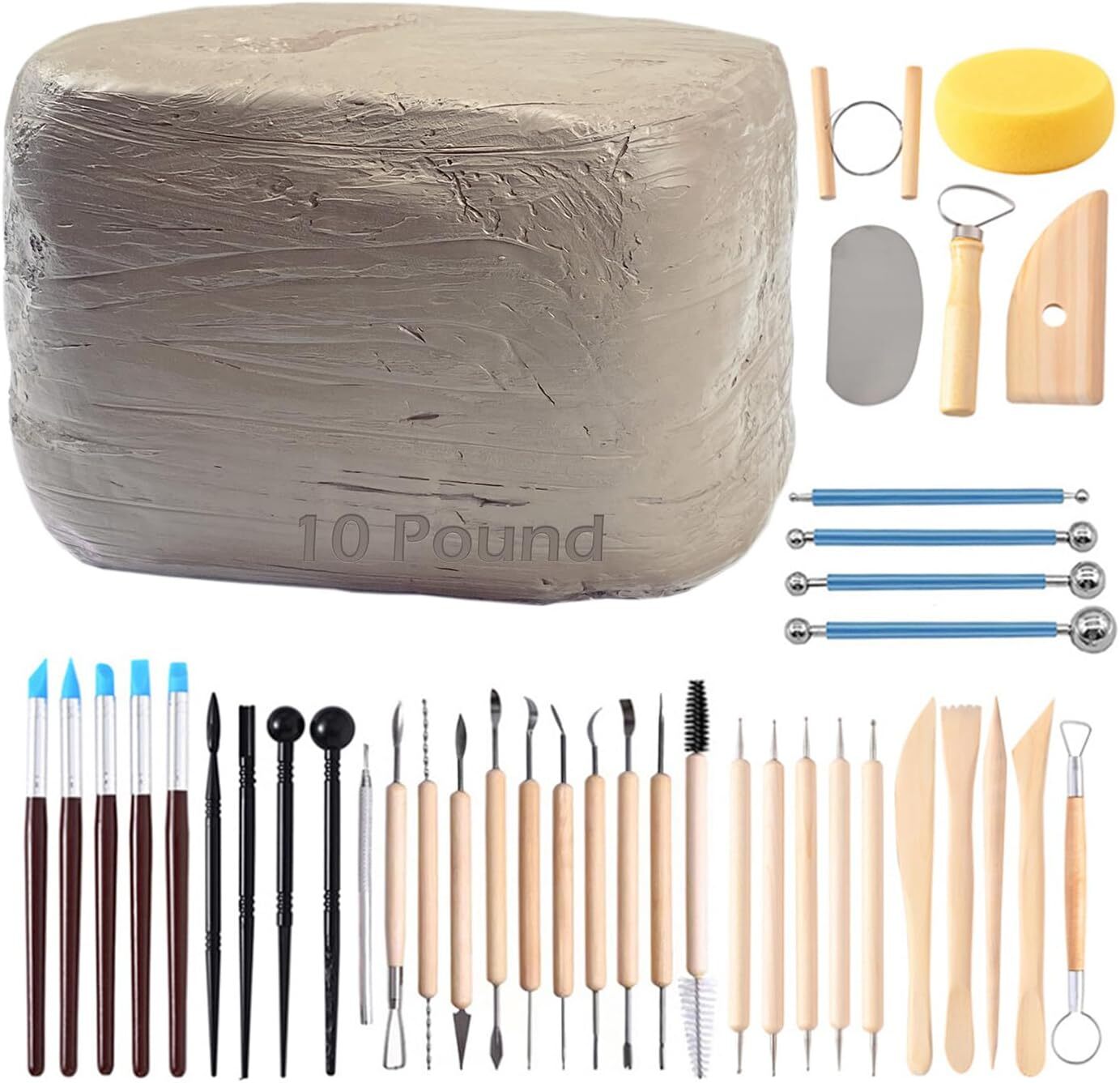

Photos from current listings. Actual item, color, and included accessories may vary.
Dry Clay Art Buying Guide
Dry clay art refers to water-based modeling clays that harden without a kiln, ranging from air-dry polymer blends to natural mineral bodies. The core trade-off is between plastic, slow-drying workability and fast-setting durability, with shrinkage and brittleness being the main failure points. Choose air-dry polymer for fine detail and low shrinkage, or natural mineral clay for large sculptural forms where slight shrinkage is acceptable.
Key takeaways
- Air-dry polymer clays shrink 5-10% and cure via water evaporation, suiting thin, detailed work; natural mineral clays shrink up to 15% and need slower drying to avoid cracks.
- Paper-reinforced air-dry clay has higher green strength and lower cracking risk, making it the standard for hand-built slabs and thick sculptures.
- Natural air-dry modeling clay is often sold in 10 lb blocks with tool sets; density and moisture content determine workability and cure time.
At a glance
- Category
- Pottery Clay & Ceramic Bodies
- Last updated
- Nov 28, 2026
Current offers
Highlights
- Air-dry polymer clays shrink 5-10% and cure via water evaporation, suiting thin, detailed work; natural mineral clays shrink up to 15% and need slower drying to avoid cracks.
- Paper-reinforced air-dry clay has higher green strength and lower cracking risk, making it the standard for hand-built slabs and thick sculptures.
- Natural air-dry modeling clay is often sold in 10 lb blocks with tool sets; density and moisture content determine workability and cure time.
- Oil-based, non-hardening plasticine is not dry clay art—it remains reusable and is unsuitable for permanent pieces.
Best use cases
- Best-fit: fine jewelry, miniatures, and figurines—use air-dry polymer clay for smooth finish and minimal shrinkage; skip natural mineral clay, which cracks at thin cross-sections.
- Best-fit: large hand-built sculptures and bowls—use paper-reinforced or natural mineral air-dry clay in 10 lb blocks with armature support; skip polymer clay for thick forms due to uneven curing.
- Best-fit: classroom and beginner projects—choose pre-moistened natural air-dry clay with a tool set for forgiving workability; skip fast-dry polymer if students need extended working time.
- Wrong-fit: outdoor permanent garden art—air-dry clays are not frost-proof; use kiln-fired stoneware or concrete instead.
Buying tips
- For solid pieces thicker than 1 inch, choose paper-reinforced air-dry clay to reduce shrinkage cracks during slow drying.
- Check moisture content: clay should be pliable but not sticky; 10 lb blocks often arrive soft and can be stiffened by air-drying before use.
- Match clay body to finish: polymer air-dry clay accepts acrylic paint and varnish; natural mineral clay takes slip, underglaze, or acrylic sealers.
- Avoid oil-based plasticine for permanent art—it never hardens and will sag; confirm labels say 'air-dry' or 'self-hardening'.
Specs
| Clay Type | Air-dry polymer vs natural mineral |
|---|---|
| Shrinkage Rate | 5-10% polymer / up to 15% natural |
| Cure Time | 24 hr thin / 3-7 days thick |
| Reinforcement | Paper-reinforced / plain mineral |
Related searches
What to check before buying
- Measure shelf and workspace depth for 10 lb block storage and drying space; thick pieces need 3-7 days of even airflow.
- Confirm room humidity: high humidity slows cure and increases cracking risk; use a dehumidifier or dry in a warm, ventilated area.
- Plan armature support (wire, foil, or mesh) for forms taller than 6 inches to prevent slumping.
- Have sealant or varnish ready if the piece will be handled; air-dry clay is porous and can stain without a sealer.
FAQ
Data sources: eBay / Amazon listings and product attribute feeds. Updated Nov 28, 2026.
Some links on this page are affiliate links. If you buy after clicking one, we may earn a commission at no extra cost to you. This does not change which products appear here or their order. Affiliate disclosure.