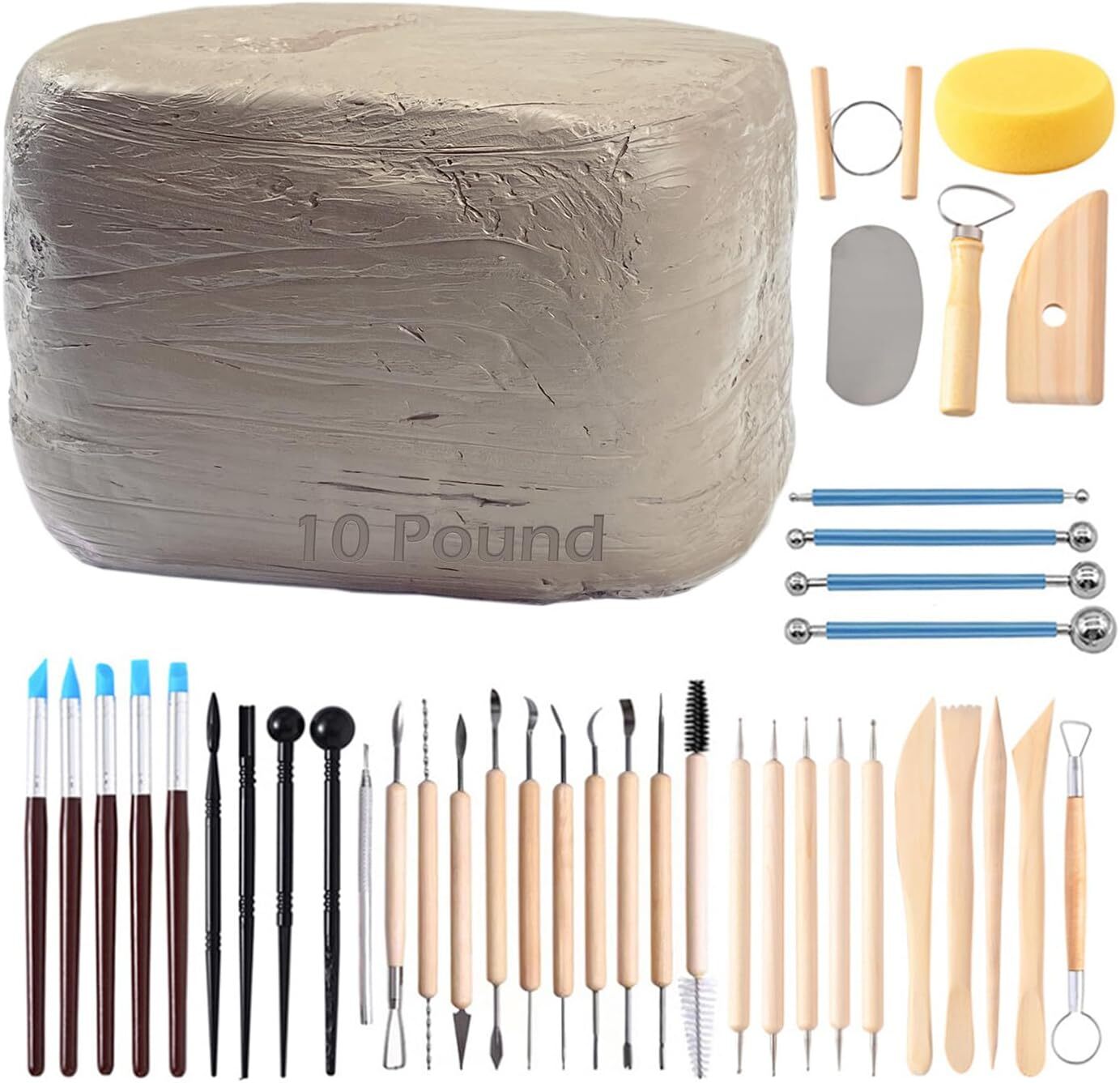

Photos from current listings. Actual item, color, and included accessories may vary.
Modeling Clay Buying Guide
Modeling clay is a non-firing, hand-sculptable material used for maquettes, . The primary trade-off is between oil-based/plastiline clays that never harden and air-dry/water-based clays that cure but shrink and crack. Choose oil-based for reusable armatures and animation; choose air-dry only when a permanent, paintable sculpture is required, and never expect either to be waterproof without a sealer.
Key takeaways
- Oil-based plastiline (sulfur-free) stays permanently pliable, accepts fine detail, and never dries—ideal for reusable reference maquettes.
- Air-dry clay cures by evaporation, shrinking 5–15%; thick sections over 1 inch crack unless built over a foil or wire armature.
- Water-based modeling clay re-softens with water but cannot be cast or fired; finished pieces need acrylic varnish to resist moisture.
At a glance
- Category
- Pottery Clay & Ceramic Bodies
- Last updated
- Nov 28, 2026
Current offers
Highlights
- Oil-based plastiline (sulfur-free) stays permanently pliable, accepts fine detail, and never dries—ideal for reusable reference maquettes.
- Air-dry clay cures by evaporation, shrinking 5–15%; thick sections over 1 inch crack unless built over a foil or wire armature.
- Water-based modeling clay re-softens with water but cannot be cast or fired; finished pieces need acrylic varnish to resist moisture.
- Professional sulfur-free plastiline avoids staining silicone molds and remains workable at room temperature without a heat gun.
Best use cases
- Best fit: stop-motion and maquette sculptors pick sulfur-free oil-based plastiline in medium-firm consistency for reusable, non-drying armatures.
- Best fit: classroom and kids' projects pick soft, non-staining water-based modeling clay in large blocks; it re-hydrates and cleans up with water.
- Wrong fit: outdoor garden ornaments or fountains—air-dry and oil clays are not waterproof; use fired ceramic or concrete instead.
- Wrong fit: production slip-casting or wheel throwing—modeling clay lacks the plasticity and fluxed bodies of true ceramic clays and must not go in a kiln.
Buying tips
- For armature sculpting, buy sulfur-free plastiline: sulfur contaminates platinum-cure silicone molds and inhibits curing.
- Scale block size to project: a 1 lb block covers roughly a 3-inch figure; buy 10 lb or 20 lb boxes for busts and multi-part maquettes.
- Match hardness: soft (00–10) for blocking large masses, medium (20–30) for detail, firm (40+) for sharp edges and warm-room work.
- Air-dry clay needs a wire or foil core for any section thicker than 1 inch; solid thick blocks crack as they shrink during drying.
Specs
| Binder Type | Oil-based vs water-based vs polymer |
|---|---|
| Cure Behavior | Never dries vs air-dry 24-72 hr |
| Sulfur Content | Sulfur-free (silicone-safe) vs standard |
| Hardness Scale | Soft 00-10 / Medium 20-30 / Firm 40+ |
Related searches
What to check before buying
- Confirm your clay is explicitly labeled sulfur-free if you plan to make silicone molds from the sculpt.
- Measure your armature or figure height; a 1 lb block yields about 3 inches of solid figure, so upsize to 10 lb+ for busts.
- For air-dry pieces, plan a foil or wire armature and a slow, draft-free drying area to limit shrinkage cracks.
- Check that tools and hands are clean of sulfur or latex contaminants before working platinum-cure silicone over the clay.
FAQ
Data sources: eBay / Amazon listings and product attribute feeds. Updated Nov 28, 2026.
Some links on this page are affiliate links. If you buy after clicking one, we may earn a commission at no extra cost to you. This does not change which products appear here or their order. Affiliate disclosure.