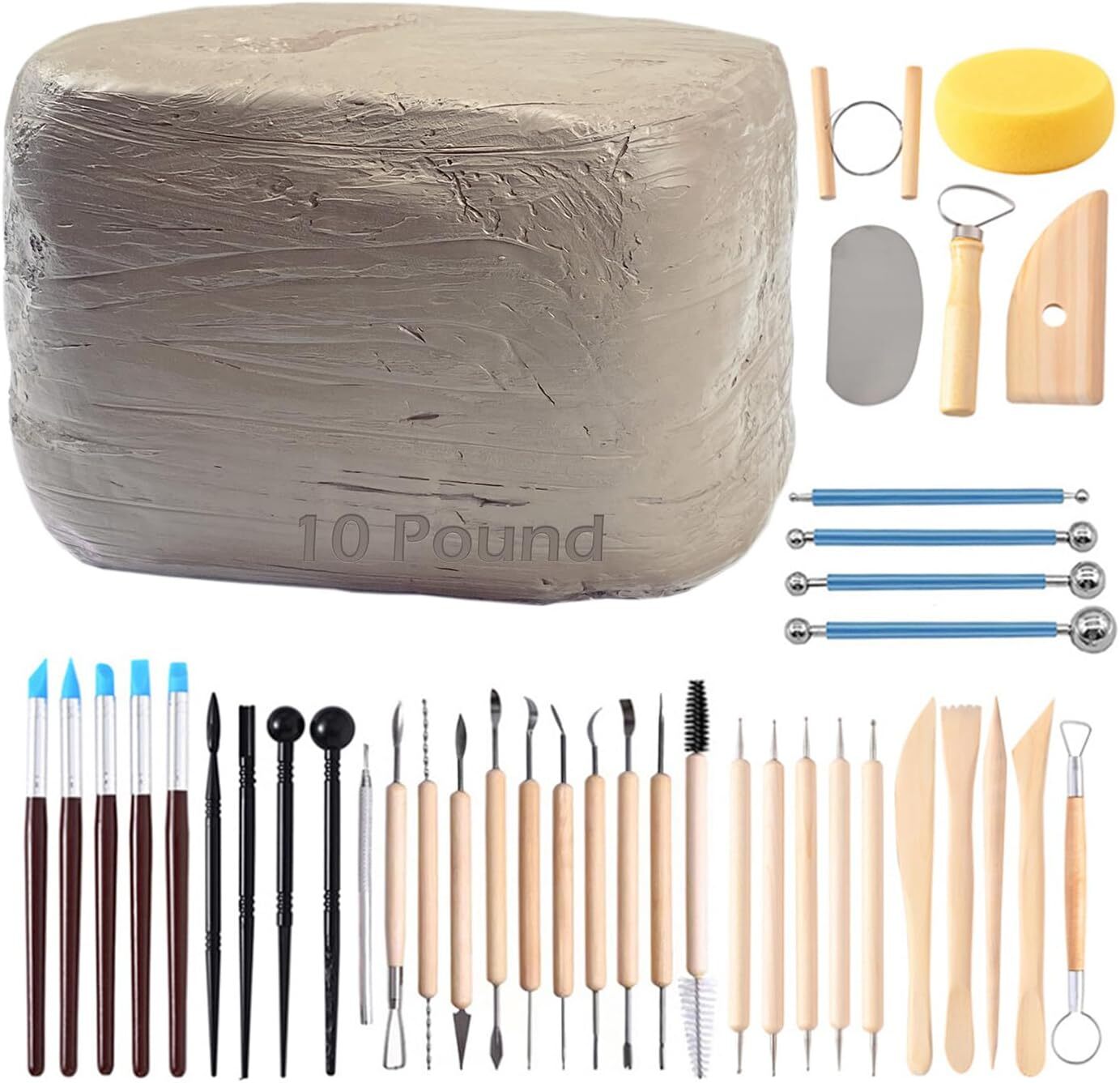

Photos from current listings. Actual item, color, and included accessories may vary.
Natural Clay Buying Guide
Natural clay is unrefined, mineral-rich earthen material sold for throwing, hand-building, and sculpting, distinct from polymer and self-hardening synthetic clays. The core trade-off is between raw, plastic earthenware bodies that require kiln firing for permanence and air-dry natural clays that harden by evaporation but remain water-soluble and fragile. Choose true kiln-fire clay if you need food-safe, waterproof, durable ceramics; choose air-dry natural clay only for decorative sculpture and practice pieces.
Key takeaways
- Kiln-fired earthenware matures at cone 04-06 (1,940-2,012°F); stoneware vitrifies at cone 6-10 (2,232-2,381°F) and is the threshold for functional, watertight ware.
- Air-dry natural clay hardens by water evaporation, not sintering, so it stays porous, re-softens with water, and cannot hold liquid or pass food-safety standards.
- Plasticity and shrinkage are inverse: high-plasticity earthenware bodies shrink 8-12% drying and firing, while grogged stoneware at 10-20% grog shrinks 5-8% and resists cracking.
At a glance
- Category
- Pottery Clay & Ceramic Bodies
- Last updated
- Nov 28, 2026
Current offers
Highlights
- Kiln-fired earthenware matures at cone 04-06 (1,940-2,012°F); stoneware vitrifies at cone 6-10 (2,232-2,381°F) and is the threshold for functional, watertight ware.
- Air-dry natural clay hardens by water evaporation, not sintering, so it stays porous, re-softens with water, and cannot hold liquid or pass food-safety standards.
- Plasticity and shrinkage are inverse: high-plasticity earthenware bodies shrink 8-12% drying and firing, while grogged stoneware at 10-20% grog shrinks 5-8% and resists cracking.
- Clay body mesh size governs texture: 80-200 mesh gives smooth throwing bodies; 35-80 mesh with sand or grog suits hand-building and large sculpture.
Best use cases
- Best fit: potters with kiln access throwing mugs, bowls, and ovenware — pick cone 6 stoneware for durability and food safety; skip air-dry clay entirely for functional ware.
- Best fit: sculptors and teachers without kilns making decorative busts, maquettes, and classroom projects — pick air-dry natural clay in 10 lb sealed packs; plan on sealed finishes since pieces stay water-sensitive.
- Best fit: beginners testing wheel-throwing — pick a 25 lb bag of cone 04-06 earthenware for low-cost practice; skip stoneware until centering and pulling are consistent to avoid wasted expensive body.
Buying tips
- Match clay to your kiln's maximum cone: earthenware 04-06 for low-fire kilns, mid-fire stoneware cone 6 for most studio kilns, high-fire cone 10 only for rated kilns and shelves.
- Buy sealed, dated bags: clay is perishable — fresh plastic-wrapped body throws better than crusty or moldy stock, and 25 lb bags are the standard unit for wheel work.
- For hand-building, choose grogged body (10-20% fine grog) to reduce shrinkage cracks; for throwing, choose smooth 80-200 mesh body for finer walls and better release.
- Account for shrinkage in sizing: an earthenware piece shrinks roughly 1/8 in per inch from wet to fired, so throw or build 10-12% larger than the target finished dimension.
Specs
| Clay Type | Earthenware / Stoneware / Air-dry |
|---|---|
| Firing Range | Cone 04-06 low / Cone 6 mid / Cone 10 high |
| Shrinkage | 5-12% wet-to-fired |
| Grog / Mesh | 10-20% grog / 35-200 mesh |
Related searches
What to check before buying
- Confirm kiln access and its maximum cone rating before choosing body; air-dry clay needs no kiln but yields non-functional, water-sensitive pieces.
- Measure your wheel head or work table and storage space: 25 lb sealed bags stack flat and keep best in cool, frost-free storage with plastic wrap.
- Check electrical and ventilation for a kiln if firing at home; kilns need dedicated circuits and exhaust, otherwise rely on a community studio.
- Plan companion tools and finishes: wire cutters, ribs, and a sealed glaze or acrylic topcoat for air-dry pieces; glaze and kiln furniture for fired ware.
FAQ
Data sources: eBay / Amazon listings and product attribute feeds. Updated Nov 28, 2026.
Some links on this page are affiliate links. If you buy after clicking one, we may earn a commission at no extra cost to you. This does not change which products appear here or their order. Affiliate disclosure.