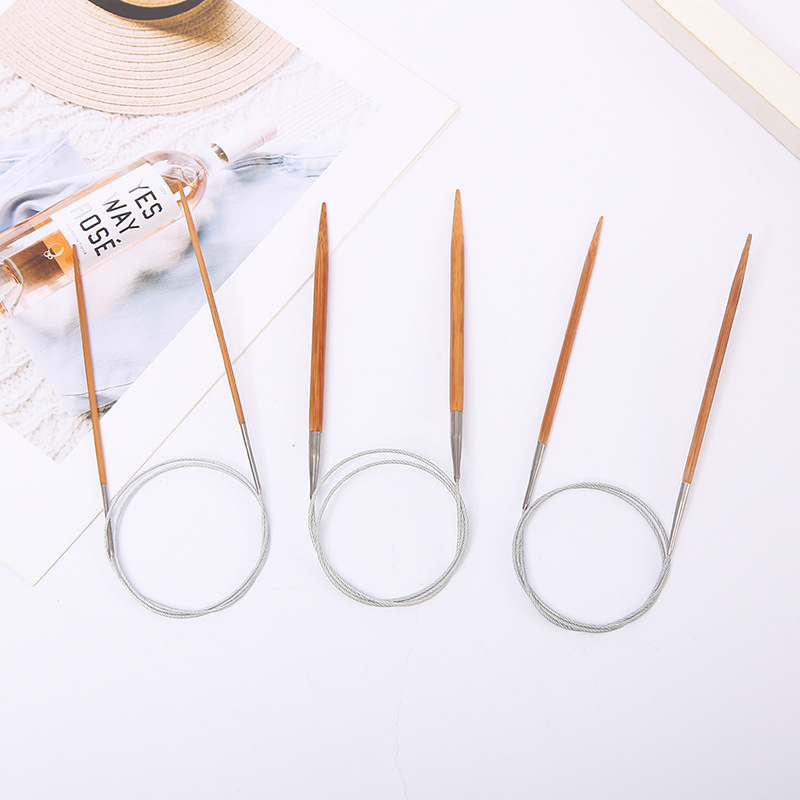

Photos from current listings. Actual item, color, and included accessories may vary.
Bamboo Knitting Needle Buying Guide
Bamboo knitting needles are lightweight, warm-to-the-touch tools favored for grippy stitch control and quiet, fatigue-free sessions. The core trade-off is surface friction versus durability: bamboo offers grip for slippery yarns but can warp, splinter, or snap at thin gauges, while denser woods and metal trade grip for longevity. Choose bamboo for lace-weight to worsted projects on circulars and straights; skip it for tight-gauge sock knitting or high-tension work where metal or reinforced wood wins.
Key takeaways
- Bamboo hardness varies by species and carbonization; heat-treated (carbonized) needles are denser and more warp-resistant than pale natural bamboo.
- Thin bamboo tips below 3.0 mm flex and are prone to snapping under tight tension; 4.0 mm and above are the durable sweet spot.
- Circular bamboo needles need a smooth cable join; a snagging transition shreds yarn and defeats bamboo's low-friction glide advantage.
At a glance
- Category
- Knitting Needles & Accessories
- Last updated
- Nov 28, 2026
Current offers
Highlights
- Bamboo hardness varies by species and carbonization; heat-treated (carbonized) needles are denser and more warp-resistant than pale natural bamboo.
- Thin bamboo tips below 3.0 mm flex and are prone to snapping under tight tension; 4.0 mm and above are the durable sweet spot.
- Circular bamboo needles need a smooth cable join; a snagging transition shreds yarn and defeats bamboo's low-friction glide advantage.
- US vs metric sizing is not interchangeable; a US 6 bamboo is 4.0 mm, while US 7 is 4.5 mm, and many bamboo sets label only one scale.
Best use cases
- Best fit: lace, fingering, and worsted sweaters on 4.0–6.0 mm bamboo circulars, where grip prevents dropped stitches and light weight reduces hand fatigue.
- Best fit: beginner practice and slippery cotton, silk, or alpaca blends, where bamboo's surface friction gives stitch control metal needles lack.
- Wrong fit: tight-gauge sock cuffs and colorwork on 2.0–2.75 mm needles; thin bamboo flexes and snaps, so use metal DPNs or reinforced wood instead.
- Wrong fit: high-tension knitters and machine-wash projects; bamboo absorbs moisture, warps, and loses smoothness, so choose metal or laminated birch.
Buying tips
- Match needle gauge to yarn: use 4.0–6.0 mm bamboo for worsted and DK; reserve 2.0–3.5 mm bamboo for loose-gauge lace only, not firm sock fabric.
- Select carbonized or heat-treated bamboo over pale natural bamboo for denser tips that resist dents and maintain a smoother glide over long projects.
- For circulars, confirm the cable-to-needle join is smooth and the cable swivel is rotation-free; rough joins are the top failure point on bamboo circulars.
- Buy interchangeable sets only when the brand's cable threads match the tip connector standard; mismatched threads create loose joins and dropped stitches.
Specs
| Material Grade | Carbonized vs natural bamboo |
|---|---|
| Needle Size Range | 2.0–10.0 mm (US 0–15) |
| Tip Style | Straight, circular, DPN, interchangeable |
| Durability Threshold | 4.0 mm+ resists flex/snap |
Related searches
What to check before buying
- Measure your project's required needle size in mm and cross-check the US size conversion; bamboo sets often mislabel US 6 as 4.0 mm versus 4.25 mm.
- Confirm cable length suits your project: 16-inch circulars for hats, 24–32 inch for sweaters, and 40-inch for magic-loop or large blankets.
- Check your yarn's friction and ply: slick silk and alpaca benefit from bamboo grip, while fuzzy mohair can felt and drag on bamboo's porous surface.
- Verify storage and climate: bamboo warps in humid rooms and dries/cracks near radiators, so store in a dry case away from direct heat.
FAQ
Data sources: eBay / Amazon listings and product attribute feeds. Updated Nov 28, 2026.
Some links on this page are affiliate links. If you buy after clicking one, we may earn a commission at no extra cost to you. This does not change which products appear here or their order. Affiliate disclosure.