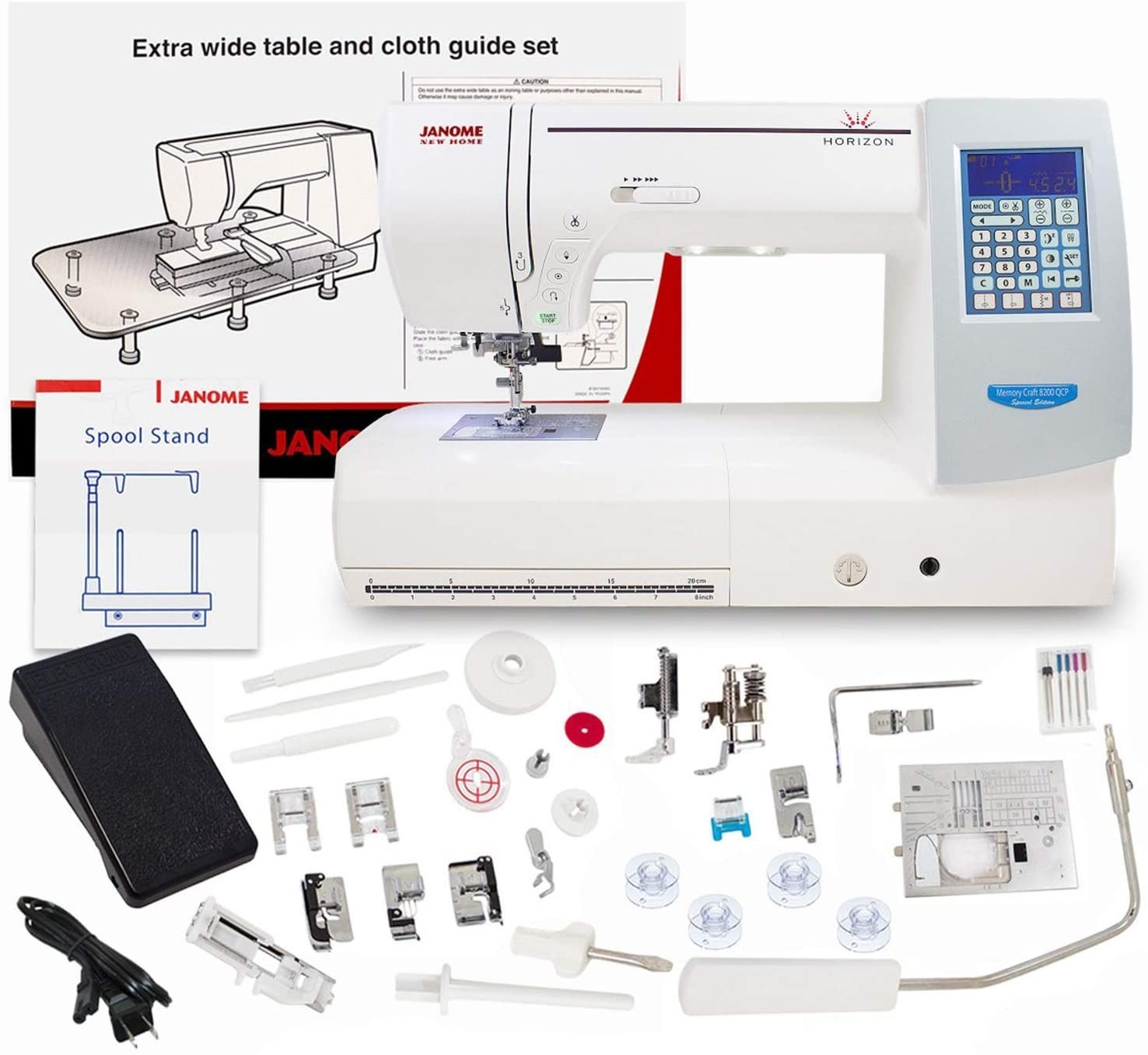

Photos from current listings. Actual item, color, and included accessories may vary.
Quilting Machine Buying Guide
Quilting machines span two distinct architectures: domestic computerized machines with a quilt table and long-arm quilting heads with deep throat space. The primary trade-off is throat/harp space versus stitch-regulation complexity—longarms deliver speed and frame compatibility, domestics deliver piecing and decorative stitches. The decision rule: buy a longarm only if your project exceeds 120 inches of quilt width or you require a frame; choose a domestic quilting machine if piecing, free-motion on a table, and multi-stitch utility matter more than throat depth.
Key takeaways
- Longarm quilting heads use industrial rotary hooks and 16-22 inch throat depths, enabling continuous quilt roll feeding on a frame; domestic machines max out near 9-11 inches of harp space.
- Computerized quilting machines regulate stitch length electronically (feed-dog or dual-feed systems) and offer 70-200 built-in stitches, while longarms rely on stitch regulators or manual speed control.
- Longarm heads are typically sold head-only or as frame bundles; a 16-inch head requires a compatible 8-12 foot frame and a separate power/control system, whereas domestics are standalone.
At a glance
- Category
- Sewing & Quilting Machines
- Last updated
- Nov 28, 2026
Current offers
Highlights
- Longarm quilting heads use industrial rotary hooks and 16-22 inch throat depths, enabling continuous quilt roll feeding on a frame; domestic machines max out near 9-11 inches of harp space.
- Computerized quilting machines regulate stitch length electronically (feed-dog or dual-feed systems) and offer 70-200 built-in stitches, while longarms rely on stitch regulators or manual speed control.
- Longarm heads are typically sold head-only or as frame bundles; a 16-inch head requires a compatible 8-12 foot frame and a separate power/control system, whereas domestics are standalone.
- Domestic quilting tiers differ by feed system: basic models use drop feed plus a walking foot, mid-tier adds built-in dual feed (e.g., Janome AcuFeed), and top-tier adds independent bobbin winders and knee lifters.
Best use cases
- Best fit for a domestic quilting machine: quilters piecing tops on a standard table, finishing throws up to queen size with free-motion or walking-foot techniques—skip longarms if you lack floor space for a frame.
- Best fit for a longarm head: quilters with a dedicated frame or existing carriage system finishing king-size quilts; wrong fit if you only sew garments or small crafts, since head-only units cannot sew without a frame.
- Best fit for a computerized quilting machine with 70+ stitches: buyers wanting decorative stitches, automatic buttonholes, and quilting in one unit; skip if you need throat depth beyond 11 inches for dense roll quilting.
- Best fit for a pre-owned longarm head: budget-conscious frame owners who already own a compatible carriage; wrong fit for first-time buyers without a frame, as head-only units lack the table and stitch regulation setup.
Buying tips
- Measure your quilting frame throat requirement: a 16-inch longarm head needs at least 16 inches of clear harp plus frame carriage clearance; domestic machines require only table depth for the quilt roll.
- Match the feed system to your technique: dual-feed (walking foot or built-in) is mandatory for straight-line quilting without puckering; free-motion quilting requires drop-feed disengagement and a darning foot.
- Verify frame compatibility for head-only longarms: the head must match the carriage plate bolt pattern and encoder cable standard of your frame brand; mismatched heads void stitch regulation.
- Prioritize stitch regulation for longarms: a built-in regulator maintains consistent stitch length across speed changes; without it, stitch length varies with hand speed and quilt drag.
Specs
| Machine Type | Domestic vs Longarm head |
|---|---|
| Throat/Harp Space | 9-11 in domestic / 16-22 in longarm |
| Feed System | Drop feed, dual feed, or regulator |
| Frame Requirement | None domestic / mandatory longarm |
Related searches
What to check before buying
- Measure floor space: a 10-foot frame plus longarm head needs roughly 12 x 6 feet of clearance; domestic quilting machines need only a sturdy table with rear quilt support.
- Confirm electrical: longarm heads and frames draw higher current and may require a dedicated 15-amp circuit; domestics run on standard household outlets.
- Check throat and harp dimensions: domestic machines need at least 9 inches of harp space for queen quilts; longarms need 16+ inches of throat depth for king rolls.
- Verify companion parts: longarm head-only purchases require a compatible frame, carriage, and stitch regulator; domestics require a walking foot, free-motion foot, and extension table for quilting.
FAQ
Data sources: eBay / Amazon listings and product attribute feeds. Updated Nov 28, 2026.
Some links on this page are affiliate links. If you buy after clicking one, we may earn a commission at no extra cost to you. This does not change which products appear here or their order. Affiliate disclosure.