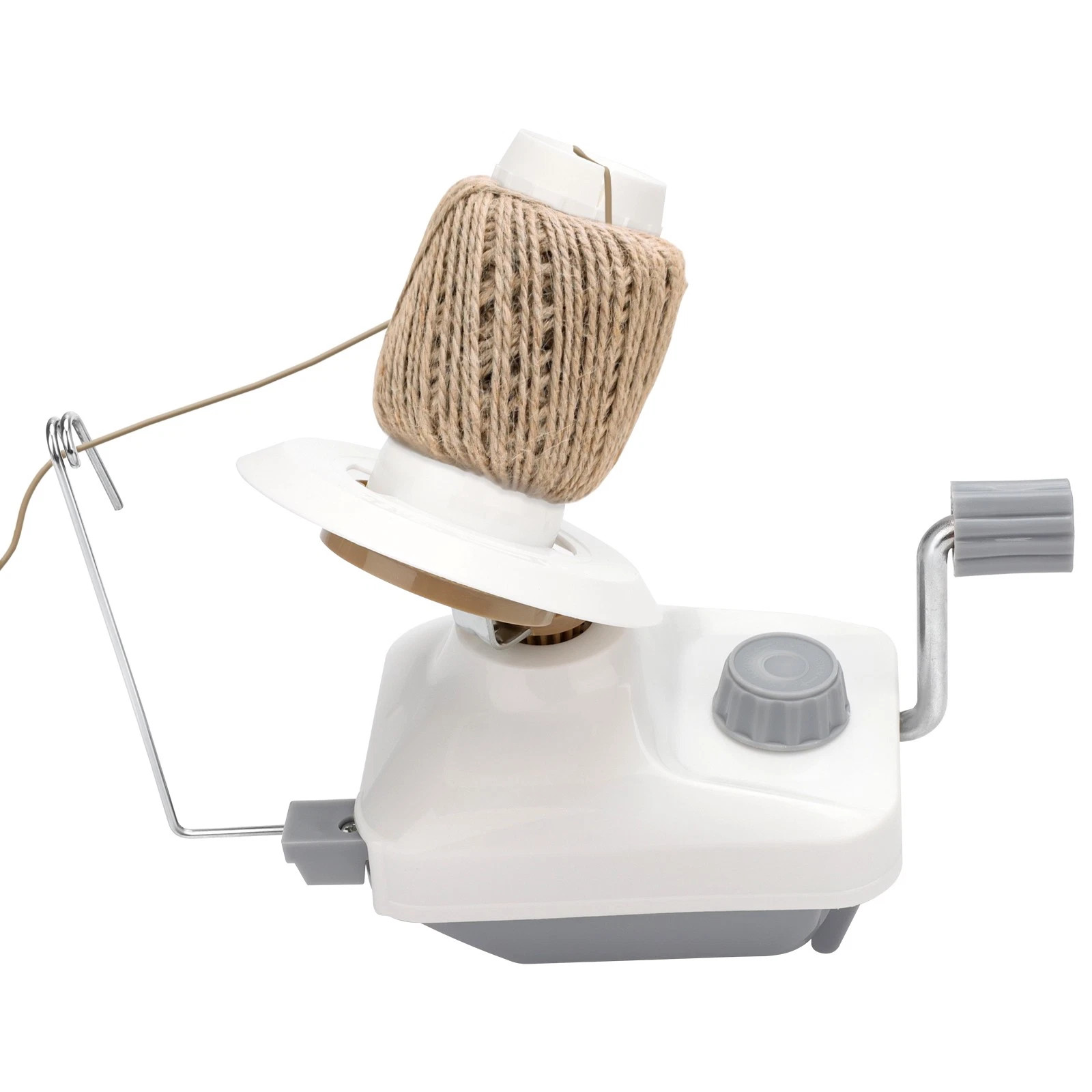

Photos from current listings. Actual item, color, and included accessories may vary.
Ball Winder Buying Guide
A ball winder turns skeins and hanks into compact, center-pull cakes that feed smoothly without tangling. The decisive trade-off is manual hand-crank plastic versus metal-geared construction, where nylon gears and thin clamps flex or crack under sustained tension while steel or reinforced units hold alignment for years. Buy metal-geared or full-metal winders for regular use, and accept plastic only for light, occasional winding.
Median $35.00
Key takeaways
- Manual hand-crank winders need no power and produce consistent cakes; electric models trade portability for speed and higher cost.
- Metal-geared or all-metal bodies resist stripping under thick wool and high tension; nylon gears wear fastest on bulky yarn.
- Large 10 oz capacity handles full sweater quantities and bulky yarns; small ~4 oz units suit sock and fingering weights.
At a glance
- Category
- Yarn Winders & Project Bags
- Last updated
- Nov 27, 2026
Current offers
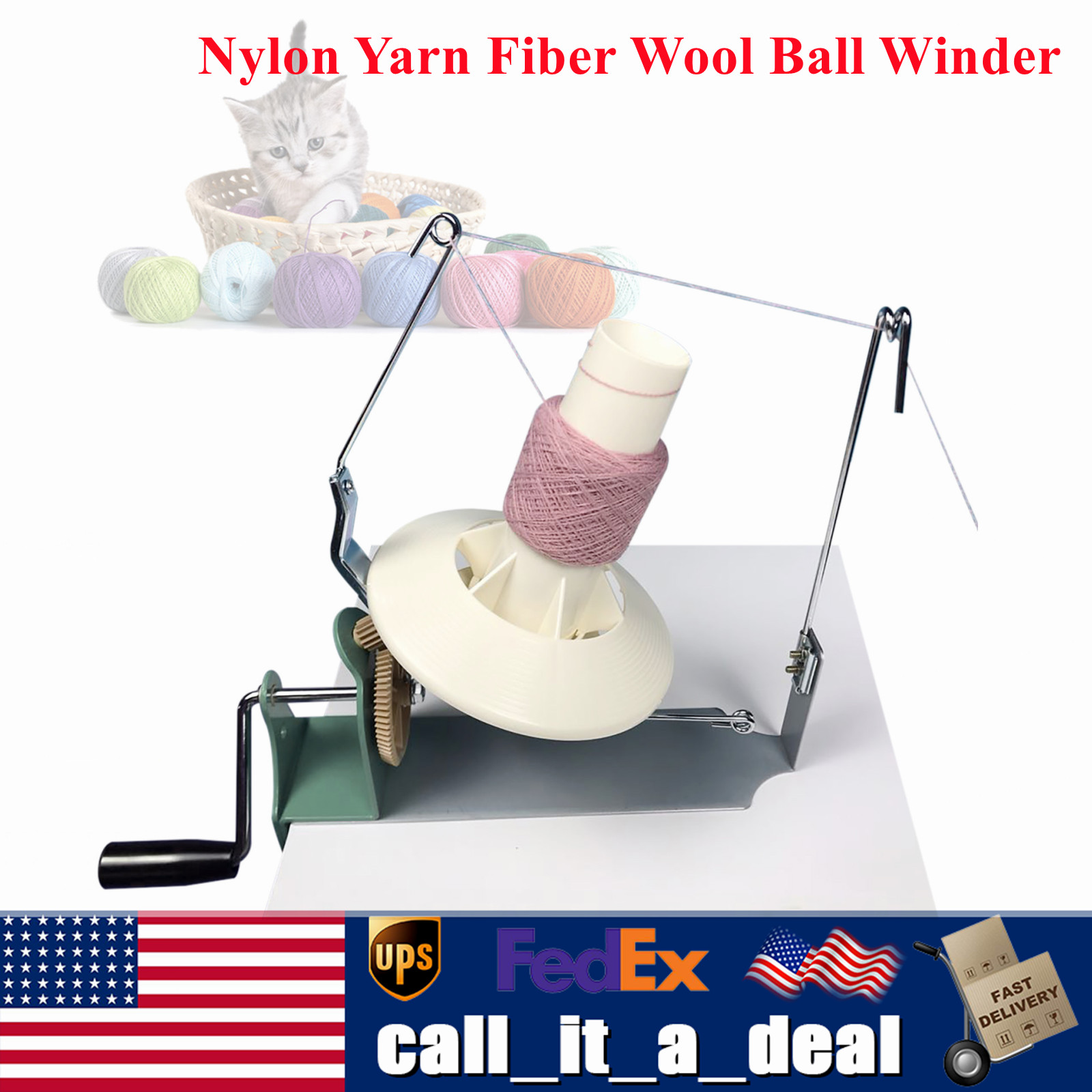
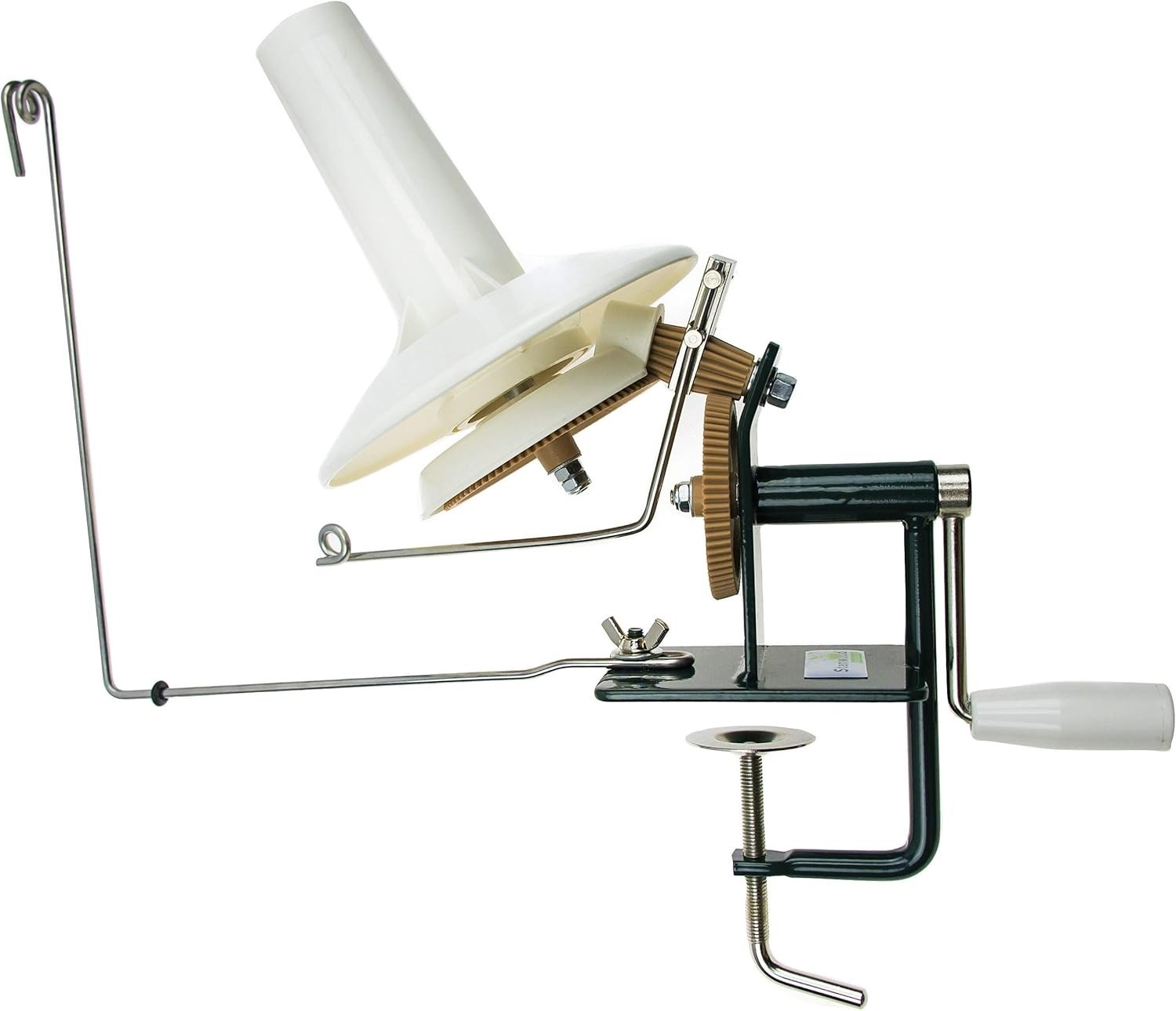
Highlights
- Manual hand-crank winders need no power and produce consistent cakes; electric models trade portability for speed and higher cost.
- Metal-geared or all-metal bodies resist stripping under thick wool and high tension; nylon gears wear fastest on bulky yarn.
- Large 10 oz capacity handles full sweater quantities and bulky yarns; small ~4 oz units suit sock and fingering weights.
- Table clamp or C-clamp mounting anchors the winder; flimsy clamps slip under tension and cause uneven, tangled cakes.
Best use cases
- Best fit: frequent knitters winding sweater lots of worsted or bulky yarn should pick a metal-geared, large-capacity winder with a sturdy clamp. Skip small plastic units.
- Best fit: occasional crocheters winding leftover skeins into cakes can use a compact manual plastic winder and save space and cost.
- Best fit: spinners and dyers rewinding hanks into cakes need a large 10 oz winder plus a swift to hold the hank; a winder alone tangles loose hanks.
Buying tips
- Match capacity to yarn weight: 10 oz capacity covers bulky and sweater lots; 4-6 oz units suit fingering and sock yarn.
- Choose metal or reinforced gears over exposed nylon; stripped gears are the top failure point on budget winders.
- Verify clamp opening fits your table thickness — most C-clamps grip up to about 2 inches; thicker benches need a bolt-mount base.
- Mechanical ratio matters: higher gear ratio winds faster with less wrist strain, a real advantage for large batches.
Specs
| Drive Type | Manual hand-crank vs electric |
|---|---|
| Capacity | 4-6 oz small / 10 oz large |
| Gear Material | Metal or reinforced vs nylon |
| Mount Type | Table C-clamp vs bolt-mount base |
Related searches
What to check before buying
- Measure your work surface edge thickness to confirm the clamp or bolt mount will secure the winder.
- Confirm you own or will buy a yarn swift; winders cake yarn, but hanks need a swift to stay untangled.
- Check cake diameter fits your storage and project bags so wound cakes don't crush or unwind.
- For electric models, confirm plug voltage matches your region and that a cord reaches your workspace.
FAQ
Data sources: eBay / Amazon listings and product attribute feeds. Updated Nov 27, 2026.
Some links on this page are affiliate links. If you buy after clicking one, we may earn a commission at no extra cost to you. This does not change which products appear here or their order. Affiliate disclosure.