
Photos from current listings. Actual item, color, and included accessories may vary.
Jewelry Rolling Mill Buying Guide
A jewelry rolling mill is a benchtop metal-forming machine that reduces sheet and wire thickness through hardened steel rollers, with the primary trade-off between cast-iron frame rigidity and roller hardening quality versus lightweight imported builds that flex under load. The decisive rule: buy a mill whose frame mass and roller hardness match your maximum reduction per pass—if the frame flexes or rollers are soft, sheet warps and wire ovals.
Median $152.99
Key takeaways
- Gear ratio directly sets torque multiplication: 1:2 requires more crank effort but rolls faster; 1:4 to 1:6 give easier feeding for hard alloys and thicker reductions.
- Roller material is the durability limiter—hardened tool steel (58-62 HRC) holds flatness and resists grooving; soft mild-steel rollers flatten and transfer marks to your metal.
- Roll width (75mm/2.95in vs 76mm/3in) and thickness range (0.03-6.5mm vs 0.1-7mm) define maximum sheet width and minimum achievable gauge per pass.
At a glance
- Category
- Beads & Jewelry Making
- Last updated
- Nov 28, 2026
Current offers
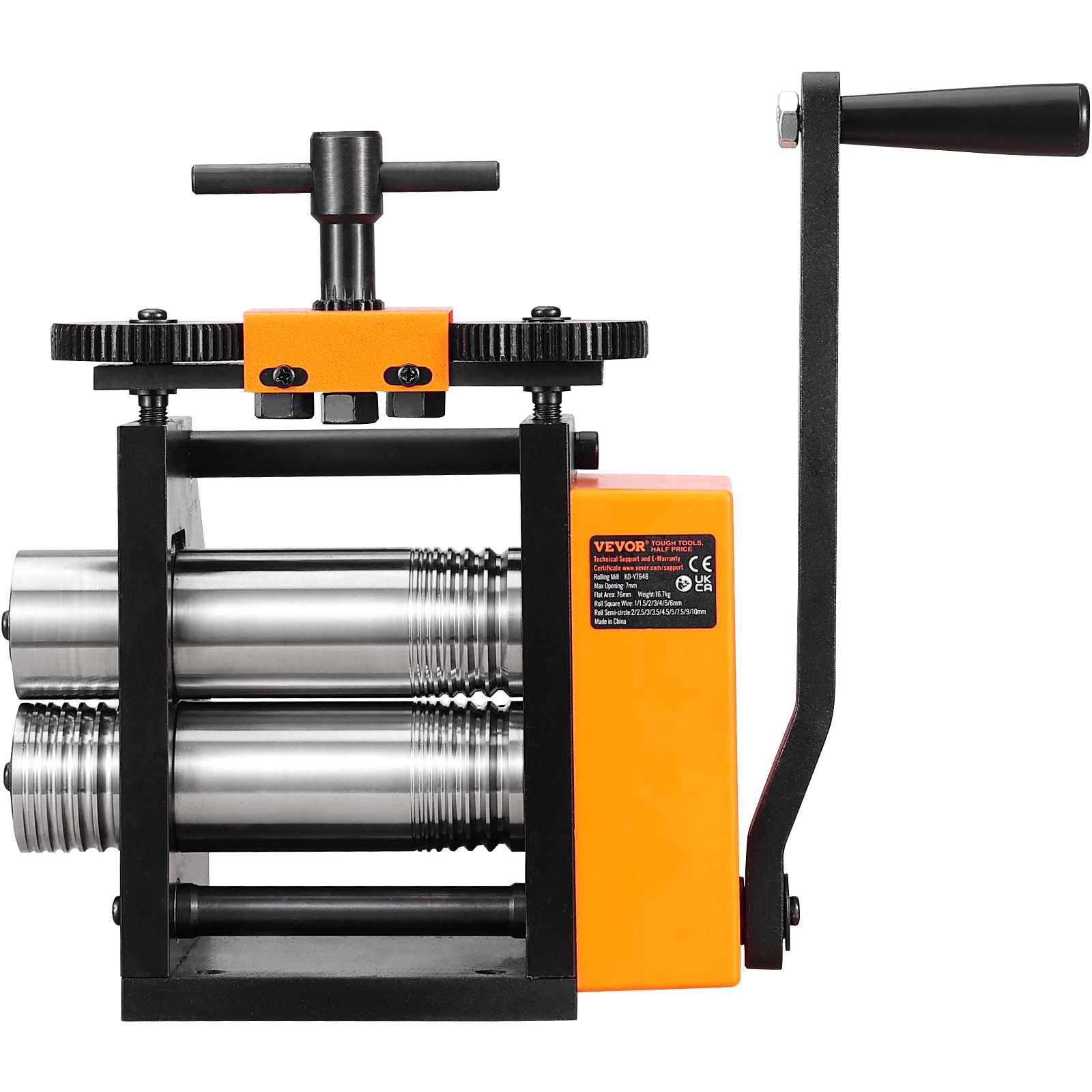 Rolling Mill, 2.95"/75 Mm Jewelry Machine, 1: 2 Gear Ratio, 3-in-1 Multi-function 0.03-6.5mm Press Thickness For Metal Making Sheet Square Wire Semicircle$147.99View on Mallflare
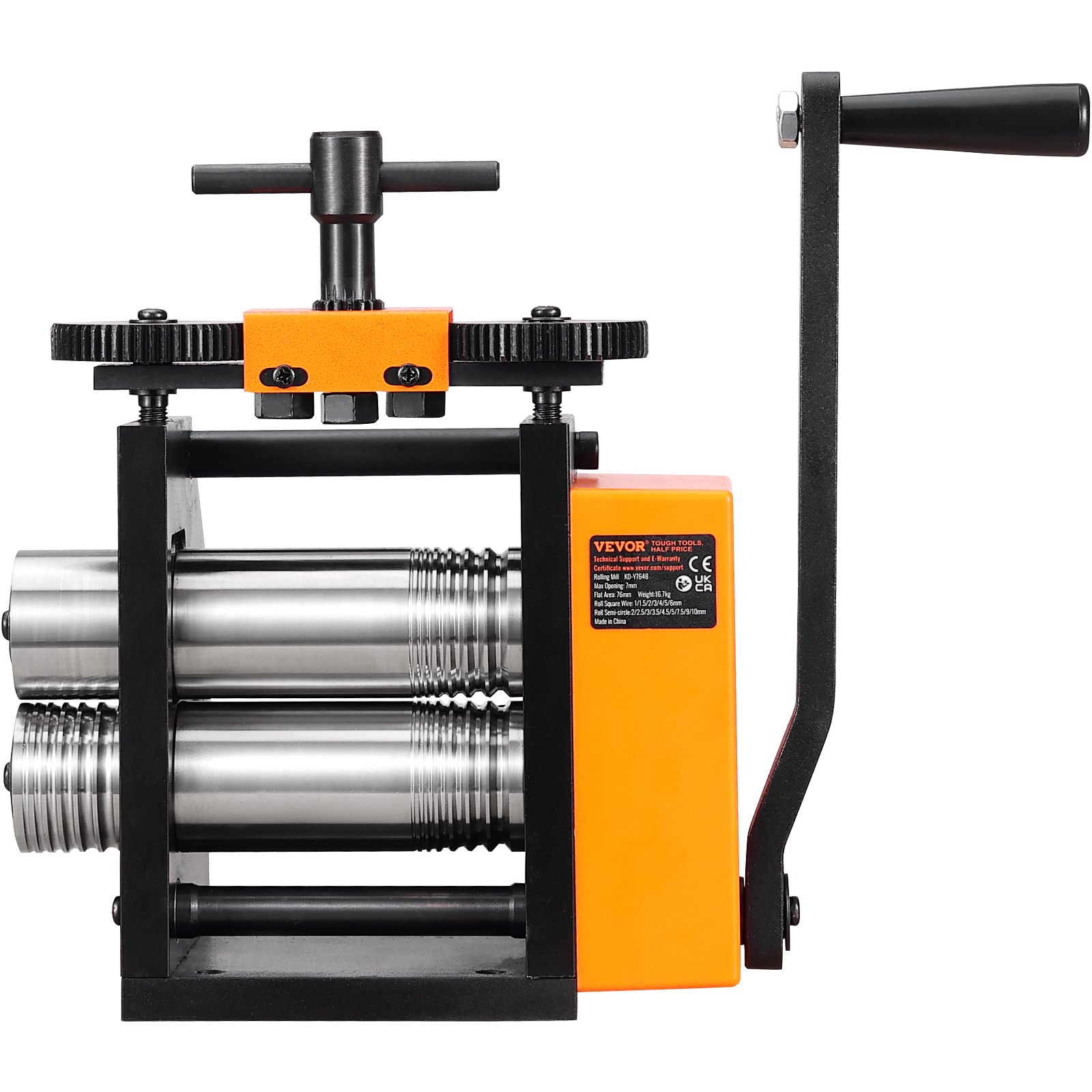 Rolling Mill, 3"/76 Mm Jewelry Machine, 1: 2 Gear Ratio, 3-in-1 Multi-function 0.1-7mm Press Thickness For Metal Making Sheet Square Wire Semicircle Pattern$157.99View on Mallflare
Highlights
- Gear ratio directly sets torque multiplication: 1:2 requires more crank effort but rolls faster; 1:4 to 1:6 give easier feeding for hard alloys and thicker reductions.
- Roller material is the durability limiter—hardened tool steel (58-62 HRC) holds flatness and resists grooving; soft mild-steel rollers flatten and transfer marks to your metal.
- Roll width (75mm/2.95in vs 76mm/3in) and thickness range (0.03-6.5mm vs 0.1-7mm) define maximum sheet width and minimum achievable gauge per pass.
- 3-in-1 combination mills bundle flat, square-wire, and semicircle/pattern grooves; dedicated flat mills hold flatter sheet because full roller width stays true.
Best use cases
- Best fit: a 1:2 geared 75-76mm combination mill for a hobbyist rolling occassional copper, brass, and silver sheet up to 3mm thick—pick the wider 76mm/3in unit if you routinely roll 25mm+ wide stock.
- Best fit: a 1:4 or 1:6 reduction mill for jewelers working sterling, fine silver, or gold-filled where hard alloys demand low per-pass reduction—skip 1:2 for daily production on hard metals.
- Wrong fit: a lightweight stamped-frame mill for rolling wide (>50mm) sheet or reducing thick billet in fewer passes—frame flex warps sheet and misaligns rollers.
- Wrong fit: expecting pattern/rollers to texture hard stainless or titanium—combination mills are built for non-ferrous precious and base metals, not ferrous or refractory alloys.
Buying tips
- Match roll width to your widest stock: 75mm rollers handle ~65-70mm usable sheet after edge clearance; choose 76mm/3in for 70mm+ sheet or larger cuff blanks.
- Choose 1:4-1:6 gear reduction for sterling, gold-filled, and thick reductions; 1:2 suits soft copper/brass and thin stock where speed matters more than torque.
- Check minimum thickness: 0.03mm rollers produce thin foil; 0.1mm minimum is fine for sheet and wire but limits foil work—confirm the lower gap spec against your target gauge.
- Verify roller hardness or steel grade (hardened tool steel, 58+ HRC) and bearing type (bronze bushings vs ball bearings); bushings need frequent oiling but last in low-volume shops.
Specs
| Gear Ratio | 1:2 (fast) to 1:4-1:6 (torque) |
|---|---|
| Roll Width | 75mm/2.95in or 76mm/3in |
| Thickness Range | 0.03-6.5mm to 0.1-7mm |
| Roller Type | 3-in-1 flat/wire/semicircle vs flat |
Related searches
What to check before buying
- Measure your widest sheet or wire project—roll width minus ~5-10mm edge clearance sets your maximum usable stock width before buying.
- Confirm bench space and mounting: mills weigh 15-30kg and need bolting or a sturdy clamp base; check bench depth for crank swing and stock clearance.
- Verify roller gap range covers both your thickest billet and thinnest foil target (e.g., 0.03-6.5mm vs 0.1-7mm) so one mill handles your full range.
- Check crank/gear configuration and handedness: confirm the mill suits your dominant hand and bench orientation, and that replacement rollers or grooves are available for your chosen 3-in-1 pattern.
FAQ
Data sources: eBay / Amazon listings and product attribute feeds. Updated Nov 28, 2026.
Some links on this page are affiliate links. If you buy after clicking one, we may earn a commission at no extra cost to you. This does not change which products appear here or their order. Affiliate disclosure.