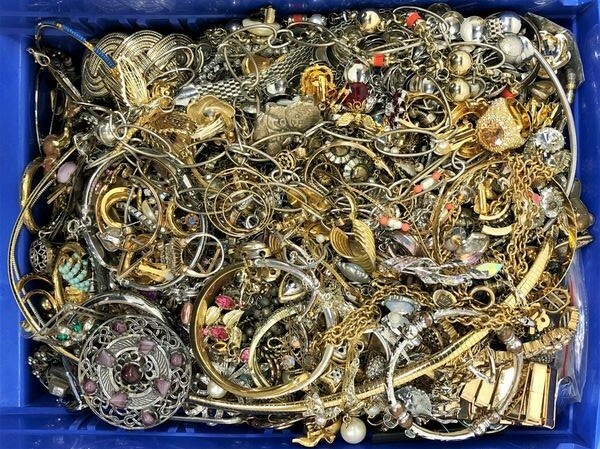

Photos from current listings. Actual item, color, and included accessories may vary.
Mixed Lot Buying Guide
Mixed lots are bulk assortments of beads and jewelry components sold by weight or piece count, where the core trade-off is price-per-gram versus sortable yield — random 'soup' lots deliver volume but require labor, while curated lots cost more per usable piece. The decision rule: buy weight-based lots only when you can absorb unsellable junk and have time to sort; buy curated or themed lots when you need predictable, project-ready components.
Key takeaways
- Weight lots (3 lb, 5 lb, 10 lb) price by the pound, not piece count — expect 30-50% unusable or broken components in unsorted 'junk' tiers.
- Material composition drives durability: glass and stone survive tumbling and wear; acrylic and plated base metal tarnish, chip, or flake within months.
- Sorted 'soup' lots vs unsorted junk lots differ in grading — soup is loose beads only, junk includes tangled chains, single earrings, and broken clasps.
At a glance
- Category
- Beads & Jewelry Making
- Last updated
- Nov 28, 2026
Current offers
Highlights
- Weight lots (3 lb, 5 lb, 10 lb) price by the pound, not piece count — expect 30-50% unusable or broken components in unsorted 'junk' tiers.
- Material composition drives durability: glass and stone survive tumbling and wear; acrylic and plated base metal tarnish, chip, or flake within months.
- Sorted 'soup' lots vs unsorted junk lots differ in grading — soup is loose beads only, junk includes tangled chains, single earrings, and broken clasps.
- Hole size and bead gauge determine stringing compatibility — mixed lots often span 0.5-2 mm holes, requiring multiple wire gauges (26-32 AWG) on hand.
Best use cases
- Best fit: crafters and upcyclers buying 3-5 lb soup lots for high-volume, low-cost projects like bead bowls, mosaic, and kids' crafts — skip curated lots where per-piece cost triples.
- Best fit: resellers and repairers buying 5-10 lb unsorted jewelry lots to harvest clasps, chains, and findings — skip if you lack sorting time or space for tangled inventory.
- Wrong fit: jewelry designers needing matched, calibrated beads for saleable pieces — mixed lots cannot guarantee color, size, or finish consistency; buy strand or hank lots instead.
Buying tips
- Convert weight to usable yield: a 5 lb lot yields roughly 2,000-4,000 beads depending on size; at 30% junk, budget sorting time of 2-4 hours per pound.
- Prioritize lots listing material breakdown (glass, stone, acrylic, metal) over 'mixed materials' — material grade determines whether pieces survive wear and cleaning.
- For stringing, confirm hole diameter range; beads under 4 mm with sub-1 mm holes need 28-32 AWG wire or silk thread, not standard 20-gauge craft wire.
- Choose sorted 'soup' lots over 'tangled junk' lots unless you specifically want findings — tangled lots hide broken clasps and add untangling labor with no bead yield gain.
Specs
| Lot Type | Soup (loose beads) vs Junk (mixed jewelry) |
|---|---|
| Sold By | Weight (3-10 lb) vs Piece Count |
| Material Mix | Glass/stone vs acrylic/plated metal |
| Hole Size Range | 0.5-2 mm (varies by bead type) |
Related searches
What to check before buying
- Measure your storage: a 10 lb lot occupies roughly 1-2 gallons of volume — confirm bin or organizer capacity before buying bulk weight tiers.
- Check your stringing inventory: mixed lots demand multiple wire gauges (26-32 AWG), crimp beads, and jump rings in matching metals to assemble pieces.
- Verify material compatibility with your project: glass and stone suit outdoor and washable items; acrylic and plated metal suit display-only or sealed crafts.
- Confirm lot type in the title — 'soup' means loose beads, 'jewelry lot' means finished or broken pieces; mismatched expectations are the top return driver.
FAQ
Data sources: eBay / Amazon listings and product attribute feeds. Updated Nov 28, 2026.
Some links on this page are affiliate links. If you buy after clicking one, we may earn a commission at no extra cost to you. This does not change which products appear here or their order. Affiliate disclosure.