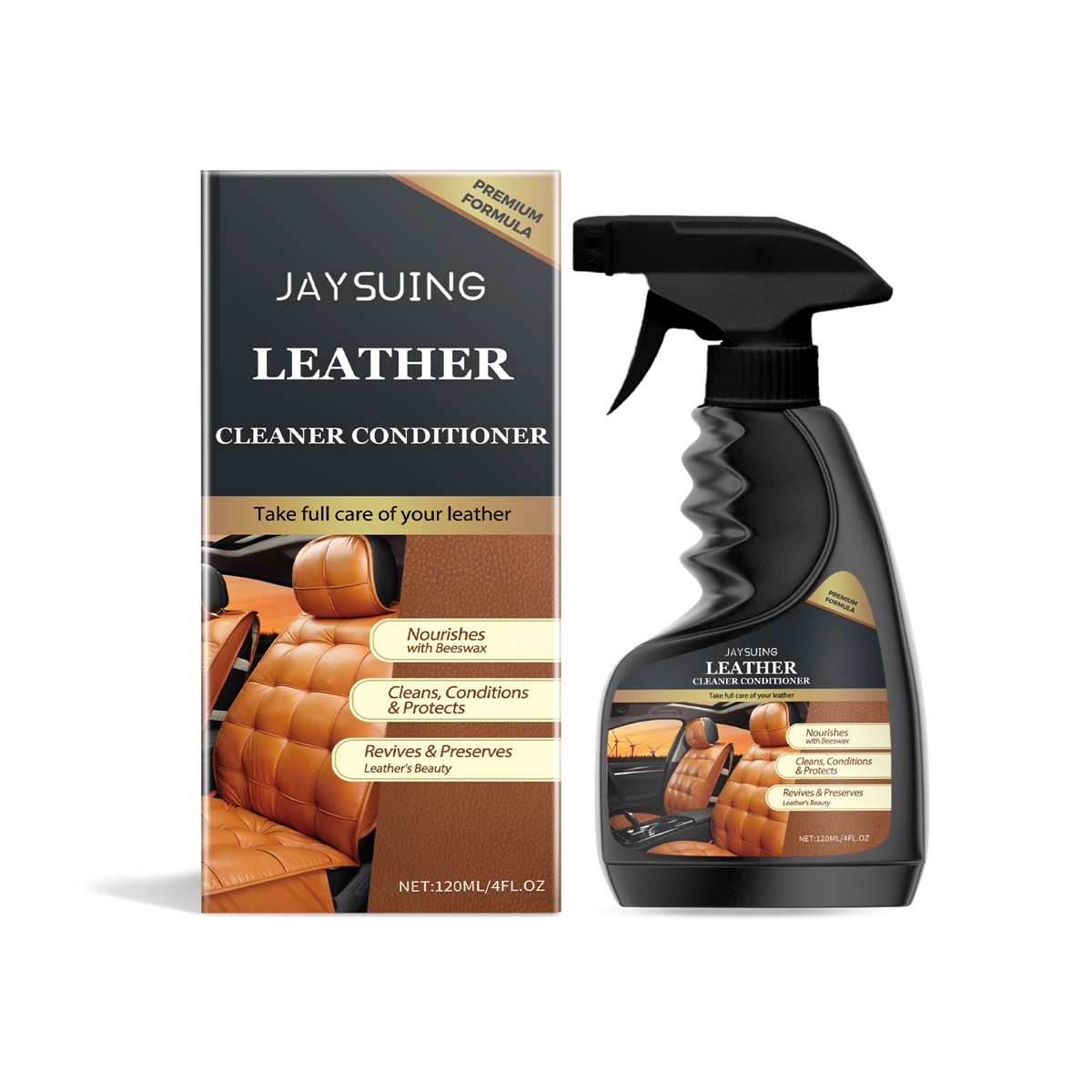

Photos from current listings. Actual item, color, and included accessories may vary.
Leather Car Seat Cleaner Buying Guide
Leather car seat cleaners are formulated to lift body oils, dye transfer, and embedded grime from automotive leather without stripping its factory clear-coat or pigment finish. The core trade-off is between aggressive surfactants that clean fast but accelerate cracking and pH-balanced, lubricant-rich cleaners that preserve the topcoat over years of UV and friction. The decision rule: choose a pH-neutral, water-based cleaner paired with a separate protectant for coated automotive leather, and reserve oil-based or high-alkaline cleaners only for uncoated aniline or heavily soiled work-vehicle hides that can tolerate reconditioning.
Key takeaways
- Automotive leather is almost always pigment-coated or semi-aniline with a polyurethane clear-coat; cleaners must be pH-neutral (roughly 6-8) to avoid degrading that topcoat.
- Water-based foam cleaners rely on surfactants and gentle agitation; solvent-based cleaners dissolve oils faster but pull natural fats from uncoated hides and dull coated finishes.
- Dedicated leather cleaners differ from all-purpose interior cleaners by including lubricants (lanolin, glycerin) that replenish suppleness and reduce friction cracking at bolster seams.
At a glance
- Category
- Leather Hardware, Patterns & Care
- Last updated
- Nov 26, 2026
Current offers
Highlights
- Automotive leather is almost always pigment-coated or semi-aniline with a polyurethane clear-coat; cleaners must be pH-neutral (roughly 6-8) to avoid degrading that topcoat.
- Water-based foam cleaners rely on surfactants and gentle agitation; solvent-based cleaners dissolve oils faster but pull natural fats from uncoated hides and dull coated finishes.
- Dedicated leather cleaners differ from all-purpose interior cleaners by including lubricants (lanolin, glycerin) that replenish suppleness and reduce friction cracking at bolster seams.
- Two-step care—cleaner then protectant with UV inhibitors—outperforms single-step conditioning because conditioners alone cannot remove embedded grit that acts as an abrasive.
Best use cases
- Daily-driven coated leather seats with light oil sheen: pick a pH-neutral foam cleaner plus a non-greasy protectant; skip heavy solvent degreasers that strip the clear-coat.
- Older or uncoated aniline leather showing dryness and patina: use a mild cleaner followed by a rich conditioner; avoid foaming surfactants and alcohol-based wipes that accelerate cracking.
- Work trucks, pet haulers, or rideshare interiors with ground-in dirt: choose a stronger gel or spray cleaner with soft-bristle agitation, then recondition; skip one-step 'cleaner-conditioner' hybrids for deep soil.
- Vegan or synthetic leather (polyurethane/PVC): select a mild interior cleaner safe for plastics; skip traditional leather oils and conditioners that leave tacky residue on synthetic surfaces.
Buying tips
- Match cleaner chemistry to the finish: coated automotive leather needs pH-neutral water-based cleaners; uncoated aniline needs solvent-free, lubricant-rich formulas.
- Buy cleaner and protectant as separate products; combination cleaner-conditioners under-clean and leave oily film that attracts dust.
- Check for UV inhibitors in the protectant if the vehicle parks outside; UV degradation is the leading cause of leather cracking and color fade.
- Prefer trigger sprays or foaming pumps for controlled application on vertical seat surfaces; avoid heavy gels that trap grit in perforated leather.
Specs
| Chemistry | pH-neutral water-based vs solvent |
|---|---|
| Leather Type | Coated / semi-aniline / aniline |
| Format | Foam / spray / gel / wipe |
| Protection | UV inhibitors / separate protectant |
Related searches
What to check before buying
- Identify your seat finish: coated (most cars), semi-aniline (premium), or uncoated aniline (rare) — the label or owner's manual specifies care requirements.
- Confirm the cleaner is safe for perforated or ventilated leather; thick gels and creams can clog perforations.
- Check that the product is compatible with adjacent trim (plastic, Alcantara, vinyl) to avoid staining during overspray.
- Verify you have soft microfiber applicators and a horsehair or soft-bristle brush; these are required companion tools for safe agitation.
FAQ
Data sources: eBay / Amazon listings and product attribute feeds. Updated Nov 26, 2026.
Some links on this page are affiliate links. If you buy after clicking one, we may earn a commission at no extra cost to you. This does not change which products appear here or their order. Affiliate disclosure.