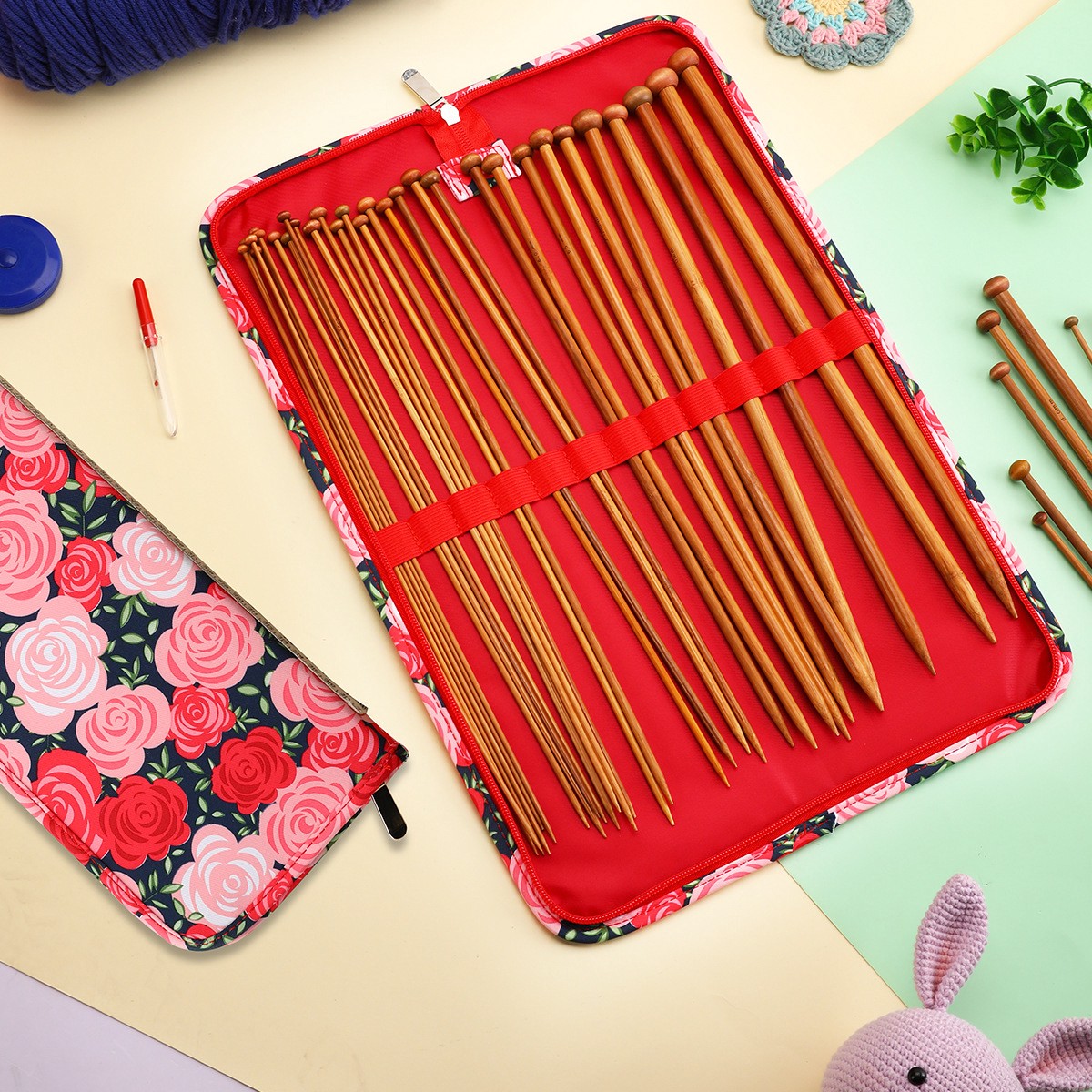

Photos from current listings. Actual item, color, and included accessories may vary.
Knitting Bag Buying Guide
A knitting bag is a project transport system: it must protect needles from bending, keep yarn clean and tangle-free, and organize active WIPs without snagging. The core trade-off is between soft fabric carryalls (light, packable, but poor structure) and structured canvas or waxed-cotton bags with internal loops and dividers that prevent needle breakage and yarn chaos. Choose a bag with dedicated needle slots, a smooth interior lining, and a wide-mouth opening if you knit on the go; skip thin single-layer totes that let circular needles kink and dpns snap.
Key takeaways
- Fabric weight drives durability: 12–16 oz canvas or waxed cotton resists abrasion and holds shape, while 8 oz or non-woven fabric bags slump and wear through at needle points.
- Internal needle organization matters more than exterior pockets: elastic loops sized for dpns and circular cables prevent bending; flat slip pockets let interchangeable tips rattle and scratch.
- A smooth, snag-free lining (nylon or polyester taffeta) lets yarn feed freely; unlined seams catch plies and create fuzz balls and tangles mid-project.
At a glance
- Category
- Knitting Needles & Accessories
- Last updated
- Nov 28, 2026
Current offers
Highlights
- Fabric weight drives durability: 12–16 oz canvas or waxed cotton resists abrasion and holds shape, while 8 oz or non-woven fabric bags slump and wear through at needle points.
- Internal needle organization matters more than exterior pockets: elastic loops sized for dpns and circular cables prevent bending; flat slip pockets let interchangeable tips rattle and scratch.
- A smooth, snag-free lining (nylon or polyester taffeta) lets yarn feed freely; unlined seams catch plies and create fuzz balls and tangles mid-project.
- Wide-mouth top openings (YKK zippers or frame stays) and flat-bottom gussets keep the bag upright and let you see all contents without dumping the project.
Best use cases
- Best fit: commuters and travel knitters — pick a structured waxed-canvas or 14 oz canvas bag with zip top, internal dpn loops, and a detachable wrist strap; skip oversized tote bags that swing and let circular needles kink.
- Best fit: home organizers with multiple WIPs — choose a bag with 2–3 separate compartments or a project pouch system so each active project stays isolated; skip single-compartment sacks that mix yarn and needles.
- Wrong fit: lace and fingering-weight knitters stuffing a large bag — fine yarns snag on rough seams and loose rivets; choose a bag with a smooth taffeta lining and no exposed hardware.
- Best fit: needle collectors — a dedicated needle case or roll with labeled slots beats a general knitting bag; use the bag for yarn and WIPs, and a separate roll for tips and cables.
Buying tips
- Match bag size to project type: a 12–14 inch wide bag handles most scarves and hats; circular needle projects and sweaters need at least 16–18 inches of internal width to avoid cramped cables.
- Check zipper quality and pull size: plastic zippers under size 5 jam on yarn; metal YKK size 5 or larger with cord pulls glide and last.
- Prefer bags with a flat, reinforced base (gusset or base panel) — they stand open on the floor or table, so you can knit two-handed without the bag tipping.
- Look for internal elastic loops sized 6–8 mm for dpns and 10–12 mm for circular needle tips; loose loops let needles slide out and snap.
Specs
| Material Grade | 12–16 oz canvas / waxed cotton / nylon |
|---|---|
| Needle Storage | Elastic loops + cable slots |
| Closure Type | YKK zip / frame / drawstring |
| Base Structure | Flat gusset / rigid insert |
Related searches
What to check before buying
- Measure your longest needle or circular cable: the bag's internal length must exceed it by at least 1 inch to prevent bending stress.
- Confirm the interior lining is smooth and seam-finished; run a hand inside to check for exposed zipper teeth or rough edges that snag yarn.
- Check the strap attachment: box-X stitching or rivets at stress points; single-stitch straps tear under a full project load.
- Verify the bag stands upright when empty and when loaded — a flat base panel or rigid insert is required for floor or table use.
FAQ
Data sources: eBay / Amazon listings and product attribute feeds. Updated Nov 28, 2026.
Some links on this page are affiliate links. If you buy after clicking one, we may earn a commission at no extra cost to you. This does not change which products appear here or their order. Affiliate disclosure.