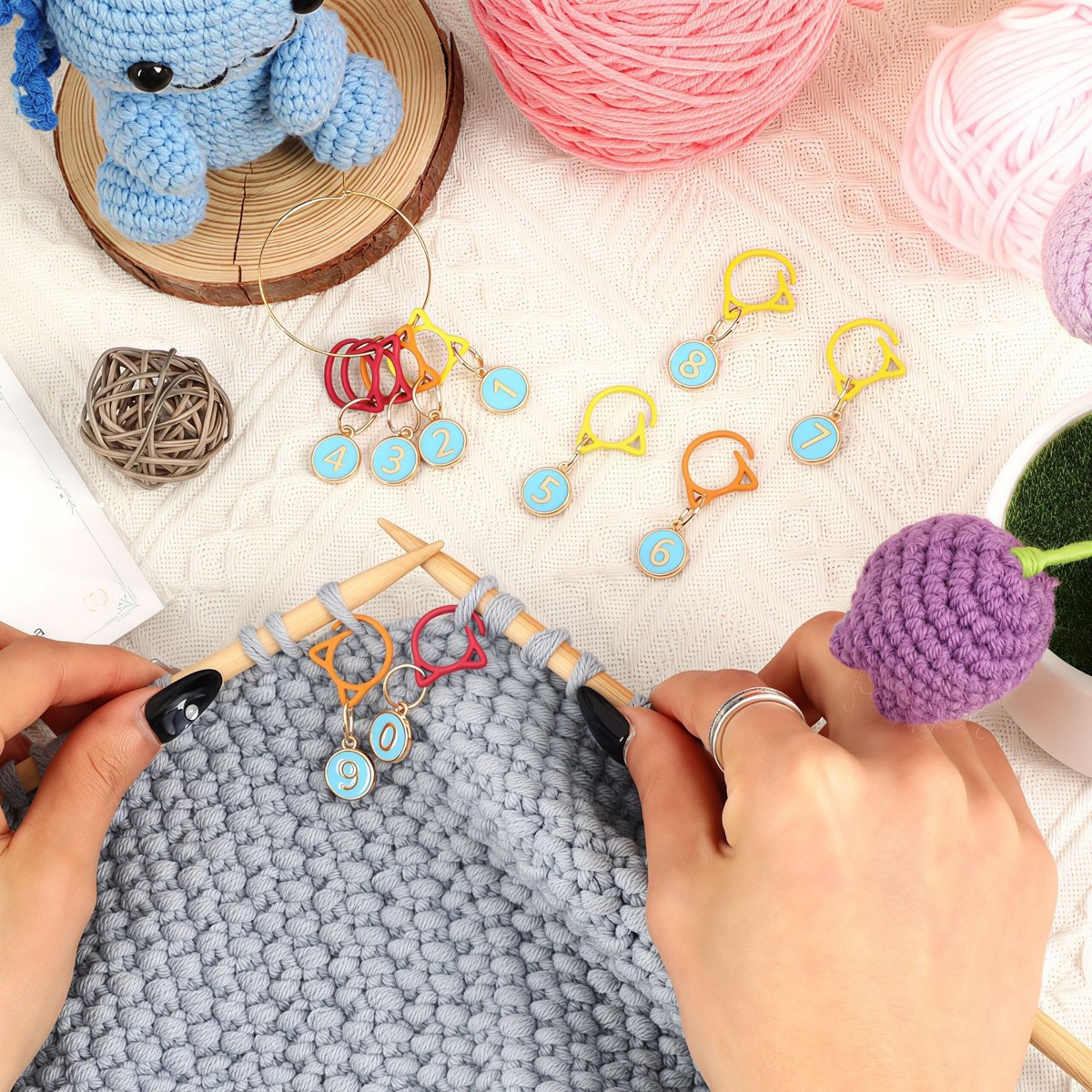

Photos from current listings. Actual item, color, and included accessories may vary.
Metal Knitting Needle Buying Guide
Metal knitting needles are rigid, low-friction tools made from aluminum, stainless steel, or brass, prized for speed and durability over bamboo or wood. The core trade-off is surface slickness versus grip: polished aluminum is fastest but drops stitches, while brushed or coated steel balances glide with control. Choose metal if you knit at tight gauges or need longevity; choose wood or bamboo if you need friction to hold slippery yarns.
Key takeaways
- Aluminum needles are lightweight and warm up fast but scratch and oxidize; stainless steel resists corrosion and holds a mirror finish for decades.
- Interchangeable sets use either screw-in (twist-lock) or click-in (snap) joins; screw-in joins loosen with clockwise knitting and need a tightening key.
- Needle tip shape matters more than material: tapered lace tips (2.5–3.5 mm) speed fine gauge, while blunt tips prevent splitting at bulky weights.
At a glance
- Category
- Knitting Needles & Accessories
- Last updated
- Nov 28, 2026
Current offers
Highlights
- Aluminum needles are lightweight and warm up fast but scratch and oxidize; stainless steel resists corrosion and holds a mirror finish for decades.
- Interchangeable sets use either screw-in (twist-lock) or click-in (snap) joins; screw-in joins loosen with clockwise knitting and need a tightening key.
- Needle tip shape matters more than material: tapered lace tips (2.5–3.5 mm) speed fine gauge, while blunt tips prevent splitting at bulky weights.
- Cable material separates premium sets: nylon-coated steel cables resist kinking and memory, while plain plastic cables curl and snag stitches.
Best use cases
- Best for fine-gauge lace and sock knitting (2.0–3.25 mm): pick stainless steel lace tips with a sharp taper and a flexible 60 cm cable.
- Best for bulky sweaters and blankets (8–12 mm): choose hollow aluminum or brass tips with blunt points to support weight without hand fatigue.
- Wrong fit: slippery silk or alpaca yarn on polished aluminum — use brushed steel or wooden needles to add friction; skip metal entirely for beginner stitch-slipping.
- Wrong fit: tight-gauge colorwork on cheap coated needles — coating flakes at the join; pay for seamless stainless brazed joins instead.
Buying tips
- Match needle size to yarn weight: fingering uses 2.25–3.25 mm, worsted 4.5–5.5 mm, bulky 8–12 mm; buy a set covering 2.75–10 mm in 0.25 mm increments.
- For interchangeable sets, confirm the join thread standard: US 3–US 15 sets use one thread; mixing brands causes cross-threading and dropped stitches.
- Check cable length math: finished garment circumference plus 10–15 cm ease determines cable; a 60 cm cable makes a 40 cm hat and a 80 cm cable suits a 60 cm sweater body.
- Prefer nickel-plated or anodized aluminum for speed; choose uncoated stainless or brass when you want lasting glide without flaking coatings.
Specs
| Needle Material | Aluminum / Stainless / Brass |
|---|---|
| Tip Style | Lace tapered vs Blunt bulky |
| Join Type | Screw-in vs Click-in |
| Size Range | 2.0–12 mm (US 0–17) |
Related searches
What to check before buying
- Measure your hand span and grip: 13 cm circular needles suit 23 cm hands; shorter tips reduce wrist strain on 2.5 mm fine-gauge work.
- Check your existing needle inventory for thread compatibility before buying an interchangeable tip pack — mismatched joins waste money.
- Confirm yarn fiber: slippery silk, alpaca, and mercerized cotton demand brushed or coated metal; sticky wool tolerates polished aluminum.
- Verify cable storage: coiled cables need a case with wide loops; kinked cables from tight storage permanently affect stitch glide.
FAQ
Data sources: eBay / Amazon listings and product attribute feeds. Updated Nov 28, 2026.
Some links on this page are affiliate links. If you buy after clicking one, we may earn a commission at no extra cost to you. This does not change which products appear here or their order. Affiliate disclosure.