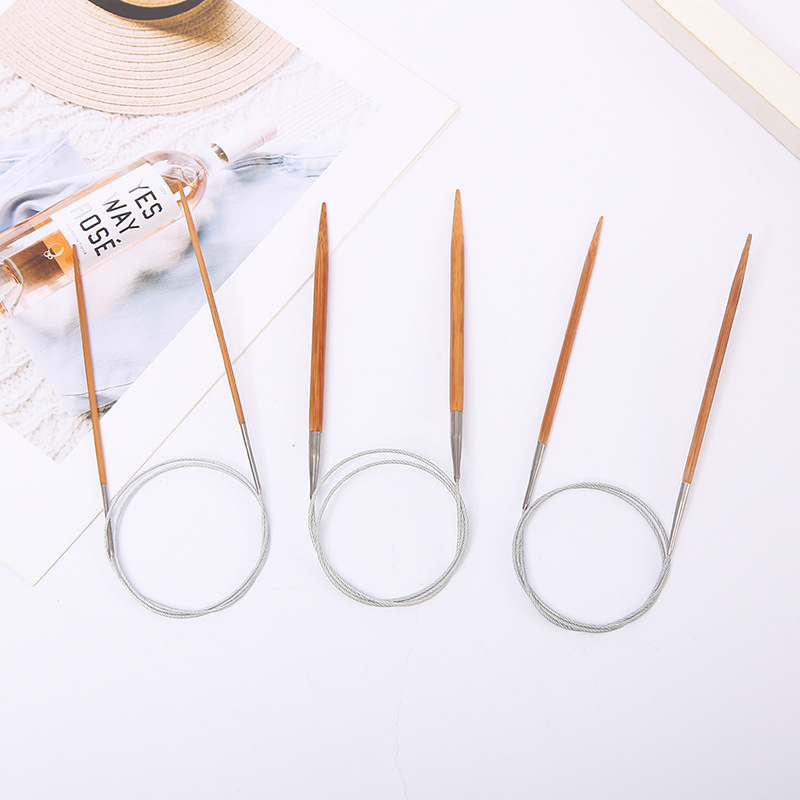

Photos from current listings. Actual item, color, and included accessories may vary.
Stainless Steel Knitting Needle Buying Guide
Stainless steel knitting needles are metal circulars and straights prized for slick, speed-friendly stitches and resistance to corrosion, but the segment splits sharply between solid surgical-grade stainless and hollow plated tubes that flex, peel, or bend at the join. The decisive trade-off is needle-tip finish versus shaft wall thickness and cable attachment quality: solid 304/316 stainless with a smooth welded or swaged join survives years of tight gauge work, while thin hollow chrome-plated brass or pot-metal fakes shed coating and snag yarn. Buy solid stainless with a seamless cable join and a tip suited to your yarn weight, and skip any needle whose metal feels paper-light or whose cable pivots roughly at the connector.
Key takeaways
- Solid 304 or 316 stainless shafts resist corrosion and bending far better than hollow chrome-plated brass tubes that dent under tight stitch tension.
- Tip geometry drives speed: sharp lace points suit fine fingering and lace, while rounded or tapered tips prevent splitting on bulky wool and cotton.
- Cable join quality decides snagging — swaged smooth transitions outperform glued-in ferrules where yarn catches and cable detaches over time.
At a glance
- Category
- Knitting Needles & Accessories
- Last updated
- Nov 28, 2026
Current offers
Highlights
- Solid 304 or 316 stainless shafts resist corrosion and bending far better than hollow chrome-plated brass tubes that dent under tight stitch tension.
- Tip geometry drives speed: sharp lace points suit fine fingering and lace, while rounded or tapered tips prevent splitting on bulky wool and cotton.
- Cable join quality decides snagging — swaged smooth transitions outperform glued-in ferrules where yarn catches and cable detaches over time.
- Surface finish matters more than mirror shine: satin or lightly brushed stainless gives controlled glide, while high-polish chrome on soft metals can feel sticky and wear through.
Best use cases
- Choose solid stainless circulars with sharp lace tips for fine-gauge shawls, socks and colorwork where speed and precise stitch pick-up matter; skip bulky blunt plastic needles.
- Pick stainless straights or interchangeable sets with rounded tips for beginner scarves and medium-worsted sweaters; skip ultra-sharp lace points that split plied wool.
- Use stainless circulars with long flexible cables for large blankets and sweater bodies knit flat; skip short straight needles that crowd stitches and strain wrists.
- For tight cotton or acrylic gauge swatches, pick thick-walled solid stainless; skip thin hollow plated needles that bend permanently under high tension.
Buying tips
- Match tip to yarn: 2.0-3.5 mm sharp lace points for fingering/lace, 4.0-6.0 mm rounded tips for worsted and bulky weights.
- Choose interchangeable sets only if the connector uses a screw-in metal join with a tightening key; glued or push-fit joins loosen under use.
- Verify solid stainless by weight and rigidity — a 4.0 mm 80 cm circular should feel stiff and substantial, not hollow or springy at the shaft.
- Cable length should equal finished circumference minus 10-15 cm of working ease; short 40 cm cables suit hats, 80-100 cm suit sweaters.
Specs
| Needle Material | Solid 304/316 stainless vs plated hollow |
|---|---|
| Tip Style | Sharp lace / rounded / tapered |
| Needle Format | Straight / circular / interchangeable |
| Cable Join | Swaged smooth vs glued ferrule |
Related searches
What to check before buying
- Measure your project circumference and pick a cable length 10-15 cm shorter than the finished garment so stitches glide without stretching.
- Confirm your yarn weight against the needle's mm size and tip sharpness — sharp points split loosely plied wool and cotton.
- Check that the cable join is swaged or smooth-welded, with no visible ridge where yarn can catch during stitch transitions.
- For interchangeable systems, confirm the thread standard matches your existing tips and cables so components remain cross-compatible.
FAQ
Data sources: eBay / Amazon listings and product attribute feeds. Updated Nov 28, 2026.
Some links on this page are affiliate links. If you buy after clicking one, we may earn a commission at no extra cost to you. This does not change which products appear here or their order. Affiliate disclosure.