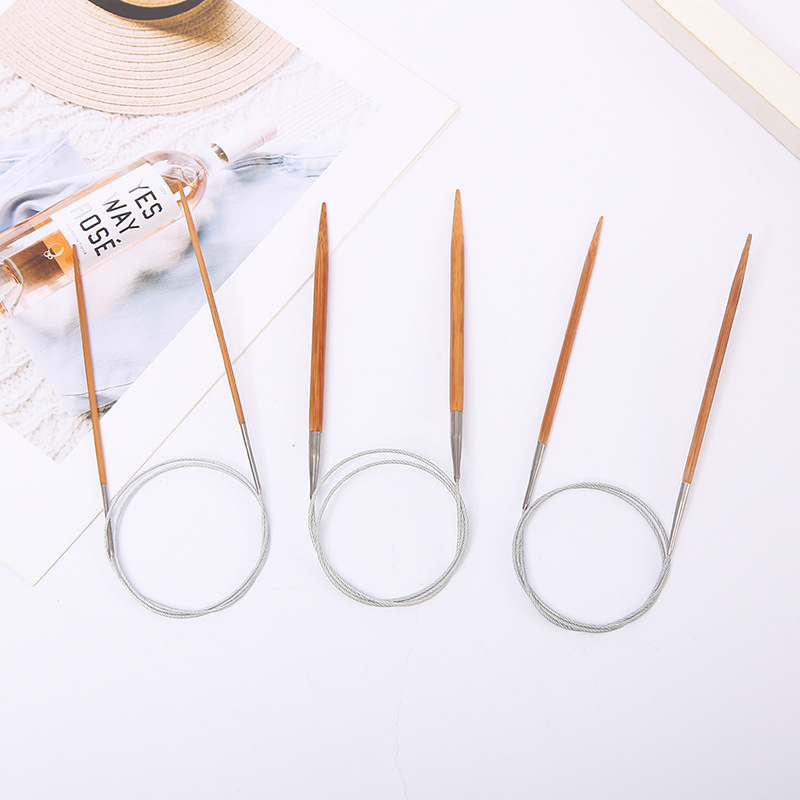

Photos from current listings. Actual item, color, and included accessories may vary.
Steel Knitting Needle Buying Guide
Steel knitting needles are metal needles valued for smooth, fast stitch glide and fine gauge precision, but the core trade-off is steel's slick surface and cold feel versus the grip and warmth of wood or bamboo. The decision rule: choose stainless steel for lace, fine yarns, and speedy stockinette; choose coated steel or a different material if you need drag or have hand fatigue.
Key takeaways
- Stainless steel resists corrosion and holds a smooth, non-tarnishing finish; uncoated carbon steel can develop patina and drag over time.
- Needle surface finish—polished vs satin—determines stitch glide: high-polish is fastest for slippery yarns, satin adds control for loose or slick fibers.
- Circular steel needles rely on the cable join; a smooth, snag-free joint and flexible cable matter more than the steel tip itself for circular knitting.
At a glance
- Category
- Knitting Needles & Accessories
- Last updated
- Nov 28, 2026
Current offers
Highlights
- Stainless steel resists corrosion and holds a smooth, non-tarnishing finish; uncoated carbon steel can develop patina and drag over time.
- Needle surface finish—polished vs satin—determines stitch glide: high-polish is fastest for slippery yarns, satin adds control for loose or slick fibers.
- Circular steel needles rely on the cable join; a smooth, snag-free joint and flexible cable matter more than the steel tip itself for circular knitting.
- Tip shape (sharp lace point vs rounded universal) changes usability: sharp points suit decreases and fine yarns, rounded tips prevent splitting for bulky yarns.
Best use cases
- Best fit: lace shawls, socks, and fine-gauge sweaters in wool or alpaca—pick sharp-tipped stainless steel circulars with a smooth join for speed and precision.
- Best fit: high-volume stockinette and colorwork where fast glide reduces hand motion—choose polished steel straights or fixed circulars in the size range you use most.
- Wrong fit: bulky, slippery synthetic yarns or arthritic hands needing drag and warmth—skip bare steel and choose bamboo, wood, or coated aluminum instead.
Buying tips
- Match needle size to yarn weight using standard gauge: fingering uses 2.25–3.25 mm, DK 3.75–4.5 mm, worsted 4.5–5.5 mm, bulky 6.5–9 mm—buy the range your patterns call for.
- For circulars, verify cable length equals desired circumference minus needle tips; a 40 cm cable with 10 cm tips yields roughly a 60 cm finished loop.
- Prefer interchangeable sets with a consistent join system (screw-in or click) so cables and tips from the same line lock securely without loosening mid-row.
- Check tip-to-cable transition for a seamless taper; a stepped or burred join snags fine yarn and is the most common failure point on budget steel circulars.
Specs
| Material Grade | Stainless vs coated carbon steel |
|---|---|
| Surface Finish | High-polish vs satin / coated |
| Tip Profile | Sharp lace vs rounded universal |
| Format | Straights, fixed circulars, interchangeables |
Related searches
What to check before buying
- Measure your project's required circumference and match circular cable length accordingly—do not buy a fixed circular longer than the loop you need.
- Confirm the needle size range covers your pattern gauge; steel sets typically span 2 mm to 10 mm, with lace sets going finer.
- Check your yarn fiber: slick synthetics and silk need satin or coated steel; grippy wool tolerates high-polish steel.
- Verify interchangeable tips and cables are the same brand and join standard—cross-brand threads usually do not fit.
FAQ
Data sources: eBay / Amazon listings and product attribute feeds. Updated Nov 28, 2026.
Some links on this page are affiliate links. If you buy after clicking one, we may earn a commission at no extra cost to you. This does not change which products appear here or their order. Affiliate disclosure.