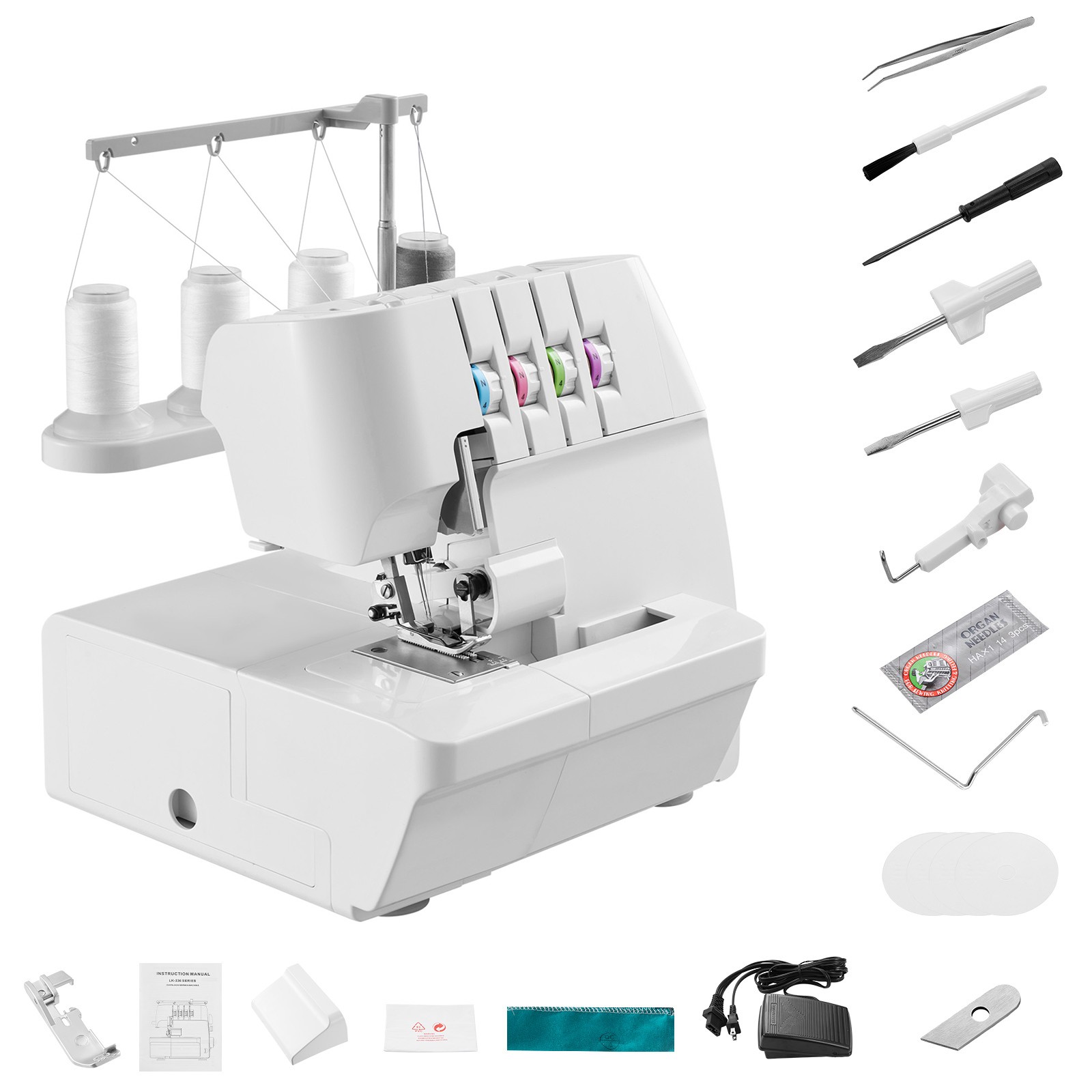

Photos from current listings. Actual item, color, and included accessories may vary.
Overlock Machine Buying Guide
An overlock machine (serger) finishes raw fabric edges with a thread-wrapped stitch while trimming the seam allowance, converting cut fabric into durable, fray-resistant garments and quilts. The core trade-off is thread-count and differential-feed capability against frame rigidity and motor quality: 2/3/4-thread models with a metal chassis handle knits and bulk fabrics, while budget 3/4-thread units with plastic frames flex and skip stitches at high speed. The decision rule: buy a 4-thread-capable machine with metal frame and adjustable differential feed for garment construction; accept a 3-thread or 2/3/4-thread fixed-differential unit only for light hemming and rolled edges on stable wovens.
Median $183.49
Key takeaways
- Thread count defines stitch structure: 2-thread rolled hem for edges, 3-thread overlock for seaming knits, and 4-thread (two needle) for strong seams with seam-allowance coverage.
- Differential feed ratio (typically 0.7:1 to 2:1) is the single biggest predictor of knit performance—it stretches or gathers the feed to prevent wavy seams on jersey and ribbing.
- Stitch speed ratings of 1250 SPM are entry-class; machines rated 1300–1500 SPM with metal frames and DC motors hold tension better at sustained output.
At a glance
- Category
- Sewing & Quilting Machines
- Last updated
- Nov 28, 2026
Current offers
Highlights
- Thread count defines stitch structure: 2-thread rolled hem for edges, 3-thread overlock for seaming knits, and 4-thread (two needle) for strong seams with seam-allowance coverage.
- Differential feed ratio (typically 0.7:1 to 2:1) is the single biggest predictor of knit performance—it stretches or gathers the feed to prevent wavy seams on jersey and ribbing.
- Stitch speed ratings of 1250 SPM are entry-class; machines rated 1300–1500 SPM with metal frames and DC motors hold tension better at sustained output.
- Metal internal frames and presser-foot pressure adjustment separate durable sergers from plastic-chassis units that flex, misalign the loopers, and produce skipped stitches.
Best use cases
- Garment sewing in knits and stretch fabrics: pick a 4-thread model with adjustable differential feed (0.7:1–2:1) and metal frame; skip 2/3-thread-only units that cannot lock a two-needle seam.
- Rolled hems and edge finishing on wovens: a 3-thread machine with a dedicated rolled-hem setting is sufficient; a 4-thread machine adds capability but is not required.
- Quilting and home-decor edge finishing: choose a 2/3/4-thread convertible serger with LED light and strong suction feet for fabric control; a fixed 3-thread-only unit limits belt-loop and binding work.
- Heavy-duty canvas or denim: select a 4-thread serger with metal frame and presser-foot pressure adjustment; skip 1250 SPM plastic-frame units rated only for light fabrics.
Buying tips
- Match thread count to fabric: 4-thread for knit seaming and garment construction, 3-thread for woven edge finishing and rolled hems, 2-thread for decorative rolled edges only.
- Require a differential feed range of at least 0.7:1 to 2:1 if you sew knits; fixed differential feed will produce wavy or puckered seams on jersey.
- Prefer a metal internal frame and presser-foot pressure adjustment over plastic chassis; frame rigidity prevents looper misalignment and skipped stitches at speed.
- Treat 1250 SPM as entry-level; if you sew daily, choose a 1300+ SPM machine with a DC motor for consistent tension at sustained speed.
Specs
| Thread Count | 2/3/4-thread convertible |
|---|---|
| Stitch Speed | 1250–1500 SPM |
| Differential Feed | 0.7:1 to 2:1 adjustable |
| Frame & Motor | Metal frame / DC motor |
Related searches
What to check before buying
- Measure your sewing table footprint and confirm the machine base plus thread spool and cone clearance fit—sergers need more rear and side clearance than standard sewing machines.
- Confirm your electrical outlet voltage and plug type match the machine's rated voltage; sergers are typically single-voltage units and a mismatch requires a step-up or step-down transformer.
- Budget for 3–4 thread cones plus a cone stand or adapter; sergers do not use standard spools efficiently and require cone threading for consistent tension.
- Check that replacement needles, presser feet, and loopers are a standard class available from multiple suppliers—proprietary parts add long-term cost and downtime.
FAQ
Data sources: eBay / Amazon listings and product attribute feeds. Updated Nov 28, 2026.
Some links on this page are affiliate links. If you buy after clicking one, we may earn a commission at no extra cost to you. This does not change which products appear here or their order. Affiliate disclosure.