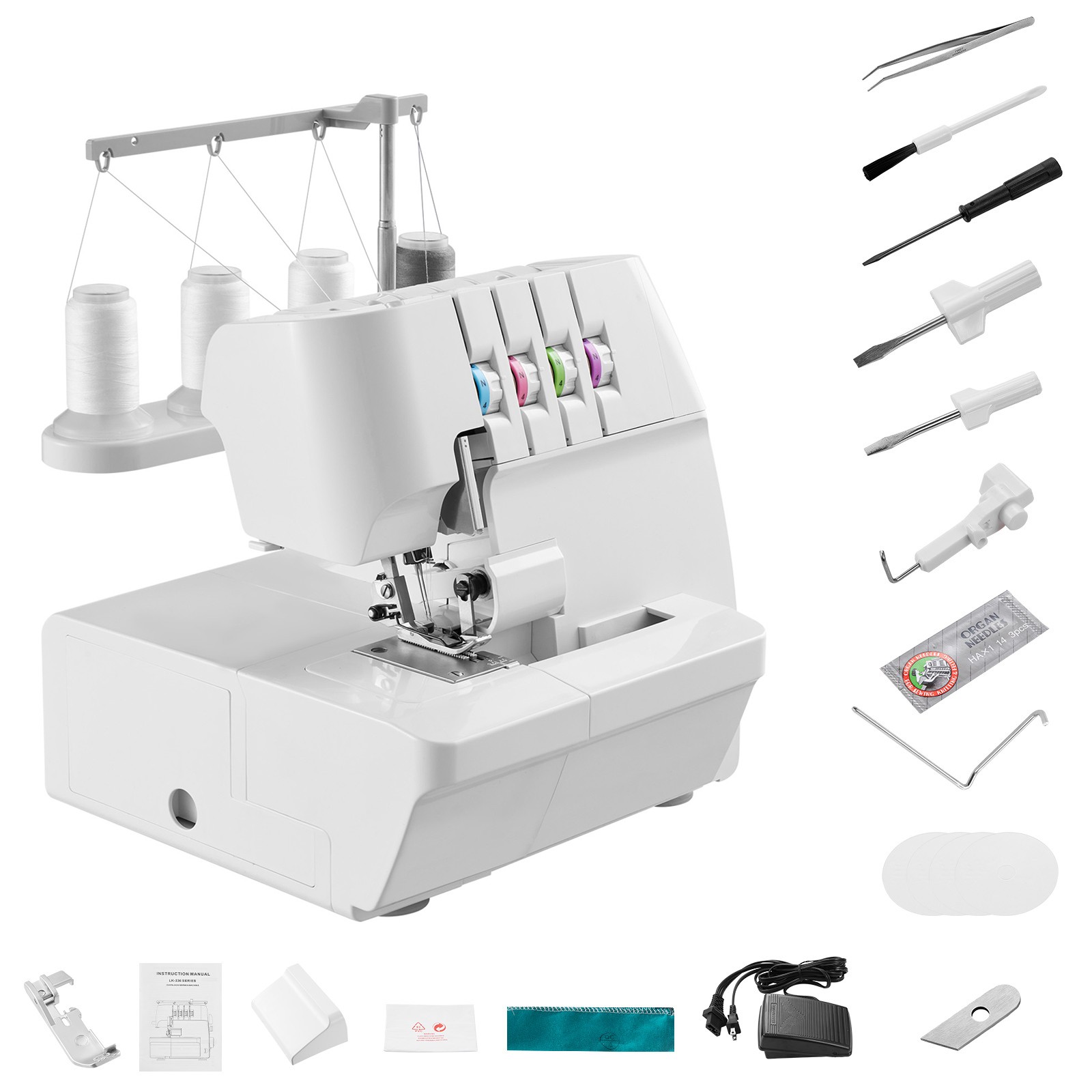

Photos from current listings. Actual item, color, and included accessories may vary.
Serger Buying Guide
Sergers are not sewing machines with extra stitches; they are overlock machines built to trim, wrap, and stretch-finish fabric edges in one pass. Buying the wrong thread count or differential-feed setup is the most common mistake, because a 3-thread serger cannot replicate a 4-thread stretch stitch and a 5-thread safety stitch is a different architecture entirely.
Median $183.49
Key takeaways
- Thread count defines architecture: 2-thread for rolled hems, 3-thread for overcast edges, 4-thread for stretch seams, 5-thread for a safety stitch combining a chain stitch with an overlock.
- Differential feed ratios around 0.7:1 to 2:1 control puckering on knits and gathering on wovens; a serger without adjustable differential feed limits stretch-fabric work.
- Stitch speed is measured in stitches per minute (SPM); 1250-1300 SPM is the standard hobby class, while 1500+ SPM models are semi-professional.
At a glance
- Category
- Sewing & Quilting Machines
- Last updated
- Nov 28, 2026
Current offers
Highlights
- Thread count defines architecture: 2-thread for rolled hems, 3-thread for overcast edges, 4-thread for stretch seams, 5-thread for a safety stitch combining a chain stitch with an overlock.
- Differential feed ratios around 0.7:1 to 2:1 control puckering on knits and gathering on wovens; a serger without adjustable differential feed limits stretch-fabric work.
- Stitch speed is measured in stitches per minute (SPM); 1250-1300 SPM is the standard hobby class, while 1500+ SPM models are semi-professional.
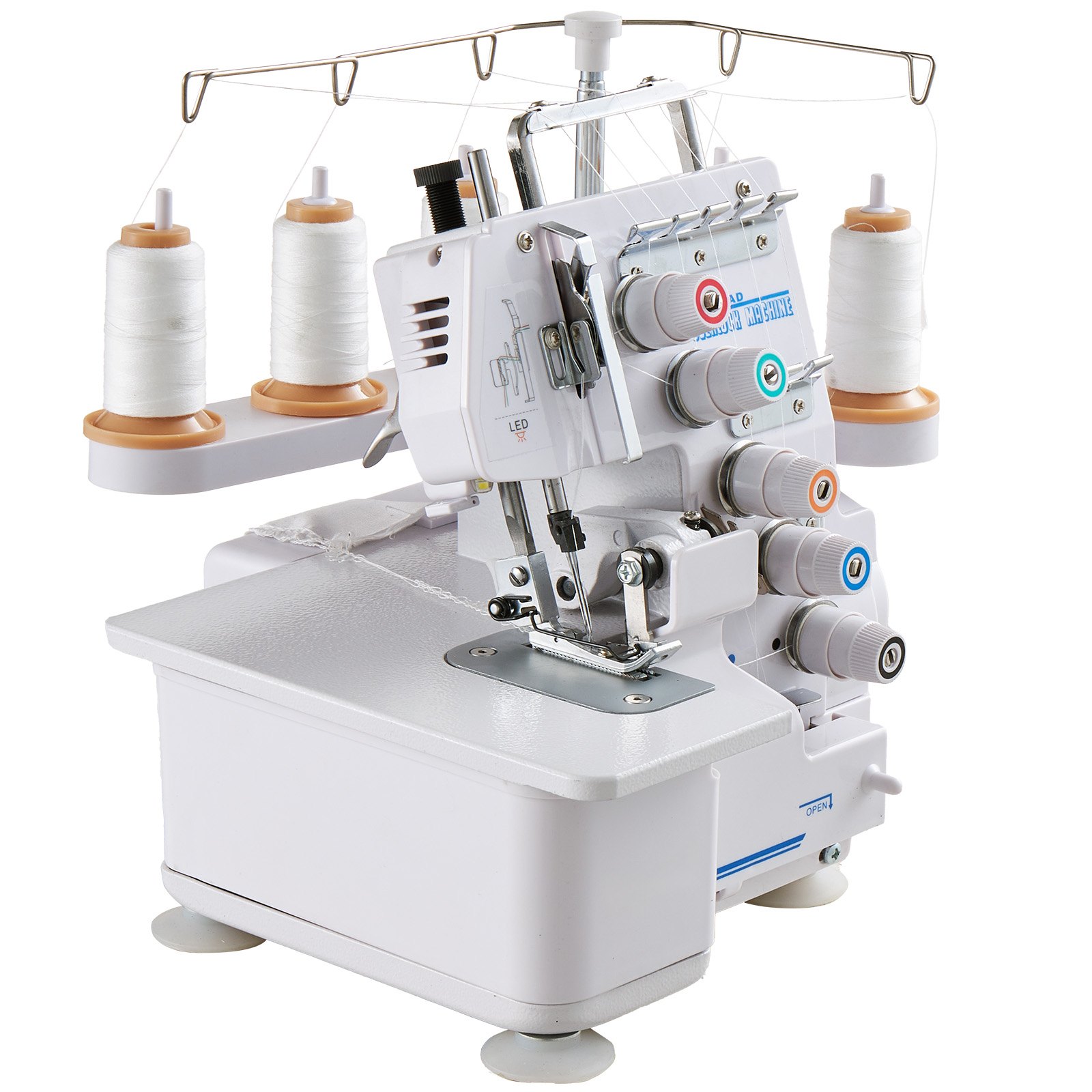
- Heavy-duty metal frames reduce vibration at speed; suction-cup feet and LED lighting are convenience features, not indicators of stitch quality or durability.
Best use cases
- Choose a 4-thread serger if you sew knit garments and need stretch seams that survive wear; skip 3-thread-only models for activewear.
- Choose a 3-thread serger for finishing woven edges and basic rolled hems on a budget; skip it if you need a safety stitch.
- Choose a 5-thread safety-stitch serger for garment construction that needs a chain stitch plus overlock in one pass; skip it for quilting-only work.
- Skip a serger entirely if your work is straight-stitch quilting or home decor without exposed seam finishes; a conventional sewing machine covers that.
Buying tips
- Pick the thread count by fabric: 4-thread for knits and stretch, 3-thread for wovens, 5-thread for durable garment seams.
- Check differential feed adjustability because fixed-feed sergers pucker on jersey and cannot gather evenly on woven fabric.
- Compare stitch speed in SPM and frame material; metal frames hold timing at 1250+ SPM better than plastic chassis.
- Inspect the included accessory set for a rolled-hem plate and extra needles, since these are required for 2-thread and 3-thread conversions.
Specs
| Thread Count | 2 / 3 / 4 / 5 thread |
|---|---|
| Stitch Speed | 1250-1500+ SPM |
| Differential Feed | Adjustable 0.7:1 to 2:1 |
| Frame Material | Metal vs plastic chassis |
What to check before buying
- Measure your table space: sergers are wider than sewing machines and need clearance for fabric feeding on both sides.
- Confirm your electrical outlet and plug standard matches the machine's voltage; sergers are typically 110-120V or 220-240V by region.
- Check that the model includes the thread stand and spool cones, since sergers use cone thread, not standard spools.
- Verify your fabric stash: if you mainly sew knits, confirm 4-thread capability; for wovens, 3-thread is sufficient.
FAQ
Data sources: eBay / Amazon listings and product attribute feeds. Updated Nov 28, 2026.
Some links on this page are affiliate links. If you buy after clicking one, we may earn a commission at no extra cost to you. This does not change which products appear here or their order. Affiliate disclosure.