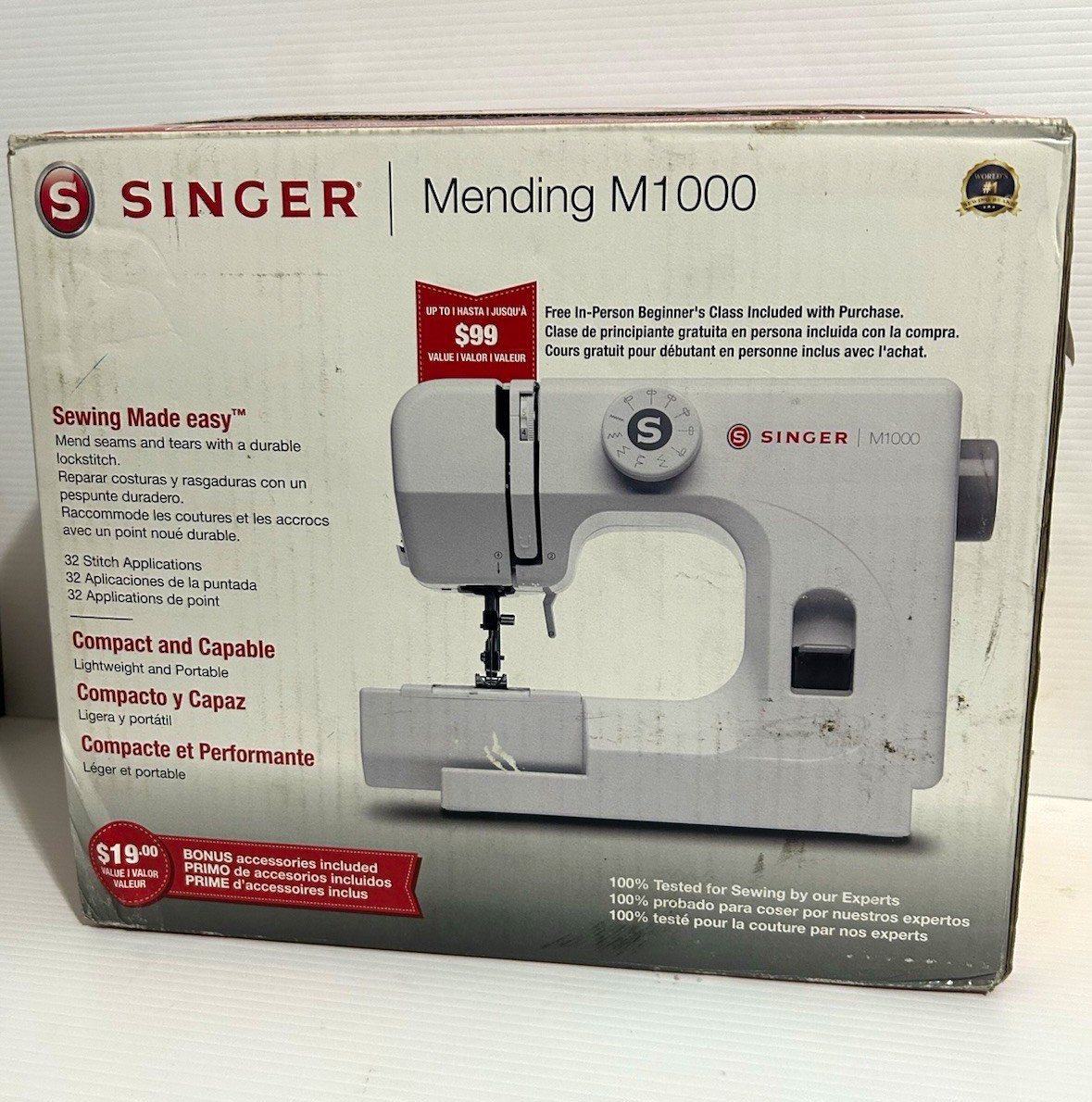

Photos from current listings. Actual item, color, and included accessories may vary.
Singer Sewing Machine Buying Guide
Singer sewing machines span mechanical portables to heavy-duty semi-professionals, with the core trade-off being metal internal frame and motor torque versus plastic gears and lightweight portability. The decision rule is simple: match the machine's rated stitch power and frame material to your thickest regular fabric — light-duty plastic-frame models for sheers and mending, metal-frame heavy-duty models for denim and canvas.
Median $94.98
Key takeaways
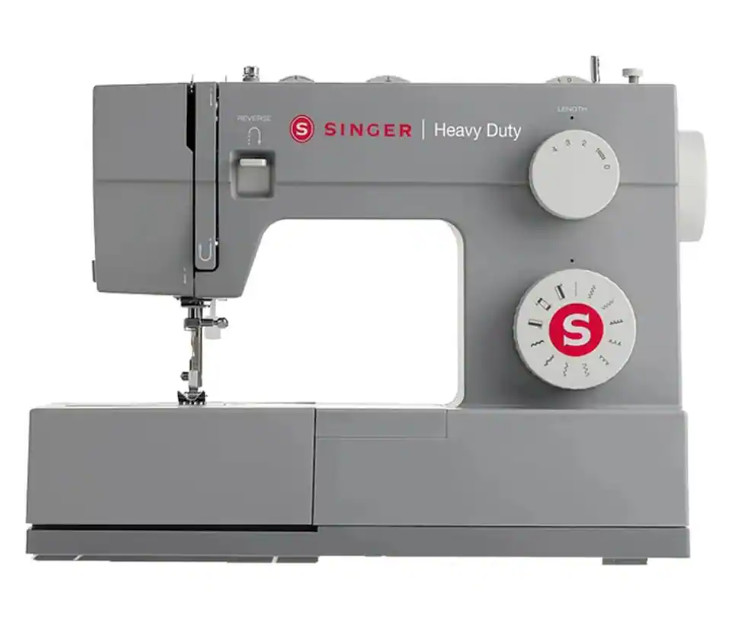
- Heavy Duty 4411 uses a metal internal frame, stainless steel bedplate, and 60% stronger motor penetration than Singer's standard mechanical line.
- The M1000-class portable is a 120V mechanical oscillating-hook machine with preset stitch length/width — built for lightweight mending, not thick seams.
- Singer model tiers differ by hook type and stitch count: Heavy Duty 44-class offers 23 built-in stitches and a 1,100 stitches-per-minute max speed.
At a glance
- Category
- Sewing & Quilting Machines
- Last updated
- Nov 28, 2026
Current offers
Highlights
- Heavy Duty 4411 uses a metal internal frame, stainless steel bedplate, and 60% stronger motor penetration than Singer's standard mechanical line.
- The M1000-class portable is a 120V mechanical oscillating-hook machine with preset stitch length/width — built for lightweight mending, not thick seams.
- Singer model tiers differ by hook type and stitch count: Heavy Duty 44-class offers 23 built-in stitches and a 1,100 stitches-per-minute max speed.
- Drop-in top-loading bobbins dominate Singer's current lineup, while front-loading bobbin systems remain on older or industrial-derived models.
Best use cases
- Best fit: Singer Heavy Duty 4411 for home sewists regularly hemming denim, canvas, or upholstery — metal frame and stronger motor handle thick seams. Skip M1000-class portables for these fabrics.
- Best fit: M1000 portable for beginners, dorm residents, or occasional mending of light cottons and knits where compact 120V storage matters more than power.
- Wrong fit: any plastic-frame Singer for continuous production sewing or leather — step up to a metal-frame heavy-duty or industrial machine instead.
Buying tips
- Pick a metal internal frame if you sew denim, canvas, or multiple layers of upholstery fabric — plastic-frame machines flex and skip stitches under load.
- Match motor rating to fabric: heavy-duty Singer models deliver higher penetration torque; standard mechanical models stall on 10 oz denim cross-seams.
- Confirm 120V North American plug and 60 Hz motor for US/Canada households; export voltages require a step-up transformer, not just a plug adapter.
- Choose drop-in top-loading bobbins for easy threading and front-loading only if you need the higher bobbin capacity of industrial-style hooks.
Specs
| Frame Material | Metal internal vs plastic body |
|---|---|
| Motor Tier | Heavy-duty 60% stronger vs standard |
| Stitch Count | 23 built-in (Heavy Duty) vs preset |
| Bobbin System | Drop-in Class 15/15J top-loading |
Related searches
What to check before buying
- Measure your sewing table footprint — Heavy Duty 4411 needs roughly 16 x 7 inches of bed space and clearance behind for the thread stand.
- Verify a grounded 120V outlet within cord reach; these are corded machines with no battery option.
- Check your thickest planned fabric against the machine's rated stitch penetration — if it exceeds 8 oz denim, choose the metal-frame heavy-duty tier.
- Confirm bobbin class (Singer Class 15 or 15J) and buy spare bobbins and needles matching the machine before your first thick-fabric project.
FAQ
Data sources: eBay / Amazon listings and product attribute feeds. Updated Nov 28, 2026.
Some links on this page are affiliate links. If you buy after clicking one, we may earn a commission at no extra cost to you. This does not change which products appear here or their order. Affiliate disclosure.