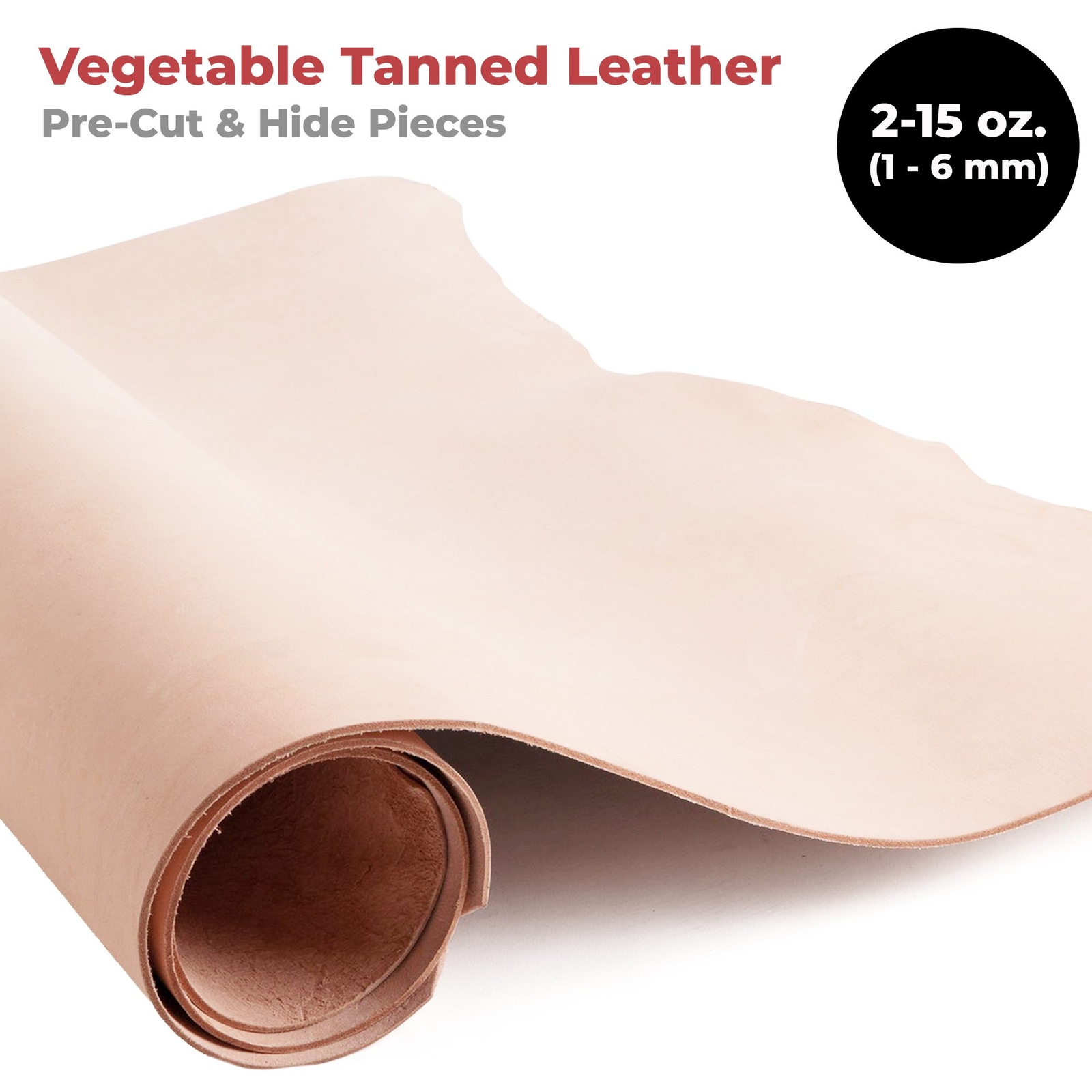

Photos from current listings. Actual item, color, and included accessories may vary.
8 Vegetable Tanned Leather Buying Guide
Vegetable-tanned leather is a full-grain hide tanned with plant tannins, prized for its firm hand, natural patina, and ability to be tooled, molded, and dyed. The core trade-off is thickness versus workability: heavier weights (8–9 oz) suit structural goods like belts and holsters, while mid-weights (4–6 oz) handle bags and wallets. The decision rule is simple: match ounce weight to the load-bearing role of the finished piece, not to a single 'best' thickness.
Key takeaways
- Vegetable tanning uses tree-bark tannins, producing firm, dense hides that patina and hold tooled impressions; chrome-tanned leather is softer but cannot be carved.
- Thickness is measured in ounces (1 oz ≈ 0.4 mm): 8–9 oz ≈ 3.2–3.6 mm for belts, straps, and holsters; 4–6 oz ≈ 1.6–2.4 mm for bags and pouches.
- Skived and pre-cut panels save labor but limit grain continuity; full sides and shoulders offer longer, stronger fibers for large single-piece cuts.
At a glance
- Category
- Leather Hides & Panels
- Last updated
- Nov 28, 2026
Current offers
Highlights
- Vegetable tanning uses tree-bark tannins, producing firm, dense hides that patina and hold tooled impressions; chrome-tanned leather is softer but cannot be carved.
- Thickness is measured in ounces (1 oz ≈ 0.4 mm): 8–9 oz ≈ 3.2–3.6 mm for belts, straps, and holsters; 4–6 oz ≈ 1.6–2.4 mm for bags and pouches.
- Skived and pre-cut panels save labor but limit grain continuity; full sides and shoulders offer longer, stronger fibers for large single-piece cuts.
- Full-grain vegetable-tanned hides retain the outermost grain for maximum durability; top-grain or split versions are thinner, weaker, and less patina-prone.
Best use cases
- Choose 8–9 oz (3.2–3.6 mm) for single-layer belts, shoulder straps, knife sheaths, and holsters where stiffness and load-bearing matter; skip lighter weights for these uses.
- Choose 4–6 oz (1.6–2.4 mm) for wallets, bag gussets, and lined pouches; skip 8–9 oz because it is too stiff for folding seams without skiving.
- Choose pre-cut panels for small tooling projects and repairs; choose full sides or shoulders when you need continuous grain across large patterns and are willing to cut and skive yourself.
Buying tips
- Calculate ounce weight from millimeter thickness: 8–9 oz ≈ 3.2–3.6 mm, 4–6 oz ≈ 1.6–2.4 mm; confirm the listed mm range rather than trusting the ounce label alone.
- Select full-grain vegetable-tanned hides over top-grain or split for tooling and long-term patina; split leather has no grain and will not burnish edges cleanly.
- For belts, order a panel at least 1.5× your waist length plus overlap to allow for stretch and cutting loss; pre-cut straps should match your exact finished width.
- Check tannery origin and tannin type—domestic oak/bark tannages tend to be firmer and lighter in color than some imported quick-tans, which affects carving and dye uptake.
Specs
| Tannage Type | Vegetable (plant tannin) vs Chrome |
|---|---|
| Weight Range | 4–6 oz (1.6–2.4 mm) to 8–9 oz (3.2–3.6 mm) |
| Grain Grade | Full-grain vs top-grain / split |
| Cut Format | Full side / shoulder vs pre-cut panel |
Related searches
What to check before buying
- Measure the finished pattern's largest single piece; confirm the hide or panel dimension exceeds it by at least 10% for cutting and skiving loss.
- Confirm ounce/mm range against your machine or hand-tool capability—8–9 oz requires heavy-duty stitching and hole punching.
- For edge finishing, plan on burnishing vegetable-tanned edges; verify the hide is full-grain and not coated or corrected.
- Check that pre-cut panels list grain orientation and tannage; mismatched panels can vary in firmness and dye absorption across a single project.
FAQ
Data sources: eBay / Amazon listings and product attribute feeds. Updated Nov 28, 2026.
Some links on this page are affiliate links. If you buy after clicking one, we may earn a commission at no extra cost to you. This does not change which products appear here or their order. Affiliate disclosure.