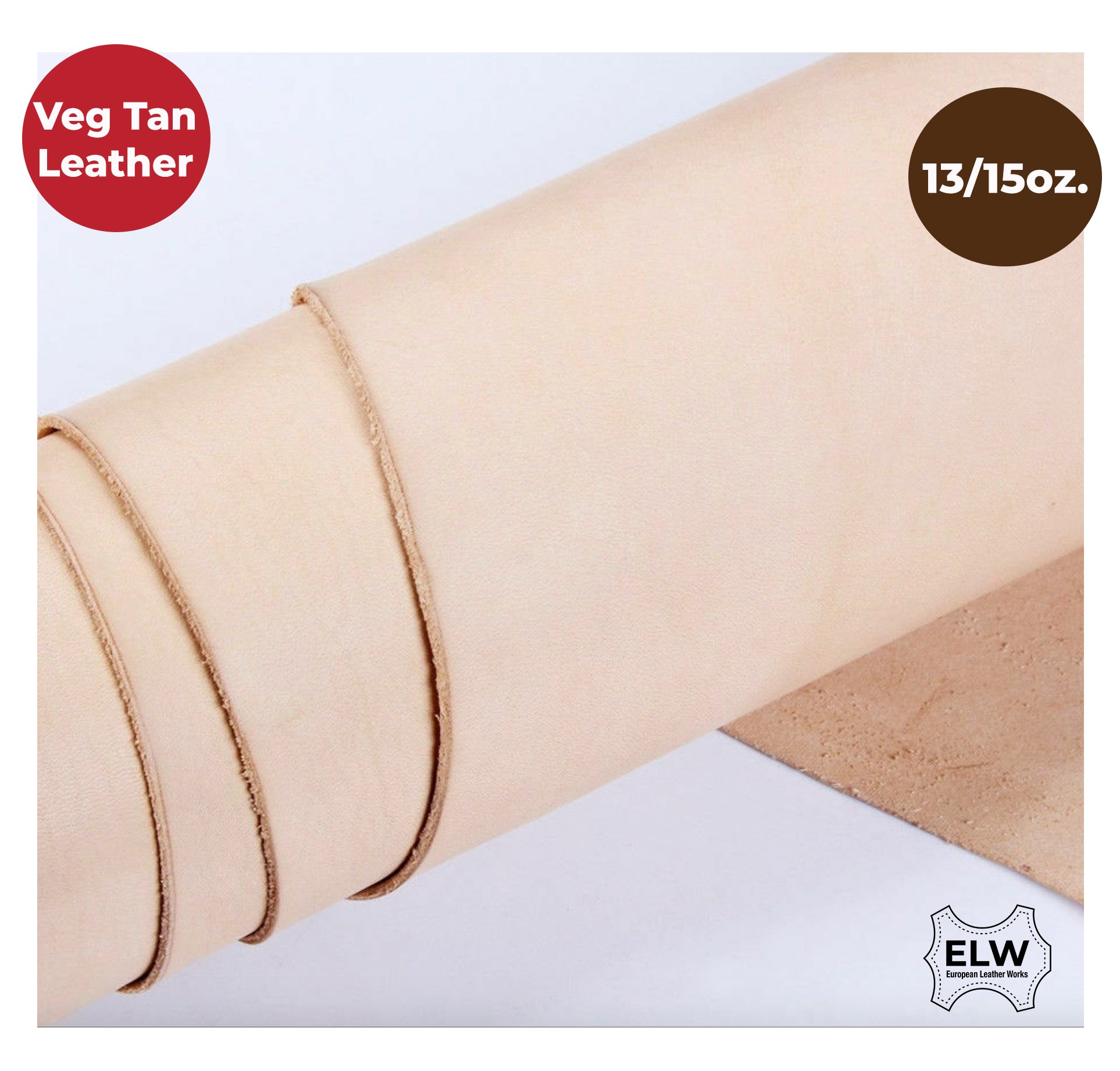

Photos from current listings. Actual item, color, and included accessories may vary.
Veg Tan Hide Buying Guide
Veg tan hide is full-grain cowhide tanned with plant tannins, prized for rigidity, toolability, and a patina that darkens with age. The core trade-off is thickness versus workability: 4–6 oz hides carve and fold cleanly for bags and wallets, while 10–14 oz hides resist deformation for belts, straps, and armor but require heavy edge finishing and stitching. Choose by finished-goods thickness and temper—not by color names or cut dimensions alone—and reject hides with loose break, scars, or inconsistent tannage.
Key takeaways
- Vegetable tannage produces dense, firm-tempered leather that holds tooled impressions; chrome-tanned hides are softer but will not carve or mold reliably.
- Thickness is sold in ounces (1 oz ≈ 0.4 mm): 2–4 oz for linings and small goods, 4–6 oz for bags and wallets, 8–10 oz for sheaths, 12–14 oz for belts and straps.
- Full-grain denotes the intact top grain; top-grain and split-grain hides are sanded or split and lose tensile strength and patina depth.
At a glance
- Category
- Leather Hides & Panels
- Last updated
- Nov 28, 2026
Current offers
Highlights
- Vegetable tannage produces dense, firm-tempered leather that holds tooled impressions; chrome-tanned hides are softer but will not carve or mold reliably.
- Thickness is sold in ounces (1 oz ≈ 0.4 mm): 2–4 oz for linings and small goods, 4–6 oz for bags and wallets, 8–10 oz for sheaths, 12–14 oz for belts and straps.
- Full-grain denotes the intact top grain; top-grain and split-grain hides are sanded or split and lose tensile strength and patina depth.
- Hides ship as shoulders (firm, uniform), sides (large, variable), or bellies (loose, stretchy); shoulder and side cuts are the standard for structural work.
Best use cases
- Best fit: pick 4–6 oz shoulder or side for wallets, pouches, and bag panels—firm enough to hold shape, thin enough to skive and fold.
- Best fit: pick 12–14 oz bridle or strap-grade side for belts, dog collars, and tool holders; single-ply construction replaces glued layers.
- Wrong fit: avoid 10+ oz hides for lined wallets or small curved goods—thickness prevents clean turns and causes bulk at seams.
- Wrong fit: skip belly cuts and heavily scarred bargain sides for visible wear items; loose fiber stretches and cracks at stress points.
Buying tips
- Convert ounces to millimeters before ordering: multiply ounces by 0.4; a 12–14 oz hide is 4.8–5.6 mm, which suits 1.5-inch belts without backing.
- For a belt, buy a hide at least 1.5× your waist length plus 8 inches; a 48-inch side covers a single 40-inch belt with waste.
- Choose shoulder cuts for tooling and molding; sides offer larger continuous panels for bags but vary in temper across the hide.
- Inspect for uniform tannage color, tight grain, and minimal scars; veg tan lightens when stretched, revealing loose break before cutting.
Specs
| Tannage | Vegetable (plant tannin) vs chrome |
|---|---|
| Grain Grade | Full-grain > top-grain > split |
| Thickness Range | 2–4 oz light / 8–10 oz mid / 12–14 oz heavy |
| Cut Format | Shoulder (firm) / Side (large) / Belly (loose) |
Related searches
What to check before buying
- Measure your finished pattern's largest panel; ensure the hide's usable area (excluding edges and defects) exceeds it by 2 inches per side.
- Match thickness to your machine: most home sewing machines handle up to 6 oz; 10+ oz requires a walking-foot or hand stitching.
- Confirm you have a strap cutter, edge beveler, and burnishing tools—veg tan edges require finishing that chrome-tan does not.
- Store at 40–60% relative humidity; dry climates stiffen veg tan and cause cracking, so plan for conditioning wax or oil.
FAQ
Data sources: eBay / Amazon listings and product attribute feeds. Updated Nov 28, 2026.
Some links on this page are affiliate links. If you buy after clicking one, we may earn a commission at no extra cost to you. This does not change which products appear here or their order. Affiliate disclosure.