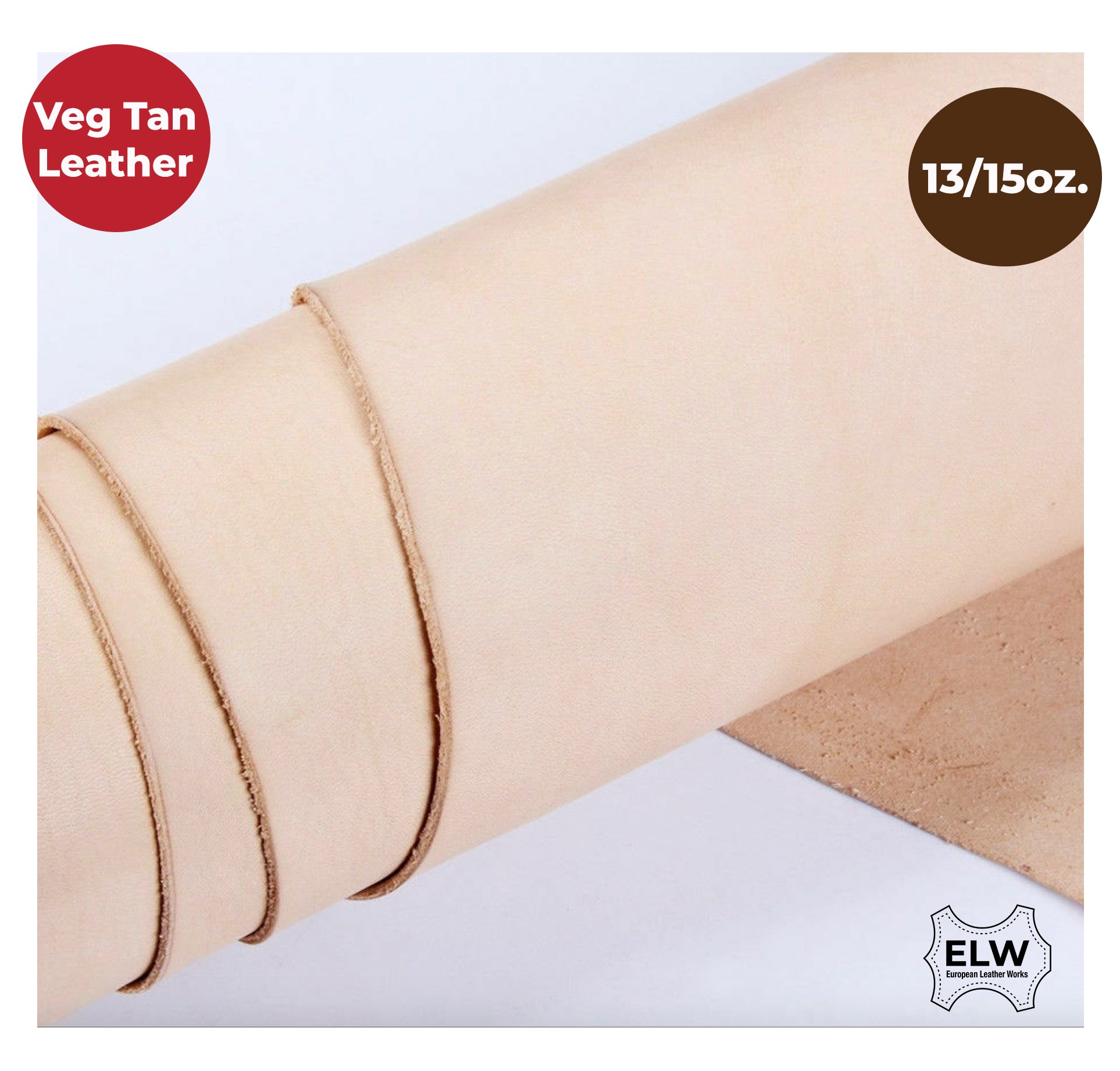

Photos from current listings. Actual item, color, and included accessories may vary.
Veg Tan Leather Buying Guide
Veg tan leather is full-grain cowhide tanned with vegetable tannins, prized for its stiffness, carveability, and patina; the core trade-off is thickness versus workability, since heavier weights resist stretching but require more force to cut and stitch. The clear decision rule: buy by ounce weight and tannage (e.g., 2-3 oz for garments/lining, 8-10 oz for bags, 12-14 oz for bridle/straps) and demand full-grain or top-grain explicitly, skipping bonded or chrome-tanned splits sold as 'veg tan'.
Key takeaways
- Thickness is measured in ounces (1 oz ≈ 0.4 mm); common tiers are 2-3 oz (0.8-1.2 mm) for linings, 5-6 oz (2-2.4 mm) for wallets, 8-10 oz (3.2-4 mm) for bags, and 12-14 oz (4.8-5.6 mm) for bridle work.
- Full-grain veg tan retains the entire grain layer for maximum tensile strength and tooling response; top-grain is sanded (loses grain character), while splits and bonded leather lack the fiber density for carving or long-term flex.
- Vegetable tanning uses tree-bark tannins (often mimosa or quebracho) over weeks, producing a firmer hand and natural patina; chrome tan is faster and softer but unsuitable for stamping, molding, or edge burnishing.
At a glance
- Category
- Leather Hides & Panels
- Last updated
- Nov 28, 2026
Current offers
Highlights
- Thickness is measured in ounces (1 oz ≈ 0.4 mm); common tiers are 2-3 oz (0.8-1.2 mm) for linings, 5-6 oz (2-2.4 mm) for wallets, 8-10 oz (3.2-4 mm) for bags, and 12-14 oz (4.8-5.6 mm) for bridle work.
- Full-grain veg tan retains the entire grain layer for maximum tensile strength and tooling response; top-grain is sanded (loses grain character), while splits and bonded leather lack the fiber density for carving or long-term flex.
- Vegetable tanning uses tree-bark tannins (often mimosa or quebracho) over weeks, producing a firmer hand and natural patina; chrome tan is faster and softer but unsuitable for stamping, molding, or edge burnishing.
- Panel cut matters: 24x48 in panels suit large bag gussets and belts, while 8x8 in squares suit small goods; pre-cut heavy sheets (6-14+ oz) reduce waste for strap and bridle projects but limit layout flexibility.
Best use cases
- Best fit: 2-3 oz full-grain veg tan for wallet interiors, linings, and garment accents—pick 8x8 or 12x12 squares for small goods and skip heavy 10+ oz panels that are too stiff to fold.
- Best fit: 5-6 oz for belts, dog collars, and structured pouches; choose 24x48 panels when cutting multiple straps, and avoid 2-3 oz for load-bearing straps that will stretch.
- Best fit: 8-10 oz for tooled holsters, bag bodies, and molded masks; select full-grain hides with tight fiber and skip top-grain or split leather that tears at stitch lines under load.
- Wrong fit: 12-14 oz bridle-weight sheets for hand-sewn small goods—too thick for standard pricking irons and needles; reserve for strap work, reins, and heavy-duty cases requiring 4.8-5.6 mm stock.
Buying tips
- Convert ounce to millimeter before ordering: multiply oz by 0.4 (e.g., 8 oz ≈ 3.2 mm); standard stitching chisels handle up to about 10 oz, so heavier stock needs awl or drill piercing.
- Insist on full-grain or top-grain and vegetable-tanned labeling; 'veg tan' bonded or split leather has no grain direction and will delaminate or crack at folds within months.
- For belts, calculate length from waist plus 8-10 in overlap and order a panel at least 1.5 in wide per strap; a 24x48 in panel yields multiple 1.5 in x 48 in belt blanks with less waste.
- Choose natural/beige for dyeing and carving (takes tooling and oil evenly) and dark brown pre-dyed for finished goods; pre-dyed surfaces can resist further stamping and may crock on light fabrics.
Specs
| Tannage | Vegetable-tanned full-grain vs chrome |
|---|---|
| Weight Range | 2-3 oz to 12-14 oz (0.8-5.6 mm) |
| Panel Size | 8x8 in squares to 24x48 in panels |
| Grain Grade | Full-grain / top-grain / split |
Related searches
What to check before buying
- Measure your project's largest pattern piece plus 1 in seam allowance on all sides; a 24x48 in panel covers most bag gussets, while 8x8 in squares only fit wallets and small straps.
- Confirm your stitching tools: standard 4 mm pricking irons and #18 needles handle up to about 10 oz; for 12-14 oz bridle stock plan on an awl, drill, or heavy-duty stitching pony.
- Check edge-finishing supplies: veg tan burnishes with water and gum tragacanth or beeswax; chrome-tanned and bonded leathers require edge paint and will not burnish cleanly.
- Plan for moisture and light: natural veg tan darkens with UV and oil, so store panels flat, dry, and out of direct sun; pre-dyed dark brown hides resist patina but can transfer dye to light fabrics.
FAQ
Data sources: eBay / Amazon listings and product attribute feeds. Updated Nov 28, 2026.
Some links on this page are affiliate links. If you buy after clicking one, we may earn a commission at no extra cost to you. This does not change which products appear here or their order. Affiliate disclosure.