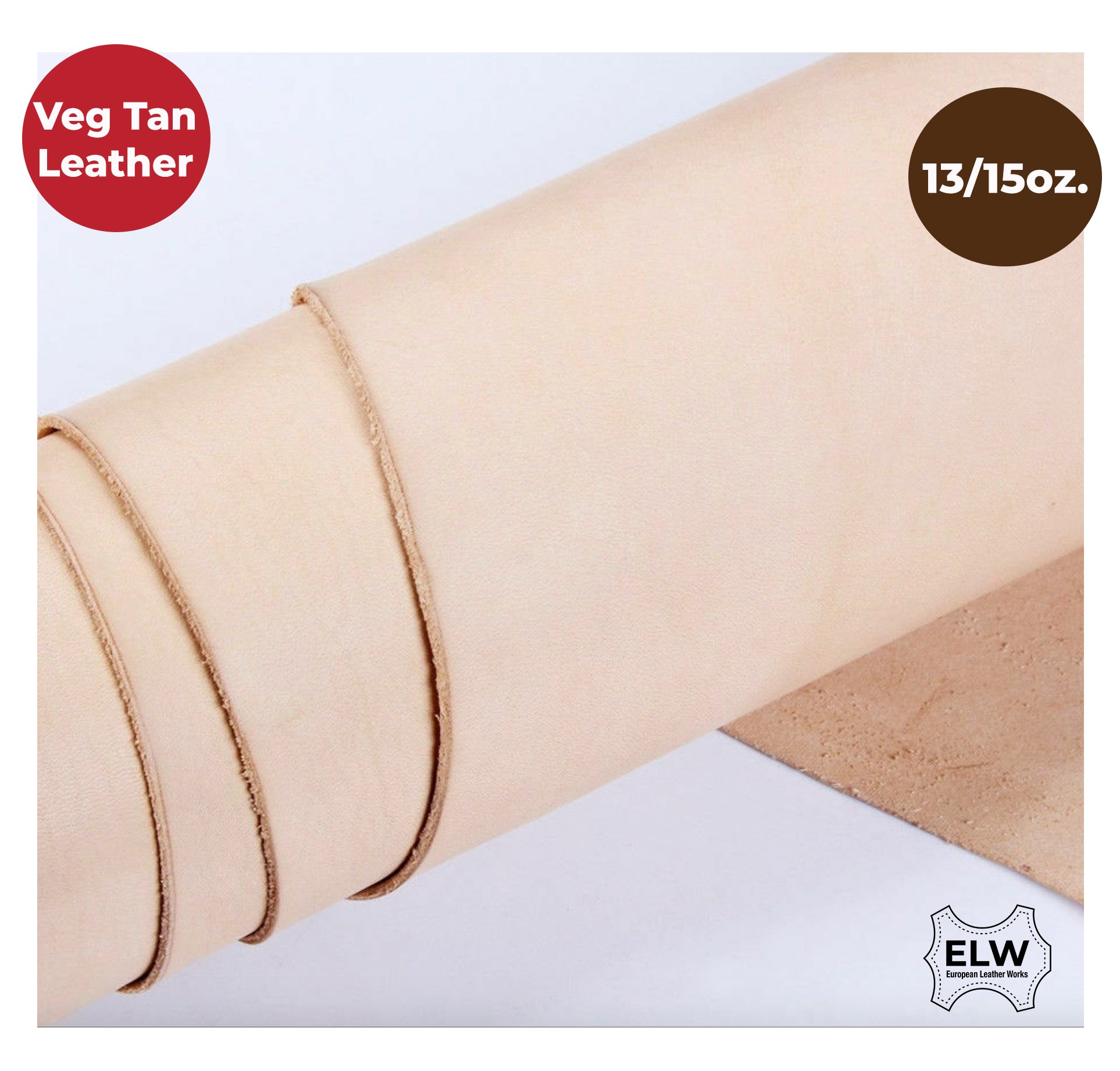

Photos from current listings. Actual item, color, and included accessories may vary.
Full Grain Veg Tan Leather Buying Guide
Full grain veg tan leather is a vegetable-tanned cowhide that retains the entire grain surface, offering unmatched durability and a patina that develops with use. The primary trade-off is thickness versus workability: heavier hides (13/15 oz) suit rigid goods like belts and holsters, while lighter weights (4/5 oz) are needed for bags and molded items. The clear decision rule is to match ounce weight to the project's structural needs and insist on full-grain (not top-grain) for maximum fiber density.
Key takeaways
- Vegetable tanning uses tree bark tannins, producing a firm, moldable leather that darkens with UV and handling—unlike chrome-tanned leather which stays soft and colorfast.
- Full grain means the outermost grain layer is intact; top-grain is sanded, corrected grain is stamped, and bonded leather is shredded scraps—only full grain offers self-healing patina.
- Weight is measured in ounces per square foot: 2/3 oz (0.8–1.2mm) for linings, 4/5 oz (1.6–2.0mm) for bags, 8/10 oz (3.2–4.0mm) for straps, and 13/15 oz (5.2–6.0mm) for heavy belts and armor.
At a glance
- Category
- Leather Hides & Panels
- Last updated
- Nov 28, 2026
Current offers
Highlights
- Vegetable tanning uses tree bark tannins, producing a firm, moldable leather that darkens with UV and handling—unlike chrome-tanned leather which stays soft and colorfast.
- Full grain means the outermost grain layer is intact; top-grain is sanded, corrected grain is stamped, and bonded leather is shredded scraps—only full grain offers self-healing patina.
- Weight is measured in ounces per square foot: 2/3 oz (0.8–1.2mm) for linings, 4/5 oz (1.6–2.0mm) for bags, 8/10 oz (3.2–4.0mm) for straps, and 13/15 oz (5.2–6.0mm) for heavy belts and armor.
- Pre-cut panels are sized by square footage or dimensions; a 24"x48" panel yields 8 sq ft, enough for one belt (approx. 1.5 sq ft) plus a small pouch, but not a full bag.
Best use cases
- Best fit: Belt makers and holster crafters should choose 13/15 oz (5.2–6.0mm) full grain veg tan for rigidity and edge burnishing; skip lighter weights that stretch under load.
- Best fit: Bag and wallet makers need 4/5 oz (1.6–2.0mm) for main panels and 2/3 oz for linings; avoid 13/15 oz which is too stiff for sewn curves without skiving.
- Best fit: Tooling and stamping projects require 8/10 oz (3.2–4.0mm) with a dry, firm hand—imported hides with high fat content resist crisp impressions; skip chrome-tanned or oily hides.
- Wrong fit: Upholstery or garment use—veg tan is too firm and non-drapey; choose chrome-tanned or garment-weight leather instead.
Buying tips
- Calculate yield: measure your pattern's square footage and add 15% waste; a 24"x48" panel (8 sq ft) makes one 1.5"-wide belt up to 48" long or two large wallets.
- For molding (masks, cases), select 8/10 oz (3.2–4.0mm) with a tight grain and low oil content; heavier 13/15 oz cracks when molded sharply.
- Check the tannery origin: Hermann Oak and Wickett & Craig are known for consistent thickness and clean backs; imported hides often vary ±1 oz across the panel.
- Pre-cut panels should be ordered at least 2" larger than your final pattern in both dimensions to allow for edge trimming and grain defects.
Specs
| Tannage | Vegetable-tanned (bark tannins) |
|---|---|
| Grain | Full grain (intact outermost layer) |
| Weight Range | 2/3 oz to 13/15 oz (0.8–6.0mm) |
| Panel Size | 24"x48" (8 sq ft) / pre-cut strips |
Related searches
What to check before buying
- Confirm your project's required ounce weight: belts need 8/10 oz or heavier; bags need 4/5 oz; linings need 2/3 oz.
- Measure your work surface and storage: a 24"x48" panel requires a flat, dry area; rolls or folds cause permanent creases in veg tan.
- Verify tannage: vegetable-tanned leather is required for tooling and molding; chrome-tanned will not hold shape.
- Check thickness consistency: full grain veg tan should have less than 0.5mm variance across the panel; reject panels with thin spots or scars.
FAQ
Data sources: eBay / Amazon listings and product attribute feeds. Updated Nov 28, 2026.
Some links on this page are affiliate links. If you buy after clicking one, we may earn a commission at no extra cost to you. This does not change which products appear here or their order. Affiliate disclosure.